The Ultimate Northern Gangwon Course: Encompassing Nature, History, Culture, and Art!
8 stops · Approx. 5 hours
A course that explores the five northern Gangwon DMZ regions: Cheorwon, Hwacheon, Inje, Yanggu, and Goseong. Do not miss the encounters with unspoiled nature, beautifully cultivated gardens, poignant historical sites, and artistic inspirations. The scenic drive that ties the entire journey together is an added bonus!
- Duration
- Approx. 5 hours
- Distance
- Approx. 240km
Along the way
- 1
Soisan Mountain
소이산
Soisan Mountain is a small peak rising 352.3 meters above sea level in the Cheorwon Plain, located in Sayo-ri, Cheorwon-eup (127°12' E, 38°15' N). After the Korean War, it served as a U.S. military base and fell within the Civilian Control Line, making it off-limits to the public. However, following an agreement with the ROK Army's 6th Infantry Division to open Soisan, a joint civilian, government, and military project began construction in June 2011 and was completed in December 2011. In 2012, the trail was finally opened to the public under the name 'Soisan Ecological Forest Green Trail.' Areas outside the designated walking path remain minefields, allowing visitors to walk alongside barbed-wire fences. This site was once home to the No. 1 Beacon Mound that alerted of foreign invasions starting from the Goryeo Dynasty, and it stands at the heart of Cheorwon's history, preserving memories of the vibrant old Cheorwon before the Korean War. From the summit of Soisan Mountain, visitors can enjoy a panoramic view of White Horse Hill (Baengma-goji), Kim Il-sung Hill, Cheorwon Station, the Second Tunnel, the Labor Party Building, the region's largest migratory bird habitat, and the Cheorwon Plain.MoreLess
- 2Goseokjeong Flower Field
고석정 꽃밭
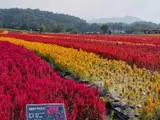
This flower field was created near Goseokjeong, a premier tourist destination in Cheorwon. A colorful array of red, yellow, and purple flowers—including cockscombs, sunflowers, kochia (bassia), Siberian chrysanthemums, buckwheat flowers, zinnias, and globe amaranths—showcase their unique beauty. Visitors can take vivid and picturesque photos from anywhere in the garden.MoreLess
- 3
Haesan Observatory
해산전망대
Haesan, whose name means 'mountain where the sun rises,' is a scenic mountain standing 1,194 meters above sea level. It is also known as Ilsan (Sun Mountain) or Tiger Mountain. Because it was located within the Civilian Control Zone, tourist access was once restricted, but it is now open to everyone. From Haesan Observatory on the mountain, visitors can take in a panoramic view of nearby Paroho Lake.MoreLess
- 4
Peace Dam (Hwacheon)
평화의댐(화천)
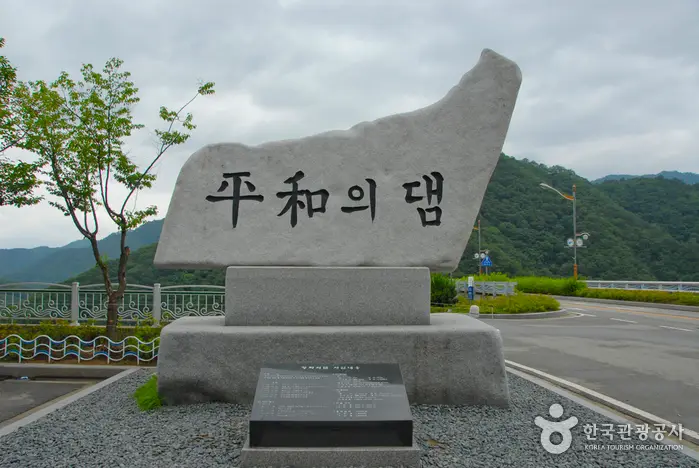
Construction began in 1986 using public donations to counter potential flood attacks and natural disasters following North Korea's construction of Mount Geumgang Dam, and the first phase was completed in 1989. A total of 166.6 billion KRW—including 63.9 billion KRW in public donations—was invested in the project, but construction was halted amid reports that the threat of Mount Geumgang Dam had been exaggerated. In 2002, a second phase of construction began to raise the dam's height, which was completed in October 2005. Around the Peace Dam, visitors will find the Water Culture Pavilion, World Bell Park, Bimok Park, Security Exhibition Hall, and a permanent outdoor performance stage.MoreLess

- 5
Yanggu Arboretum
양구 수목원
Yanggu Arboretum is a place where the mystical natural ecosystem unfolds near the DMZ Military Demarcation Line, offering opportunities to observe rare plants. In particular, Mount Daeamsan, where the arboretum is located, is home to Yongneup Swamp—the first wetland registered by South Korea upon joining the Ramsar Convention—further elevating the arboretum's value. Spanning an area of 149,000 square meters, the arboretum holds a wide variety of plant species and serves as an ecological learning center through the preservation and propagation of rare and endangered native plants.MoreLess
- 6Park Soo Keun Museum
박수근미술관
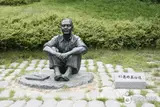
Painter Park Soo-keun sought to express human goodness and sincerity through his art. Rather than the madness of Van Gogh or the revolutionary spirit of Picasso, he observed life with a candid and benevolent gaze akin to Millet, establishing himself as an incomparable figure in modern Korean art. Built on a site of approximately 660 square meters at the artist's birthplace in Yanggu-gun, Gangwon-do, the Yanggu County Park Soo Keun Museum was established to honor the artist's philosophy on art and life while serving as a flagship cultural space for the region. The works on display at the museum include three oil paintings such as 'Two Seated Men,' prints such as 'A Tree and Two Women' and 'Tapdori (Circling the Pagoda),' the watercolor 'Paints,' and dozens of drawings.MoreLess
- 7
Misiryeong Old Road
미시령옛길
This mountain pass stands 826 meters above sea level, connecting Toseong-myeon in Goseong-gun and Buk-myeon in Inje-gun, Gangwon-do, Republic of Korea. Along with Jinburyeong and Hangyeryeong, it once functioned as a major route connecting the Yeongdong (Sokcho-si, Goseong-gun) and Yeongseo (Inje-gun) regions. However, following the opening of the Misiryeong Tunnel, vehicle traffic over Misiryeong and surrounding passes decreased sharply. The road is winding with almost no straight sections. A rest area once stood at the summit, but it has since been demolished and replaced by the Misiryeong Visitor Information Center. Visitors can enjoy views of Ulsanbawi Rock of Mount Seoraksan and experience the beauty of all four seasons: cherry blossoms in spring, lush greenery in summer, autumn foliage in fall, and snowscapes in winter.MoreLess
- 8
Hwaamsa Temple (Goseong)
화암사(고성)
Hwaamsa Temple is located in Sinpyeong-ri and was founded by Master Jinpyo in the 5th year of King Hyegong, the 36th monarch of the Silla Kingdom. The temple once housed a six-panel folding screen of the Avalokitesvara Bodhisattva gifted by King Jeongjo, though its whereabouts after Korea's liberation remain unknown. Historical records indicate the presence of 15 stupas, including the Jukam-dang Stupa, and 16 portraits of eminent monks, including that of Master Jinpyo. Situated at the foot of Sinseonbong Peak, the temple boasts outstanding surrounding scenery, including the pristine Hwaamgol Valley, Subawi Rock, and Ulsanbawi Rock.MoreLess
Source: Korea Tourism Organization (TourAPI) · Machine-translated