Calling All Cafe Enthusiasts! A Cafe Tour with Truly Unique Concepts!
7 stops · Approx. 3 hours 30 minutes
A course that connects Ongjin-gun, Ganghwa-gun, and Paju-si, taking you from bridge-connected islands with distinct island vibes and an urban center blending architecture with books, to crossing the Imjingang River by gondola to visit an art gallery.
- Duration
- Approx. 3 hours 30 minutes
- Distance
- Approx. 180 km
Along the way
- 1DMZ LIVE Experience Hall
DMZ 생생누리
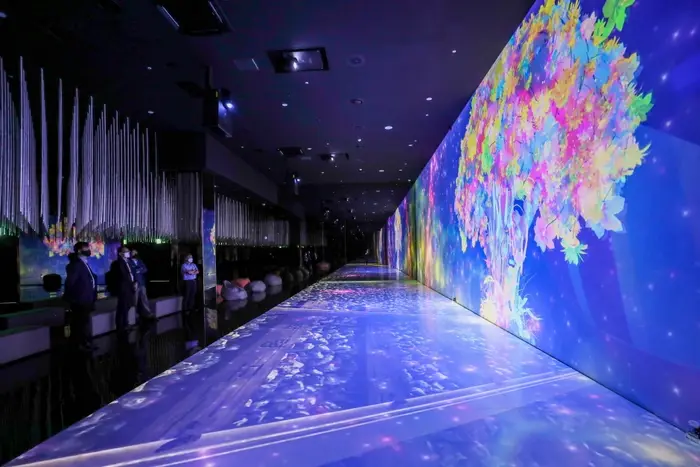
DMZ LIVE Experience Hall signifies a place where visitors can experience and enjoy the DMZ up close and vividly. By embodying the diverse values and charms of the DMZ and border regions—including their history, symbolism, and ecological environment—through immersive media content, it offers visitors an entertaining and meaningful experience.MoreLess

- 2Paju Book City
파주 출판도시
This area brings together publishing-related businesses, including publishers, printing offices, and bookbinders. Many publishers operate libraries, secondhand bookstores, and themed libraries, making it a wonderful destination for both children and adults. Because it offers much more than a one-time visit, many people return regularly, and the cultural events, lectures, and concerts hosted by publishers make it an excellent cultural hub.MoreLess
- 3Laveniche Plaza
라베니체광장
Created alongside the development of Gimpo Hangang New Town, Hangang Central Park connects with the waterside Geumbit Waterway and the Laveniche commercial district to form a wonderful walking trail. Stretching along a 2.68 km walking path, Geumbit Waterway Laveniche offers diverse scenery across its southern and northern ends. Designed around the theme of Venice, the City of Water, Laveniche features various shops along a 1.7 km round-trip waterside path. Centered around Central Plaza, lifestyle goods shops, restaurants, and pubs line both sides of the canal, making it the perfect spot to enjoy shopping and relaxation after a light stroll.MoreLess
- 4
Susan Park
수산공원
Located at Daemyeong Port in Gimpo-si, this massive emotional resort cafe also operates a sushi restaurant, a kids cafe, and Monsterium. Susan Park is open year-round from 10:00 AM to 9:00 PM, and Goryeo Sushi, a conveyor-belt sushi restaurant featuring wild-caught live fish, opens from 11:00 AM. Susan Park has a spacious parking lot; pets and strollers are not permitted inside.MoreLess
- 5
Joyang Bangjik
조양방직
Established with domestic capital in 1933 as Ganghwa's first artificial silk factory, Joyang Bangjik fell into ruin as the local textile industry declined over the years. The once-unsightly, decaying building has been reborn as a massive cafe. Crumbling walls turned into an impressive art gallery and cinema, long workbenches were converted into coffee tables, and the space left empty by machines and workers was filled with antiques sourced from China and Europe. British doors retaining broken windowpanes, circular mirrors once fitted on old Czech trains, and fish-shaped pastry (bungeoppang) molds that worked hard flipping through winter days are naturally arranged as if they had always belonged there. Preserving the original building framework across the factory grounds spanning over 990 ㎡ (approx. 300 pyeong), the cafe keeps the stories of time alive throughout its space. It currently sells various drinks and cakes.MoreLess
- 6
Ganghwa Jeondeungsa Temple
강화 전등사
The oldest temple in Korea and the largest on Ganghwado Island. Harmonizing beautifully with the surrounding mountain, it offers distinct impressions each season, making it ideal for a light hike while admiring the yellow ginkgo trees and autumn foliage. In the basement, there is Museoljeon Hall—a modern Dharma hall—and Seoun Gallery, which regularly hosts Buddhist art exhibitions. Recently selected as a Korea Unique Venue and wellness tourism destination, it is receiving widespread attention and is highly recommended for an autumn visit. Located inside Jeongjoksan Samrangseong Fortress (Historic Site), said to have been built by the three sons of Dangun Wanggeom, Jeondeungsa Temple's exact founding year is uncertain, but it served as a royal prayer temple during the Goryeo Dynasty under the name Jinjongsa. The current name, Jeondeungsa, is said to have originated in 1282 (the 8th year of King Chungnyeol of Goryeo) when Queen Consort Jeonghwa offered a jade lamp to the Buddha. Daeungbojeon Hall, designated as a Treasure, is a hipped-and-gabled roof building measuring 3 bays in front and 2 bays on the side, built in 1621 (the 13th year of King Gwanghaegun). It stands as a masterpiece of mid-Joseon architecture, and the splendid and delicate beauty of the canopy (datjip) crafted above the altar inside represents the pinnacle of architectural craftsmanship. Traces of soldiers who wrote their names on the pillars and walls of Daeungbojeon to pray to the Buddha for military fortune during the Byeong-in French Campaign (1866) while fighting bravely against French forces still remain throughout. Along with 10 buildings including the Treasure Yaksajeon Hall, the temple houses a Treasure Brahma Bell cast during the Northern Song Dynasty of China in the 11th century, the Yang Heon-su Victory Monument (Tangible Cultural Heritage), Daejoru Pavilion (Local Cultural Heritage), the historic sites of Jangsagak and Seonwonbogak which stored historical annals and royal genealogical records, as well as many ancient trees such as the legendary Naked Woman Statue, the barren ginkgo tree, and the crying tree. Daeungjeon Hall, designated as a Treasure, is small in scale but boasts neat joinery and exquisite sculpted decorations, making it one of the finest mid-Joseon architectural works. In particular, the splendid and elaborate canopy above the altar is an architectural masterpiece; each beam is adorned with writhing dragon figures with dragon heads protruding from the four corners, while lotus, peony, and arabesque motifs are richly embossed along the ceiling perimeter, and the central coffered ceiling is filled with stylized floral patterns (bosanghwamun). * Jeondeungsa Daeungjeon / Daeungbojeon Hall is modest in scale but features neat joinery and exquisite carved ornamentation, ranking among the finest late Joseon architectural works. In particular, the splendid and elaborate beauty of the canopy above the altar represents the pinnacle of architectural artistry. Each beam is decorated with dragon motifs with dragon heads projecting from the four corners, the ceiling perimeter is elaborately embossed with lotus, peony, and arabesque patterns, and the central coffered ceiling is filled with stylized floral designs. Even rarer are the fish embossed on the ceiling, creating an illusion of being in a dragon palace; to the left of the canopy, a small dragon frame decorated with dragon heads on both sides and a writhing dragon body once had nine bells suspended with strings extending down to the altar, which would ring all nine bells simultaneously when pulled, creating the magnificent resonance of nine dragons. * Jeondeungsa Daejoru Pavilion is a wooden structure located right in front of the courtyard leading up to Daeungjeon Hall. It acts as a gate pavilion to Daeungjeon, with a signboard reading 'Jeondeungsa' hanging under the eaves of the second floor. From the front, it appears as an elegant two-story building, but when viewed from Daeungjeon, it looks like a single-story Hanok. Built in 1839 by Monk Seungtanin as the main gate of Jeondeungsa, this 2-story pavilion features a front of 5 bays and a side of 2 bays with imitation tiles; inside the pavilion hang signboards of Jangsagak, Seonwonbogak, and Chwihyangdang. Originally a two-story pavilion, it deteriorated over time and now stands as a single-story structure with a simple bracket system, hipped-and-gabled roof, and Dancheong paintwork. * Jeondeungsa Myeongbujeon Hall, also called Siwangjeon Hall, is situated southwest of Yaksajeon Hall. Its founding date is unknown, and records indicate it was repaired in 1767 (43rd year of King Yeongjo), 1839 (5th year of King Heonjong), and 1844 (21st year of King Gojong). Measuring 3 bays wide and 2 bays deep, it enshrines Ksitigarbha Bodhisattva inside along with 29 other statues including the Ten Kings of the Underworld, Demon Kings, Judges, Generals, and Boy Attendants. * Jeondeungsa Wooden Seated Sakyamuni Buddha Triad was crafted in 1623 (15th year of King Gwanghaegun of Joseon) and is a wooden Buddha triad renowned for its gentle facial expression, volume, balance, and outstanding sculpting skill. A triad (Samjonbul), also known as the Buddhas of the Three Times (Samsebul), refers to the three Buddha bodies—Dharmakaya, Sambhogakaya, and Nirmanakaya—or may refer to Sakyamuni, Bhaisajyaguru, and Amitabha representing the present, past, and future. It is preserved in Daeungbojeon Hall of Jeondeungsa. The central Sakyamuni Buddha is 125 cm tall and 88 cm wide at the knees, featuring a gentle face, exceptionally large ears, commanding shoulders and chest, seated in the full-lotus position with the Bhumisparsa mudra (earth-touching gesture). The body is draped in a monastic robe that leaves the right shoulder bare, with three petal shapes visible above the tied waist sash across the chest. * Jeondeungsa Yaksajeon Hall is located west of Daeungbojeon Hall and shares almost the exact same architectural style, exterior appearance, and interior decoration as Daeungbojeon. The Buddha statue inside is a seated Bhaisajyaguru (Medicine Buddha); though slightly rigid, it is compact and harmoniously proportioned. Judging by the style, it is considered a stone Buddha from the late Goryeo Dynasty. This hall features a multi-bracket (Dapo) style of the mid-Joseon period with a single-story hipped-and-gabled roof, measuring 3 bays in front and 2 bays on the sides. Unshaped foundation stones are placed on a dressed-stone foundation, and the round pillars have a slight entasis. The bracket sets have 1 outward tier and 2 inward tiers; the tips of the bracket arms on the first and second tiers are turned upward (angseo), and while the bracket sets above the pillars feature flower-carved details, those between the pillars adopt an interlocking block shape. A unique feature of this hall is that no flat beam (pyeongbang) is placed over the lintel (changbang) despite being a Dapo-style structure. The ceiling has a coffered design at the center surrounded by slanted ceilings, around which colorful lotus and arabesque patterns are painted. * Jeondeungsa Hyangnojeon Hall is located to the right of Daeungjeon Hall and serves as the residence for the temple's ritual attendant monk (nojeon seunim). Featuring 3 bays in front, 2 bays on the side, and a hipped-and-gabled roof, it was used as a storage for ritual offerings and is said to have served as the quarters of the mid-army commander during the Byeong-in French Campaign. Jeondeungsa is located inside Samrangseong Fortress, said to have been built by Dangun's three sons, and tradition holds that it was established in 381 (11th year of King Sosurim of Goguryeo) by the eminent monk Ado Hwasang. At the time of foundation, it was called Jinjongsa. * The Treasure Brahma Bell of Jeondeungsa is immediately noticeable for its distinctive form compared to traditional Korean bells. It is entirely a Chinese-style bell with a total height of 163 cm and a base diameter of 1 m; the top features two crouching dragons without an acoustic tube, and the bell body is divided into upper, middle, and lower bands. Cast in iron at Sungmyeongsa Temple on Mt. Baegamsan, Sumu-hyeon, Huizhou during the 4th year of Emperor Zhezong's Shaosheng era in the Northern Song Dynasty (1097, 2nd year of King Sukjong of Goryeo). It was looted by imperial Japan during World War II and placed in the Bupyeong Arsenal, but was recovered after liberation by a devout Buddhist and returned to Jeondeungsa. The bell features twin dragons at the top, 16 lotus petals around the dragon heads, 8 petals encircling the upper body, and is divided horizontally into upper and lower sections by bands, which are further divided vertically into 8 rectangular sections each. Inscriptions are embossed in the elongated spaces between these sections. The bell rim is octagonal in a wave pattern typical of Chinese bells, bordered by a plain band. While similar in overall shape to the bronze bell of Yeonboksa Temple in Gaeseong, it is the only Chinese iron bell designated as a Treasure in Korea, serving as a valuable resource for the study of Chinese iron bells. In particular, the inscription bears the names of donors, co-workers, and craftsmen who participated in casting the bell, and 27 characters reading 'Daesong Huizhou' appear near the lower rim of the bell. * Jeongjoksan Gwagwolji is the site of a temporary royal palace built by King Gojong of Goryeo in 1259 (46th year of King Gojong) following the advice of Baek Seung-heon, a feng shui geomancer. When Baek Seung-heon was serving as a junior officer (nangjang), King Gojong consulted him about a suitable capital site, leading him to construct temporary palaces at Samrangseong and Sinnidong; in 1264 (5th year of King Wonjong), when the Mongols demanded a personal royal audience, Baek advised that building a palace and offering sacrifices at Chamseongdan on Mt. Manisan would resolve the issue and prompt surrounding major powers to pay tribute. The building was later destroyed during the Mongol invasions, and it is said that bedding was laid out and royal garments were kept here as if in ordinary times, even when the king was not in residence. * Jeongjoksan Sagojok (Historical Archives): Before the Imjin War, the royal annals were stored in four archives: Chunchugwan (the internal archive) and three external archives in Chungju, Seongju, and Jeonju; during the Imjin War, all were destroyed except the Jeonju archive. Afterward, the Jeonju archive copy that escaped wartime destruction was moved to Ganghwa, close to Hanyang. Printing was completed in April 1606 (39th year of King Seonjo); the original Jeonju copy was kept in the Mt. Manisan archive, while the other four sets were enshrined in Chunchugwan, Mt. Taebaeksan, Mt. Myohyangsan, and Mt. Odaesan archives. The Manisan archive suffered damage during the Byeongja Horan invasion and an accidental fire in November 1653 (4th year of King Hyojong), leading to the construction and transfer of the archives to Jeongjoksan Sago inside Samrangseong Fortress. Following the Japanese annexation of Korea in 1910, the Jeongjoksan archive records, along with the Taebaeksan annals and Gyujanggak books, were moved to the branch office of the Japanese Government-General's Department of Educational Affairs, transferred to Keijo Imperial University in 1930, and have been preserved at Seoul National University's Gyujanggak since liberation. Damaged around 1930 with only cornerstone ruins remaining, Jeongjoksan Sago was restored and renovated in 1999 as part of a Ganghwa cultural project. * Jeondeungsa Gangseoldang Hall served as a lecture hall for Jeondeungsa and is confirmed to have been used as a military barrack when Samrangseong was called Jeongjoksanseong Fortress. During the 1866 Byeong-in French Campaign, 800 Ganggye riflemen cooked and stayed here. It currently houses the Yeongsanghoesangdo (Painting of the Vulture Peak Assembly, 240 cm wide × 150 cm high), depicting Sakyamuni Buddha displaying the Bhumisparsa mudra at the center, surrounded by 12 Bodhisattvas including Avalokitesvara and Mahasthamaprapta, the Four Heavenly Kings, and the 10 Great Disciples.MoreLess
- 7
Mud Cafe (Ppeoldabang)
뻘다방
Ppeoldabang is a cafe renowned for its sunset views, located along the coast in Yeongheung-myeon, Ongjin-gun, Incheon. Designed with a Cuban motif that exudes an exotic atmosphere, it is considered the top attraction on Seonjaedo Island. A wide selection of coffee, drinks, and baked goods is available, and one of its signature items, the mojito, is made in-house using apple mint grown at Ppeoldabang combined with authentic Cuban rum. With the mudflats and sea right in front, it is ideal for family outings and also very popular as a scenic drive destination for couples due to its many photo spots. There are outdoor tables facing the sea as well as indoor seating with ocean views. Busking performances are held occasionally, making it the perfect place to snap fun photos and brighten your social media feed. ※ Pets allowedMoreLess
Source: Korea Tourism Organization (TourAPI) · Machine-translated