Check In at the Northernmost Reach of the West Sea! A Must-Bring ID Course
4 stops · Approx. 5 hours
This course covers Ongjin-gun, Ganghwa-gun, and Gimpo-si, taking you to the northernmost island in the West Sea, bridge-connected islands that require passing through military checkpoints, and hilltop observatories offering views of North Korea.
- Duration
- Approx. 5 hours
- Distance
- Approx. 210 km
Along the way
- 1
Yeonpyeongdo Island (Daeyeonpyeongdo/Soyeonpyeongdo)
연평도(대/소 연평도)
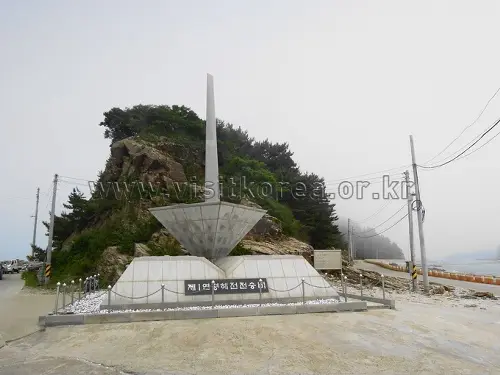
Located 145 km by sea from Incheon, Yeonpyeongdo Island is situated at the northernmost reach of the West Sea and is known as the largest fishing port in the region, just 10 km from Bupo-ri in North Korea. As the seventh island from Mount Suyang in Haeju, Hwanghae-do, it preserves an old-world charm where life goes on quietly. It is named "Yeonpyeongdo" because its flat shape stretches across the sea like a train running on water. Known widely to the public as an outpost defense base since the 1999 First Battle of Yeonpyeong, it is now popular as a summer retreat. Yeonpyeongdo Island is an entire security education site where the scars of the Yeonpyeong Island shelling are preserved as they were. A Peace Park memorializing those who fell in the naval battle also offers a firsthand experience of the tragedy of national division. The Yeonpyeongdo Peace Wish Dulle-gil trail allows visitors to walk through these security tourist sites, and North Korean territory can be clearly seen from the northern trail section. Yeonpyeongdo was once famous for its thriving seasonal fish market (pasi), known as the nation's best yellow corvina fishing grounds. Legend has it that General Im Gyeong-eop of the Joseon Dynasty stopped here on his way to Ming China during the Byeongja Horan (Manchu invasion) and caught corvina using thorny branches. At Chungminsa Shrine, which honors General Im, local fishermen hold an annual Pungeoje (ritual for a bountiful catch, a cultural tourism event) around March, raising colorful flags and beating drums and gongs during shamanic gut rituals to pray for safe sailing. Visitors can see a corvina island statue at the village entrance, and the Yellow Corvina History Museum along with the observatory offers an opportunity to shed light on traditional fishing life. [Daeyeonpyeongdo Island] It is said that fishermen learned how to catch yellow corvina from General Im Gyeong-eop in the 14th year of King Injo's reign. Although the corvina market flourished until 1968, the local residents now earn their living from blue crabs, oysters, and Manila clams harvested from the clean sea. Soyeonpyeongdo and four uninhabited islets surround it, and folk practices such as the Pungeoje ritual have been passed down orally. [Soyeonpyeongdo Island] The entire island is famous as a fishing spot for sea bass, rockfish, flounder, and mullet, and is formed around a massive titanium mine. Folk heritage like the Ninani Taryeong song has been transmitted orally, and the Pungeoje ritual is held annually. [Places to Visit] * Security Education Center - Located in Yeonpyeong-ri, the center is divided into an exhibition building and a preservation area for bombed buildings. The building (1 basement floor, 2 above-ground floors) features three exhibition halls, a 3D theater, and an air-raid shelter experience room. The first floor includes exhibits and a memorial for the shelling damage, while the second floor is dedicated to security education. Preserved damaged buildings can be viewed both outside and from the second floor inside, showcasing the tragedy of the Yeonpyeong bombardment. * Guridong Beach - A blessed natural beach located northwest of Yeonpyeong overlooking the North Korean coastline. The silver sandy beach stretches 1 km long and 200 m wide. With striking rock formations, white pebbles, fine sand, and coastal pine trees, it is an ideal spot for summer swimming. * Chungminsa Shrine (Local Tangible Cultural Heritage No. 1) - A shrine dedicated to General Im Gyeong-eop, a renowned general of the mid-Joseon period. After the humiliation of the Manchu invasion, while on his way to Ming China to strike the Qing, he stopped at Yeonpyeongdo for fresh water and provisions. He broke numerous thorny branches and drove them into the spot called "Anmok" south of present-day Dangseom. During low tide, an abundance of fish was trapped, marking the legendary origin of corvina fishing. Every spring, islanders hold a Pungeoje ritual here to pray for a good catch. * Tourist Observatory (Yellow Corvina History Museum) - Built in 2001 as an educational site for future generations and to spotlight the history of corvina fishing on the island. The sunset dipping into the northern sky is breathtakingly beautiful, evoking deep emotions among displaced families who lost their hometowns. It also offers a view of the maritime battleground from June 15, 1999. * Byeongpungbawi Rock (Oseok Coast) - Named Byeongpungbawi because it resembles an unfolded folding screen (byeongpung). Nearby titanium mines have worn down, washing rounded black stones (oseok) onto the shore to form the so-called "Oseok Coast." The beautiful black stones exposed at low tide are prized even by mineral collectors. Walking barefoot along the fine pebble shore provides both acupressure and soothing spa effects. * Face Rock (Eolgulbawi) - Located in the southeast of Soyeonpyeongdo, about 6.4 km south of Daeyeonpyeongdo, this rock is named for its striking resemblance to a human profile and is considered a signature rock of Yeonpyeongdo. It is the first attraction to catch tourists' eyes when arriving at Soyeonpyeongdo by passenger ferry.MoreLess
- 2
Gyodongdo Island (Ganghwa)
교동도(강화)
Gyodongdo Island, located northwest of Ganghwa-gun, has become much easier to visit following the opening of Gyodongdaegyo Bridge in July 2014. It was called Gomokgeun-hyeon during the Goguryeo period, renamed Gyodong-hyeon during King Gyeongdeok's reign in Silla, and served as an international transit port where Chinese envoys heading to Byeongnando stayed during the Goryeo Dynasty. * Daeryong Market: An alley market built by displaced people who fled Yeonbaek-gun in Hwanghae-do, modeled directly after the Yeonbaek Market in their hometown. The alleys retain nostalgic murals, sculptures, and vintage shop signboards. Visitors can take photos in front of old shops like Gyodong Barbershop and Dongsan Pharmacy, see the filming location of the drama "Legendary Witches" (Geobukdang), and enjoy traditional snacks like puffed rice bars (ssalgangjeong) as well as retro coffee houses (dabang). * Manghyangdae: Before the division of Korea, Gyodongdo and Yeonbaek-gun were in the same living sphere with frequent exchanges. However, displaced refugees from Yeonbaek-gun and elsewhere in Hwanghae-do could not return home due to the Korean War. In 1960, they erected a memorial monument here, where Yeonbaek-gun is visible just across the water, and continue to hold ancestral rites every year. Gyodongdo is uniquely home to many swallow nests built under the eaves of houses. Displaced residents regard these swallows as welcome and precious guests arriving from their beloved hometown. With the theme of "Peace and Unification," facilities including Gyodong Jebijip (Swallow's Nest), the Peace Nadelgil (bike trail), and Gyodong Studio have been established. Gyodong Jebijip offers spaces for performances, education, conferences, and exhibitions, featuring an outdoor stage with performance audio systems, a video lecture room equipped with laptops, cameras, and monitors, and a gallery for various exhibitions. Peace Nadelgil is a bicycle tour that starts from Jebijip. You can enjoy the natural scenery of Gyodong along the 30 km Coastal Ring Trail running beside the coastal barbed-wire fences and the Majung-gil trail set across vast green fields. Along the bike route, you can take breaks at scenic rest spots such as Manghyangdae built by displaced people looking toward their hometown, Nanjeong-ri Observatory overlooking North Korea across the sea, Goguri Rest Area overlooking a calm lake, and a coastal gazebo commanding a view of the sea and Gyodongdaegyo Bridge. At Gyodong Studio, you can dress in vintage school uniforms and take black-and-white photos, traveling back in time on this island where time has stood still.MoreLess
- 3
Sochang Experience Center
소창체험관
The Sochang Experience Center was created in 2016 by remodeling a hanok house built in 1938 and the site of the former Pyeonghwa Textile factory, which used to be a dyeing facility. It is a space dedicated to preserving traditional cultural heritage and re-evaluating the value of sochang (natural cotton fabric), a traditional industry of Ganghwa-gun. Visitors can gain insight into Ganghwa's textile history—from hwamunseok rush mats to its culmination in sochang—and experience the material with all five senses through regular programs including sochang handkerchief stamping, tea ceremony, and sochang weaving demonstrations.MoreLess
- 4
Aegibong Peace Ecopark
애기봉평화생태공원
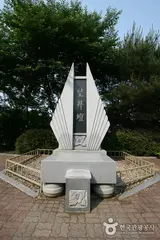
The old observatory built in 1978 was demolished to make way for the Aegibong Peace Ecopark, Gimpo's premier peace tourism destination featuring the new Jogang Observatory, which looks out over North Korea at the closest distance, and the Peace Eco Exhibition Hall showcasing stories of peace, ecology, and the future. Situated in the only Joint Utilization Zone (Free-zone) on the Korean Peninsula, it serves as a symbolic place of peace and harmony. Like the waters of the Jogang River flowing to reconnect severed history and culture, it carries forward the hope for peace along the Han River estuary. Furthermore, having been Hill 154, a site of fierce fighting during the Korean War, it serves as a poignant reminder of the world's only divided nation. As a central landmark representing peace on the Korean Peninsula with both painful history and natural abundance, Gimpo Aegibong Peace Ecopark merges peace, ecology, and tourism into a global landmark. Come enjoy diverse and engaging content, peaceful nature, and panoramic views of North Korean territory clearly visible just 1.4 km away.MoreLess
Source: Korea Tourism Organization (TourAPI) · Machine-translated