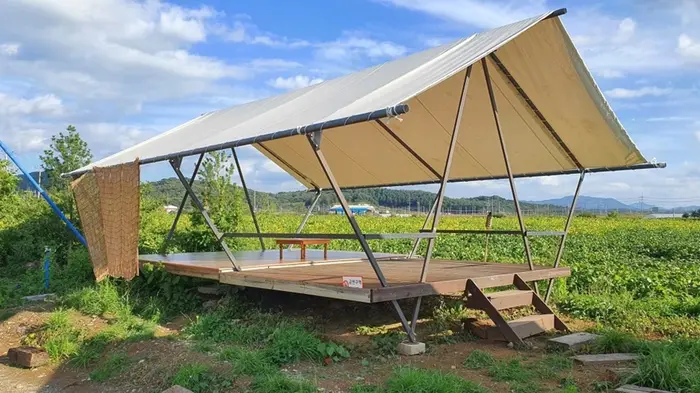
From Yeoncheon-gun and Cheorwon-gun to Hwacheon-gun! A Travel Course Along the Border of the Civilian Control Zone
6 stops · Approx. 2 hours
This course takes you through the border areas of the Civilian Control Zone connecting Yeoncheon-gun, Cheorwon-gun, and Hwacheon-gun, allowing you to witness the historical sites of the Korean War firsthand.
- Duration
- Approx. 2 hours
- Distance
- Approx. 120 km
Along the way
- 1
Yeoncheon Gorangpogu Historical Park
연천 고랑포구 역사공원
This ferry dock has served as a strategic point and a hub for the exchange of goods along the Imjingang River since the Three Kingdoms period. In the 1930s, it flourished through the trade of goods between Gaeseong and Hanseong (Seoul) to the point where a branch of Hwasin Department Store was established, but it declined due to the Korean War and the division of the peninsula. It is also well-known as the infiltration route during the January 21 armed commando infiltration incident. Yeoncheon Gorangpogu Historical Park vividly embodies and recreates the history and geographical characteristics inscribed in Gorangpogu Port. Realistic history and security experiences are available through virtual and augmented reality, and the park consists of a children's play area, a multi-purpose space (including dining areas), and a seminar room.MoreLess
- 2
Yeoncheonhoegwan
연천회관
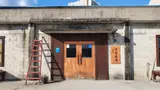
Located in Yeoncheon-eup, Yeoncheon-gun, Yeoncheonhoegwan is a cafe, contrary to what its name might suggest. Situated close to Jaein Falls, it is a convenient stop when visiting Yeoncheon. The exterior built with concrete bricks and the interior are decorated with unique and sophisticated designs. With large outdoor wooden platforms covered by sunshades, visitors can enjoy Yeoncheonhoegwan's signature beverages alongside various delicious breads and rice cakes in nature. You can also link your visit with the nearby Dolmen Park for a light stroll to enjoy the day.MoreLess
- 3Memorial Tower of Baengmagoji Battlefield and Memorial Museum
백마고지 위령비와 기념관
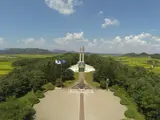
The Battle of Baengmagoji refers to a fierce struggle during the Korean War (June 25, 1950 – July 27, 1953) in October 1952 over a small, nameless hill located 3 km north of Daema-ri, Cheorwon-eup, Cheorwon-gun, where the ROK Army 9th Infantry Division (Commander Kim Jong-oh) fought with all their might against three divisions of the Chinese 38th Army, resulting in a victory for the ROK Armed Forces. Over 10 days starting from October 6, 1952, approximately 20,000 casualties occurred on both friendly and enemy sides to capture a single hill standing only 395 meters above sea level. During the battle, 55,000 artillery shells were fired by the enemy and 220,000 by friendly forces, and the hill changed hands 24 times through 12 offensive and defensive engagements. It is said to have been named Baengmagoji (White Horse Hill) because the shape of the mountain, transformed drastically by the bloody struggle, resembled a white horse lying down. The Baengmagoji Memorial Tower was erected to console the souls of the 17,535 fallen soldiers from both sides (3,146 friendly forces and 14,389 Chinese forces) who sacrificed their lives in the Battle of Baengmagoji. It was built to commemorate the site of the fierce battle, divided into three sections: the Field of Recollection, the Field of Memorial, and the Field of Resolution. In the "Field of Recollection," there are a memorial tower and an incense-burning altar honoring the fallen; in the "Field of Memorial," a monument commemorating the desire for unification and the victory is established, along with a memorial hall displaying the relics of General Kim Jong-oh, who was the commander of the White Horse Division at the time, and the Bell of Freedom, currently serving as a national security education site.MoreLess
- 4Cheorwon Korean Workers' Party Headquarters
철원 노동당사
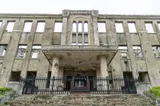
The Korean Workers' Party Headquarters located in Gwanjeon-ri, Cheorwon-eup, Gangwon-do is a three-story building completed in 1946. It was used as the North Korean Workers' Party headquarters until the outbreak of the Korean War (June 25 War). Currently, this building bears heavy damage from the Korean War, with the entire structure charred black and densely pitted with marks from artillery shells and bullets. However, because this appearance evokes the Korean War and the reality of Korea's division, it has also been used as a filming location for music videos of famous singers and a venue for notable concerts. Cheorwon Korean Workers' Party Headquarters is currently operated as a security tour course by Cheorwon-gun and is visited by many tourists. It has been under government-level protection since being registered as a Modern Cultural Heritage in February 2001.MoreLess
- 5Goseokjeong Flower Field
고석정 꽃밭
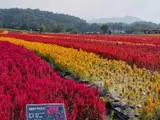
This flower field was created near Goseokjeong Pavilion, Cheorwon's representative tourist attraction. A colorful variety of red, yellow, and purple flowers—including cockscombs, sunflowers, kochia (bassia), Siberian chrysanthemums, buckwheat flowers, common zinnias, and globe amaranths—showcase their respective beauty. You can take vivid and beautiful photos anywhere you shoot.MoreLess
- 6
Chilseong Observatory
칠성전망대
Built in 1991, Chilseong Observatory suffered partial damage and aging of its building and indoor viewing facilities over 21 years; on April 19, 2013, it was remodeled with a modern touch and developed as a security tourism product. On the day of the visit, after bringing your identification and filling out an application at the Chilseong Observatory Information Center, you depart together accompanied by a guide. From Chilseong Observatory, you can see the Geumseongcheon Stream, the only stream in South Korea that flows north before heading toward the Peace Dam, admire the scenery of North Korea's beautiful mountains and fields, and observe wildlife within the DMZ.MoreLess
Source: Korea Tourism Organization (TourAPI) · Machine-translated