A Trending Tour: From Retro Hotspots to the Latest Hot Places
5 stops · Approx. 2 hours
Starting from Gyodongdo Island in Ganghwa and stretching through Gimpo and Paju, this day-trip course near Seoul is perfect for driving and sightseeing. Explore the nature, culture, history, and ecological parks of the border region, and ride the DMZ's only gondola crossing the Imjingang River.
- Duration
- Approx. 2 hours
- Distance
- Approx. 130 km
Along the way
- 1
Gyodongdo Island (Ganghwa)
교동도(강화)
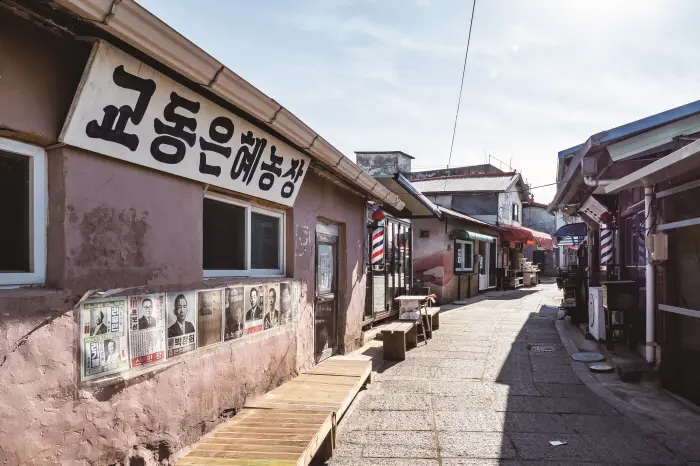
Gyodongdo Island is located northwest of Ganghwa-gun and became much more accessible after the opening of the Gyodongdaegyo Bridge in July 2014. It was called Gomokgeun-hyeon during the Goguryeo period, renamed Gyodong-hyeon during the reign of King Gyeongdeok of Silla, and served as a stopover for international trade where Chinese envoys on their way to Byeokrando stayed during the Goryeo period. * Daeryong Market: A retro alley market created by displaced people from Yeonbaek-gun in Hwanghae-do to replicate Yeonbaek Market back in their hometown. The alleys retain nostalgic murals, sculptures, and old signboards. Visitors can take photos in front of vintage shops like Gyodong Barbershop and Dongsan Pharmacy, see the filming site for the drama "4 Legendary Witches" (Geobukdang), and enjoy traditional snacks like rice crackers (ssalgangjeong) as well as classic dabang-style tea houses. * Manghyangdae: Before the division of the Korean Peninsula, Gyodongdo and Yeonbaek-gun were in the same living area with frequent exchanges. However, after the Korean War, refugees from Hwanghae-do, including Yeonbaek-gun, could no longer return to their hometowns. In 1960, displaced residents erected a memorial monument here, where Yeonbaek-gun seems close enough to touch across the water, and continue to hold memorial rituals every year. Gyodongdo has a uniquely large number of swallow nests tucked beneath its eaves. The displaced people call these swallows precious, welcome guests coming from their beloved hometowns. Under the theme of "Peace and Unification," Gyodong Swallow's Nest, the Pyeonghwa Nadelgil (Bicycle Trail), and Gyodong Studio have been established. Gyodong Swallow's Nest provides space for performances, education, conferences, and exhibitions. It features an outdoor stage equipped with sound facilities, a video lecture room with laptops, cameras, and monitors, and a gallery capable of hosting diverse exhibitions. Peace Nadeul-gil (Bicycle Trail) is a cycling tour that starts from Gyodong Swallow's Nest. You can fully enjoy Gyodong's nature along the Hoejugil (30 km) course laid out along coastal wire fences and the Majung-gil course extending across wide, green plains. While cycling, you can take a break at scenic rest stops, such as Manghyangdae erected by displaced people looking toward their hometowns, Nanjeong-ri Observatory overlooking North Korea across the sea, Goguri Rest Area overlooking a calm and peaceful lake, and a coastal gazebo offering a panoramic view of the sea and Gyodongdaegyo Bridge. At Gyodong Studio, you can dress in vintage school uniforms and take black-and-white photos. On this island where time has stopped, you can step back in time and create lasting memories.MoreLess
- 2
Joyang Bangjik
조양방직
Established with domestic capital in 1933 as Ganghwa's first artificial silk (rayon) factory, Joyang Bangjik fell into ruin as the local textile industry declined over the years. The decaying, unsightly building has been reborn as a massive cafe. The crumbling walls have transformed into an exquisite art gallery and cinema, the long workbenches into coffee tables, and the space left behind by machines and workers has been filled with antiques discovered in China, Europe, and beyond. A British door preserving broken windowpanes, a round mirror once attached to an old Czech train, and a bungeoppang (fish-shaped pastry) waffle maker that labored every winter are placed so naturally that they seem to have always belonged there. Preserving the original building framework across a factory site exceeding 990㎡ (approx. 300 pyeong), the cafe keeps the stories of time alive in every corner. It currently serves various beverages and cakes.MoreLess
- 3
Aegibong Peace Ecopark
애기봉평화생태공원
Aegibong Peace Ecopark is Gimpo's premier peace tourism destination, reborn by demolishing the aging observatory built in 1978 and introducing the new 'Jogang Observatory,' which looks out at North Korea at the shortest distance, alongside the 'Peace & Eco Exhibition Hall' carrying stories of peace, ecology, and the future. Situated in the only Han River Estuary Free-zone shared by both Koreas, it is a symbolic site representing peace and harmony. Like the Jogang River flowing to bridge severed history and culture, it carries the determination for peace in the Han River estuary. Furthermore, having been Hill 154, where fierce battles took place between the North and South during the Korean War, it reminds visitors of Korea's significance as the world's only divided nation. Carrying both painful history and natural abundance as a central hub symbolizing peace on the Korean Peninsula, Gimpo Aegibong Peace Ecopark will grow into an international landmark uniting peace, ecology, and tourism. Here, you can enjoy diverse and engaging content, peaceful nature, and a clear panoramic view of North Korean territory located just about 1.4 km ahead.MoreLess
- 4
Paju DMZ Gondola
파주 DMZ 곤돌라
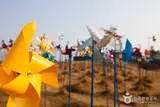
The Paju Imjingak Peace Gondola is Korea's first gondola to traverse the Civilian Control Zone (CCZ). It offers panoramic views of the Jangdan Peninsula, Bukhansan Mountain, the Gyeongui-Jungang Line, the Bridge of Freedom, Dokgae Bridge, and Imjingak. In addition, the crystal cabins with transparent glass floors provide a thrilling experience from heights of up to 50 meters.MoreLess
- 5
Malddong Donut Dessert Town
말똥도넛 디저트타운
This is Korea's largest dessert town, located in Paju. It serves dozens of types of donuts, along with desserts such as cakes, cookies, and jelly candies.MoreLess
Source: Korea Tourism Organization (TourAPI) · Machine-translated