Breathtaking Views, Views, and More Views! A Tour of the Most Scenic Overlooks
4 stops · Approx. 1 hour
There are many spacious cafes near Manisan Mountain, the cradle of the Korean national spirit, and Jeondeungsa Temple, an ancient temple steeped in history and legend. Moving on to Gimpo, step out of the car and take a stroll along Munsusanseong Fortress, where you can admire the magnificent landscapes with views stretching from North Korea all the way to Samgaksan Mountain in Seoul.
- Duration
- Approx. 1 hour
- Distance
- Approx. 50 km
Along the way
- 1
Manisan Mountain (Ganghwa)
마니산(강화)
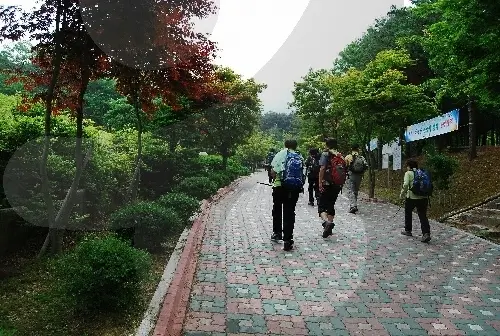
Located at the southwestern tip of Ganghwado Island and in the center of the Korean Peninsula, Manisan Mountain is situated at an equal distance from both Hallasan Mountain and Baekdusan Mountain. It is regarded as a sacred mountain where Dangun held ancestral rites to heaven, dragons ascended to the sky, dragon-horses emerged, and immortals resided; it was also prophesied that 72 generations of kings and ministers would arise here. At the summit of Manisan Mountain is Chamseongdan Altar, where Dangun, the founding father of Korea, performed heavenly rituals. It is a sacred national mountain where the torch is ignited and carried for major events like the 1988 Paralympic Games and the annual National Sports Festival. Climbing the 918 stone steps along the trail opens up a panoramic view of the West Sea, allowing visitors to revel in the scenic beauty. On the eastern foot of the mountain, you can also admire the beautiful flower patterns carved on the wooden lattice doors of the main hall at Jeongsusa Temple, built during the reign of Queen Seondeok of Silla. In addition, the Manisan Healing Forest is a protected pine forest genetic reserve where you can relax while absorbing abundant phytoncides. Walking among the straight-stretching pines and cedars will blow away your stress and offer true healing.MoreLess
- 2
Jeondeungsa Temple (Ganghwa)
강화 전등사
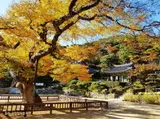
As the oldest temple in Korea and the largest on Ganghwado Island, Jeondeungsa Temple creates a distinctive atmosphere each season in harmony with the surrounding mountain. It is an especially pleasant place for light hiking amidst the golden ginkgo trees and autumn foliage. The underground modern hall, Museoljeon, and the Seoun Gallery—which regularly hosts Buddhist art exhibitions—are also worth a visit. Having recently been recognized as a Korea Unique Venue and a Wellness Tourism Destination, it is highly recommended to explore during the autumn. Located inside the Historic Site of Samrangseong Fortress on Jeongjoksan Mountain—said to have been built by the three sons of Dangun Wanggeom—the exact founding year of Jeondeungsa Temple is uncertain, but it served as a royal temple of the Goryeo Dynasty and was originally named Jinjongsa Temple. Its current name, Jeondeungsa, is said to have originated in 1282 (the 8th year of King Chungnyeol of Goryeo) when Queen Jeonghwa offered a jade lamp to the Buddha. The Main Hall (Daeungbojeon), designated as a Treasure, is a three-kan by two-kan wooden building with a hip-and-gable roof built in 1621 (the 13th year of Prince Gwanghae), representing a pinnacle of mid-Joseon architecture. In particular, the exquisitely ornate and intricate canopy (datjip) over the Buddhist altar inside is considered a masterpiece of architectural craftsmanship. Traces of names inscribed on the pillars and walls by soldiers praying to the Buddha for victory during the French expedition to Korea in 1866 (the 3rd year of King Gojong) still remain in various places today. Along with ten building complexes including the Treasure-designated Yaksajeon Hall, the temple houses a 11th-century Northern Song Chinese iron bell (Treasure), the Victory Monument of General Yang Heon-su (Tangible Cultural Heritage), Daejoru Pavilion (Local Cultural Heritage), the historical archives sites of Jangsagak and Seonwonbogak where royal annals and genealogies were kept, the legendary Nanyeosang (sculpture of a naked woman), the barren ginkgo tree, and the weeping tree. Although small in scale, Daeungjeon Hall boasts a neat structure and delicate sculptural decorations, making it one of the finest architectural structures of the mid-Joseon period. In particular, the ornate and delicate beauty of the canopy above the altar inside is the culmination of architectural craftsmanship: dragons twist across the beams with dragon heads protruding from the four corners, while lotuses, peonies, and arabesque patterns are lavishly embossed around the ceiling, and the central coffered panels are filled with floral medallions. * Daeungjeon Hall of Jeondeungsa Temple: While modest in size, Daeungbojeon Hall features a neat structure and intricate carved ornaments, ranking among the finest buildings of the late Joseon era. In particular, the ornate and delicate beauty of the canopy above the altar represents the culmination of architectural craftsmanship; dragons wind across each beam with dragon heads projecting from the four corners, while lotuses, peonies, and arabesques are gorgeously embossed around the ceiling, and the central coffered panels are filled with floral medallions. Even more extraordinary is the embossed fish on the ceiling, creating an illusion of being in a dragon palace. To the left of the canopy, nine small bells were once hung from the belly of a miniature dragon mount with dragon-head ornaments on both sides, connected by strings to the altar; when pulled, the nine bells rang simultaneously in a spectacular chorus of nine dragons roaring. * Daejoru Pavilion of Jeondeungsa Temple: A wooden building standing right before the courtyard leading up to Daeungjeon Hall. It acts as a gate pavilion to the main hall, with a wooden plaque reading 'Jeondeungsa' hanging under the eaves of the second floor. Viewed from the front, it appears as an elegant two-story structure, but from the Daeungjeon side, it looks like a single-story hanok. Built in 1839 by monk Tanin to serve as the main gate of Jeondeungsa Temple, it was a two-story pavilion measuring five kan in width and two kan in depth with a tiled roof, housing plaques of Jangsagak, Seonwonbogak, and Chwihyangdang. Originally a two-story pavilion, it deteriorated over time and now remains as a single-story building. It features a hip-and-gable roof with Dancheong paint. * Myeongbujeon Hall of Jeondeungsa Temple: Also called Siwangjeon, Myeongbujeon Hall is located to the southwest of Yaksajeon Hall. The founding year is unknown, but records show it was repaired in 1767 (43rd year of King Yeongjo), 1839 (5th year of King Heonjong), and 1884 (21st year of King Gojong). Measuring three kan wide and two kan deep, it enshrines Ksitigarbha Bodhisattva along with 29 other statues including the Ten Kings of the Underworld, Ghost Kings, judges, generals, and boy attendants. * Wooden Seated Buddha Triad of Jeondeungsa Temple: Crafted in 1623 (15th year of Prince Gwanghae), these wooden statues are known for their gentle facial features, solid volume, balance, and exceptional carving skill. The Buddha Triad, also referred to as the Buddhas of the Three Times, represents the three bodies of the Buddha (Dharmakaya, Sambhogakaya, and Nirmanakaya), or refers to Sakyamuni, Bhaisajyaguru, and Amitabha, or the Buddhas of the Past, Present, and Future. They are preserved in Daeungbojeon Hall. The central Sakyamuni Buddha is 125 cm tall with a knee width of 88 cm, characterized by a benevolent face, unusually large ears, dignified shoulders and chest, and seated in the full-lotus position performing the earth-touching gesture. The statue wears robes draped over the right shoulder, with three petal-like patterns above the tied knot of the inner garment at the chest. * Yaksajeon Hall of Jeondeungsa Temple: Located to the west of Daeungbojeon Hall, it shares a very similar architectural style and ornamentation with Daeungbojeon. The enshrined statue inside is a seated Bhaisajyaguru (Medicine Buddha), which is slightly rigid yet compact and well-harmonized, indicating it is a stone Buddha from the late Goryeo period. Architecturally, it is a single-story hip-and-gable building of the mid-Joseon multi-bracket (Dapo) style measuring three kan in width and two kan in depth. Built on a foundation of dressed rectangular stones with natural stone plinths, its round pillars have a slight entasis. A unique feature is that despite being a Dapo-style building, no flat beam is placed above the lintel. The interior ceiling features a coffered ceiling in the center and sloped ceilings on the sides, adorned with elaborate lotus-arabesque paintings. * Hyangnojeon Hall of Jeondeungsa Temple: Located to the right of Daeungjeon Hall, Hyangnojeon serves as the living quarters for the temple's senior monk. Measuring three kan wide and two kan deep with a hip-and-gable roof, it was historically used as a storehouse for ritual offerings and served as the commander's quarters during the French expedition of 1866. Jeondeungsa Temple sits within Samrangseong Fortress, said to have been constructed by the three sons of Dangun, and is traditionally believed to have been founded in 381 (11th year of King Sosurim of Goguryeo) by the eminent monk Ado under the name Jinjongsa Temple. * Iron Bell of Jeondeungsa Temple (Treasure): Easily distinguishable from traditional Korean bells, this is entirely a Chinese-style bell measuring 163 cm in height and 1 m in base diameter. Its belfry top features crouching twin dragons without a sound tube, and the bell's body is divided horizontally into upper, middle, and lower bands. Cast in 1097 (4th year of the Shaosheng era under Emperor Zhezong of Northern Song / 2nd year of King Sukjong of Goryeo) at Sungmyeongsa Temple on Baegamsan Mountain in Huizhou, this iron bell was looted by the Japanese military during World War II and placed at the Bupyeong Arsenal. After Korea's liberation, it was recovered by a devout Buddhist and returned to Jeondeungsa Temple. The mouth of the bell is shaped in an eight-lobed wavy rim typical of Chinese bells. It is the only Chinese iron bell designated as a Treasure in Korea, making it invaluable for the study of Chinese iron bells. Notably, an inscription carved in relief lists the donors, artisans, and contributors, including 27 characters near the lower rim indicating 'Huizhou, Great Song'. * Site of Gwagwol on Jeongjoksan Mountain: The site of a temporary palace built in 1259 (46th year of King Gojong of Goryeo) following the advice of geomancer Baek Seung-heon. At that time, when King Gojong inquired about a suitable capital site, Baek advised building temporary palaces in Samrangseong and Sinnidong; in 1264, when the Mongols demanded King Wonjong visit their court in person, it was advised that holding rituals at Chamseongdan on Manisan Mountain from this temporary palace would resolve the diplomatic issue and cause neighboring empires to offer tribute. The building was destroyed during the Mongol invasions. It is recorded that even when the king was not residing there, fine bedding and royal robes were always kept arranged as if occupied. * Jeongjoksan Mountain History Archive: Before the Imjin War, the royal annals were stored in the Chunchugwan Archive in the capital and three regional archives in Chungju, Seongju, and Jeonju. All except the Jeonju archive were destroyed during the war. The surviving Jeonju edition was subsequently moved to Ganghwa near Hanyang. After reproduction work was completed in April 1606 (39th year of King Seonjo), the original Jeonju copy was placed in the Manisan Archive, and four new copies were kept at Chunchugwan, Taebaeksan, Myohyangsan, and Odaesan Archives. After suffering damage during the Manchu Invasion and an accidental fire in 1653 (4th year of King Hyojong), the archive was moved to the Jeongjoksan Archive inside Samrangseong Fortress. During the Japanese colonial period in 1910, the Jeongjoksan documents were relocated along with the Taebaeksan annals and Gyujanggak collections to the Japanese Government-General, later moved to Keijo Imperial University in 1930, and are currently preserved at Seoul National University's Kyujanggak Institute. The ruined Jeongjoksan Archive was restored in 1999 as part of Ganghwa's cultural preservation project. * Gangseoldang Hall of Jeondeungsa Temple: A lecture hall that once served as military quarters when Samrangseong was known as Jeongjoksanseong Fortress. During the French expedition in 1866, it was used as a kitchen for 800 Ganggye riflemen. It preserves the Yeongsanhoesangdo painting (240 cm wide by 150 cm high), depicting Sakyamuni Buddha performing the earth-touching mudra, flanked by Avalokitesvara, Mahasthamaprapta, ten other Bodhisattvas, the Four Heavenly Kings, and the Ten Great Disciples.MoreLess
- 3
Gimpo Munsusanseong Fortress
김포 문수산성
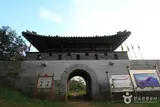
Located on Munsusan Mountain (376 m), Munsusanseong Fortress (Historic Site No. 139) was built in 1694 (20th year of King Sukjong of Joseon) to defend Ganghwado Island and repel foreign invaders entering via the sea. At the time, it had North, West, and South Gates, all of which were burned down during the French expedition to Korea in 1866. The North Gate was restored in 1995, and the South Gate was restored in 2002. The total length of the fortress wall is 6 km, with 4 km currently remaining unrestored. Offering spectacular surrounding views, the summit commands vistas overlooking North Korea, across the Hangang River estuary to Samgaksan Mountain in Seoul, and the open sea off Incheon in the distance. It is celebrated as the Geumgang of Gimpo for its year-round natural scenery. Holding deep historical significance as a living educational site of resistance against foreign aggression in the late Joseon era, it also lies close to Munsusa Temple, said to have been founded during the reign of Queen Jinseong of Silla. Hiking access is available from both Gunha-ri and Seongdong-ri. * Major Cultural Heritage: Stupa and Stele of Master Pungdam at the Site of Munsusa Temple (Tangible Cultural Heritage)MoreLess
- 4
Gimpo Jangneung (Queen Inheon) [UNESCO World Heritage]
김포 장릉(인헌왕후) [유네스코 세계문화유산]
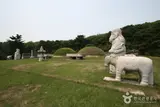
Designated as a Historic Site, Jangneung is the royal tomb of Wonjong, the biological father of King Injo (16th king of Joseon, r. 1623–1649), and his consort, Queen Inheon of the Gu clan. The scale and layout of the tomb represent the typical style of the mid-Joseon period. Below the tomb mound stands the Jaesil (ritual preparation hall), a building where King Yeongjo (21st king) and King Jeongjo (22nd king) visited annually to perform ancestral rituals.MoreLess
Source: Korea Tourism Organization (TourAPI) · Machine-translated