A Culture and Art Tour Embracing Nature, Art, and the Wind of Peace
6 stops · Approx. 3 hours 30 minutes
This culture and art tour traverses Ongjin-gun, Paju-si, and Yeoncheon-gun, where artworks harmonize with nature and the winds of peace sweep across vast plains. Experience architectural art that exists as standalone masterpieces.
- Duration
- Approx. 3 hours 30 minutes
- Distance
- Approx. 180 km
Along the way
- 1
Baemikkumi Sculpture Park
배미꾸미조각공원
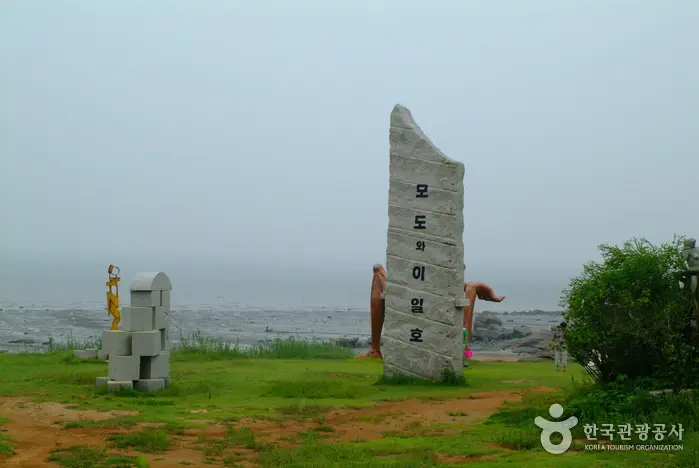
Located on Baemikkumi Beach on Modo Island in Bukdo-myeon, Ongjin-gun, Incheon, this sculpture park takes its name from the beach, which is said to resemble the curved bottom of a boat. It became a sculpture park when sculptor Lee Il-ho built a studio here and began displaying his artworks. Around 100 pieces are exhibited across a spacious yard facing the beach. The representative work is 'Mr. Willow,' an iron willow tree sculpture installed on the coastal bedrock. Harmonizing beautifully with the island scenery, it is renowned as a wonderful place to take a stroll while appreciating art, and it was also a filming location for the late director Kim Ki-duk's movie .MoreLess
- 2
Jangneung Royal Tomb, Gimpo (Queen Inheon) [UNESCO World Heritage]
김포 장릉(인헌왕후) [유네스코 세계문화유산]
Designated as a Historic Site, Jangneung is the royal tomb of Wonjong, the biological father of the 16th Joseon monarch King Injo (r. 1623–1649), and his consort, Queen Inheon of the Gu clan. The scale and layout of the tomb exemplify typical mid-Joseon characteristics. Below the tomb mound stands the Jaesil (ritual preparation hall), a building where King Yeongjo (21st monarch) and King Jeongjo (22nd monarch) visited annually to perform memorial rites.MoreLess
- 3DMZ LIVE Experience Hall
DMZ 생생누리
DMZ LIVE Experience Hall embodies the idea of experiencing and enjoying the DMZ up close and vividly. By presenting the diverse values and charms of the DMZ and border areas—such as history, symbolism, and ecology—through immersive media content, it offers visitors an entertaining and meaningful experience.MoreLess

- 4
Paju Imjingak (Pyeonghwa Nuri Park)
파주 임진각(평화누리공원)
Located about 56 km northwest of Seoul City Hall and 7 km south of the Military Demarcation Line across the Imjingang River, Imjingak is South Korea's representative peace tourism destination where the tragedies of the Korean War remain palpable. It is a place where visitors can reflect on the painful scars of the war and learn the precious value of peace. Scattered with various war relics, it is well known as a tourist attraction featuring exhibition halls as well as Pyeonghwa Nuri Park with its sprawling 30,000-pyeong lawn hill. The area around Imjingak was a devastating battlefield during the Korean War. It is home to the Imjingang River Iron Railway Bridge, which was destroyed in the early stages of the war and still remains today, and the Bridge of Freedom, crossed by South Korean and UN POWs seeking freedom from communist forces. It was designated as the Imjingak Tourist Site with the construction of the Imjingak Pavilion for North Korean displaced persons. Today, with the addition of new facilities such as Pyeonghwa Nuri, Imjingak Peace Gondola, the National Memorial for Korean War Abductees, and children's amusement facilities, it has grown into a massive 140,000-pyeong tourist attraction. * War Relics 1. Imjingak – Built in 1972 as a three-story building for displaced persons; the rooftop observatory offers a panoramic view of the bombed Imjingang River Iron Railway Bridge, the Bridge of Freedom, and the Civilian Control Zone. 2. Mangbaedan – A memorial altar where displaced persons hold rites toward their hometowns to soothe their yearning for their lost homeland. 3. Bridge of Freedom – A representative heritage site of the Korean War, this wooden bridge was named after the 12,773 South Korean and UN POWs who crossed it to freedom in 1953. 4. Gyeongui Line Steam Locomotive at Jangdan Station – Bombed at Jangdan Station while transporting war supplies during the Korean War, this locomotive was the center of fierce combat between US and Chinese forces. In 2004, it was designated as a Registered Cultural Heritage, restored, and relocated from the DMZ to Imjingak for exhibition. 5. War Memorials & Monuments – Includes the Korean War Veterans Memorial, the US Armed Forces Monument, the Memorial for the Victims of the Rangoon Bombing, and more. * Pyeonghwa Nuri Park An eco-friendly space consisting of a vast 30,000-pyeong lawn hill and an outdoor stage on water, created to transform Imjingak—a symbol of division—into a symbol of reconciliation, coexistence, peace, and unification. The park's signature spot is the 'Hill of Wind.' Featuring 3,000 colorful spinning pinwheels, it is a highly popular photo zone for families and couples, as well as a filming location for TV dramas and commercials. * Exhibition & Experience Facilities 1. Imjingak Peace Gondola – Korea's first and only gondola facility that crosses the Imjingang River, connecting 850 m into the Civilian Control Zone at Camp Greaves. 2. National Memorial for Korean War Abductees – Preserves and exhibits records related to wartime abductees to restore the honor of victims and their families. 3. Military Underground Bunker Exhibition Hall (BEAT 131) – An artistic experience space repurposed from an actual underground military bunker. 4. Peace Land – A family-friendly amusement park for children featuring rides such as a Viking ship and a mini train.MoreLess
- 5
Jaein Falls (Hantangang River National Geopark)
재인폭포 (한탄강 국가지질공원)
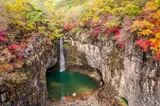
Boasting the most breathtaking scenery along the Hantangang River, Jaein Falls has long been widely renowned as a scenic attraction. The view of a small stream flowing from the northern Jijangbong Peak and plunging down an approximately 18-meter basalt columnar joint cliff is truly spectacular. Additionally, the area around Jaein Falls is known as a habitat for natural monuments such as the spotbarbel (Erimystax) and endangered plant species such as Pink Campion, alongside a beautiful love story associated with the naming of the waterfall. Visitors can observe diverse volcanic basalt features at Jaein Falls, most notably columnar joints, river erosion caves, potholes, and gas tubes. The approximately 18-meter-high waterfall has continually eroded the base below, forming a pothole reaching depths of up to 5 meters. A pothole refers to a deep hole created in a riverbed when eddies (swirling water) erode hollows or fractures in the rock.MoreLess
- 6
Yeongang Gallery
연강갤러리
Just the thought of Yeoncheon, the northernmost area bordering the DMZ, may evoke tension, but encountering the scene in person immerses visitors in an utterly peaceful and natural landscape. Yeongang Gallery is a space where one can enjoy the quiet rural scenery and the splendid vistas of the Imjingang and Hantangang rivers, elevated into art. The former security exhibition hall located inside the Civilian Control Zone in Jung-myeon, Yeoncheon-gun, was reborn as a cultural and arts exhibition space, . As the first art space established inside the Civilian Control Zone since the armistice, it is a complex space where the ecology of Yeoncheon—preserved intact under the geopolitical conditions of a border area—meets contemporary culture and art. The gallery undertakes new architectural attempts through a large-scale facade artwork depicting the landscapes of Yeoncheon and the 'Gate of Peace,' which incorporates peace messages sent from all around the world.MoreLess
Source: Korea Tourism Organization (TourAPI) · Machine-translated