A Walk Along the Hwangnyonggang River: A Trip to Jangseong, Jeonnam
8 stops
- Distance
- 36.5km
Along the way
- 1
Okjeong Garden
옥정가든
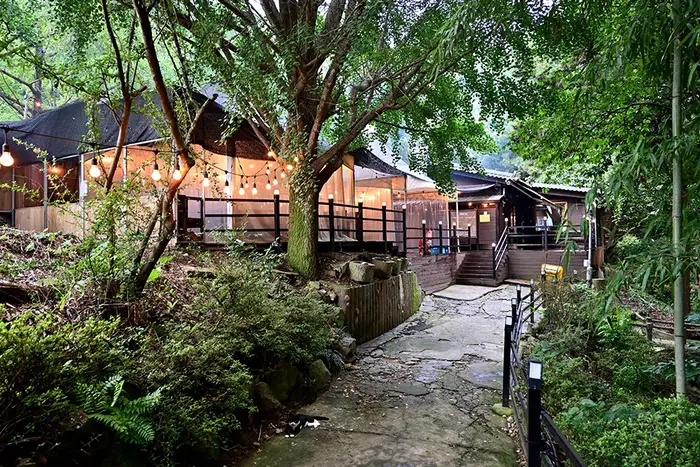
Okjeong Garden is a charcoal-grilled chicken specialty restaurant located in Hwangnyong-myeon, Jangseong-gun, Jeollanam-do. Nestled deep in the mountains, it offers fresh air and scenic views. Its signature menu, the Luxury Charcoal-Grilled Dakgalbi Set, includes pre-grilled chicken ribs, mushrooms, shrimp, webfoot octopus, and scallops, alongside chicken porridge and kalguksu (noodle soup) as part of the standard course. Guests can enjoy both sweet soy sauce-marinated dakgalbi and spicy seasoned dakgalbi at once. It is a great dining option for group gatherings, birthdays, and anniversaries.\nWith tables available both indoors and outdoors, visitors can choose according to their preference. The tender chicken meat makes it enjoyable for both children and the elderly without burden. Since the meat is grilled directly over charcoal, it naturally absorbs a delightful smoky flavor. Nearby attractions such as Hong Gil-dong Theme Park, Pilamseowon Confucian Academy, and Yowoljeongwonlim Forest make it easy to sightsee after a meal.MoreLess
- 2
Pilamseowon Confucian Academy
필암서원
Pilamseowon was established in 1590 by disciples of Haseo Kim In-hu (1510–1560) and local Confucian scholars of the Honam region. In 1786, Goam Yang Ja-jing (1523–1594), a disciple and son-in-law of Haseo, was also enshrined here. Notably, Pilamseowon received a royal plaque inscribed with "Pilam" in 1659, and it stands as a representative academy of the local seonbi (Confucian scholar) culture, especially given that Haseo Kim In-hu is the only Honam scholar enshrined in the National Confucian Shrine (Munmyo). Situated on flat land with the modest Mt. Yuminsan embracing it from behind, Pilamseowon well preserves the fundamental layout of Joseon-era Confucian academies, comprising ceremonial spaces for ancestral rites, educational and study areas, resting areas, and book storage facilities. In particular, the hanging board calligraphy of Hwagyeonnu Pavilion was written personally by Uam Song Si-yeol. In addition to preserving its historic scale, Pilamseowon retains over 60 valuable materials, including ancient documents designated as Treasures (such as slave registers, rosters of academy directors, rosters of executive staff, registers of students, record books of homage, and academy accounting records), as well as the ink painting of bamboo (Mukjukdo) and Haseo's calligraphy bestowed by King Injong. When Daewongun issued the Seowon Abolition Decree in 1868, reducing academies nationwide to only 47, Pilamseowon was among the few spared from demolition, and it also survived unharmed through the Japanese colonial period and the Korean War.MoreLess
- 3
Jangseong Hwangnyonggang Autumn Flower Festival
장성 황룡강 가을꽃축제
Every October, over one billion autumn flowers—including sulfur cosmos, pink muhly, globe amaranth, common zinnia, chrysanthemums, and sunflowers—bloom across an area of approximately 165,000 square meters along the Hwangnyonggang River. With large-scale themed gardens established, numerous visitors come to stroll along the 4km flower river and admire the beautiful Hwangnyonggang River.MoreLess
- 4
Ladybugs Jangseong
레이디벅스 장성
Cooked directly by a hotel chef, this restaurant operates on the principle of using all fresh ingredients on the same day. It is a stylish building featuring a yellow-toned exterior. The café's interior is spacious with wide table spacing, allowing guests to converse comfortably without minding others. It is ideal for visits with friends, couples, and families, as well as with children. Outside the building, there is a garden and outdoor seating, offering a healing time amidst rural views. A wide variety of meals such as pasta and risotto, along with beverages like coffee, are available, allowing visitors to enjoy both dining and dessert in one place. Located near Jangseong Dam and Hwangnyonggang Ecological Park, it is convenient for combined sightseeing.MoreLess

- 5
Hwangnyonggang River
황룡강
The Hwangnyonggang River flows from Jangseong through Imgok, passes between Yongjinsan Mountain and Eodeungsan Mountain in Gwangsan, flows south of Eodeungsan Mountain, passes Songjeong, and continues on to Naju. Hwangnyong Village is said to possess natural advantages as a stronghold. The legend that a dragon lived in Bonghwangyeon Pool is believed to have originated from referring to the tribal leader who bathed in the deep waters below the stone weir of the Hwangnyonggang River. Accordingly, the origin of the river name Hwangnyonggang likely came from Hwangnyong Village, and the name of Hwangnyong Village was likely derived from the yellow dragon (Hwangnyong) referring to the military ruler who governed this region. The name 'Bonghwangyeon (Pond)' would also have been named in connection with the military commander governing this area, ultimately explaining the river name Hwangnyonggang in connection with Bonghwangyeon.MoreLess
- 6
Munhwagakkotpida (Hanok Cafe Doldam-gil)
문화가꽃피다(한옥카페 돌담길)
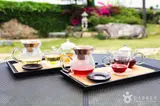
Operated by 'Munhwagakkotpida,' a resident community enterprise in Jangseong, Jeollanam-do, Doldam-gil is a hanok cafe and traditional cultural craft experience space. Recently, as word spread across social media that visitors can enjoy both a hanok and traditional culture at the same time, the number of tourists coming to Jangseong has grown significantly. The cafe, filled with the distinctive poetic ambiance of a hanok, is a place where guests can fully savor the charm of Doldam-gil. Sweet red bean latte and red bean beetroot tea are its signature menu items. In the sarangchae (detached guest quarters), craft programs such as bojagi wrapping craft and traditional knot-making are offered. Both are easy to learn and highly practical in daily life, making them very popular. 'Munhwagakkotpida' plans to carry out more active programs so that everyone from various walks of life—including career-interrupted women, marriage immigrant women, and children from multicultural families—can come together and make a colorful and rich culture blossom, just like its name suggests.MoreLess
- 7
Jangseongho Waterside Park
장성호수변공원
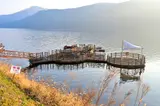
Jangseongho Lake is an artificial lake built for agricultural water supply and flood control. Selected by the Korea Tourism Organization as one of Korea's representative walking trails, Jangseongho Waterside Park is beloved by many as a great place for strolling throughout all four seasons. Each season offers unforgettable joy: blooming flowering trees in spring, refreshing lakeside strolls in summer, a feast of autumn foliage, and snowy winter landscapes. Climbing the stairs from the parking lot opens up a vast panoramic view along with the magnificent vista of Jangseongho Lake, and as you walk entranced by the lake's beauty, you will soon arrive at the Yellow Suspension Bridge. When the beautiful scenery embroiders the gently tranquil waters of Jangseongho Lake, it feels like gazing at a traditional ink wash painting, ensuring a worthwhile visit no matter the season.MoreLess
- 8Baegyangsa Temple
백양사
Located within Naejangsan National Park, Baegyangsa Temple is said to have been founded during the reign of King Mu of the Baekje Kingdom (632). Set against the backdrop of giant rock cliffs with clear, cold valley streams flowing on either side, its scenery is exceptionally magnificent. It displays ever-changing beautiful landscapes throughout the year, including vibrant autumn leaves. Daeungjeon Hall, Geungnakbojeon Hall, and Sacheonwangmun Gate are designated as local cultural heritage items, while the Stupa of Master Soyo is designated as a Treasure. Passing through a forest trail lined with oriental white oaks and maple trees to enter Baegyangsa Temple, Ssanggyeru Pavilion is the first sight to catch the eye. With a pond created by damming the valley in front and rugged rocky cliffs standing like a folding screen behind, the image of Ssanggyeru reflected on the water resembles a painting. Passing Ssanggyeru leads to Daeungjeon Hall, Geungnakbojeon Hall, and the stupas. Originally named Baekamsa Temple upon its founding, its name was changed to Jeongtosa Temple during the Goryeo Dynasty. During the reign of King Seonjo of the Joseon Dynasty, it is said that whenever Master Hwanyang read Buddhist scriptures, a white sheep came to listen to his sermons, leading to the name Baegyangsa (White Sheep Temple). Well-known as a center for Seon (Zen) meditation, it has produced many high monks who led the Buddhist community. In modern times alone, it counts five high monks, including Hwaneung, the second Gyojeong (Supreme Patriarch) during the Japanese colonial era; Man-am, the first Supreme Patriarch of the Jogye Order; Mukdam, the first Supreme Patriarch of the Taego Order; and Supreme Patriarch Seowongdang. Climbing toward the hiking trails reveals numerous hermitages, among which Yaksaam, Unmunam, and Cheonjinam offer outstanding scenery. Yaksaam Hermitage, a 20-minute walk from the temple entrance, serves as an observatory providing a panoramic view of Baegyangsa Temple nestled among deep mountains. Within the temple grounds and across the valley, a grove of 5,000 nutmeg yew trees (subtropical evergreen trees) is designated as a Natural Monument. The dense, centuries-old oriental white oak trees along the 0.5km path from the parking lot to the temple, along with over 3,000 painted maples and the nutmeg yew forest, provide an ideal setting for forest bathing.MoreLess
Source: Korea Tourism Organization (TourAPI) · Machine-translated