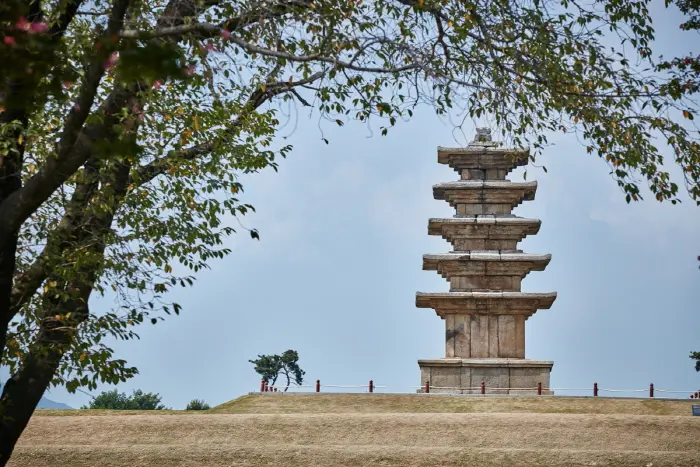
Iksan Outing Course Enjoyable for Everyone
11 stops
If you are planning a 2-day, 1-night trip to Iksan, here is a great recommended course. Enjoy a fulfilling journey from the Iksan National Museum and Wanggung-ri Historic Site, where you can discover the history of Baekje, to the Yongan Ecological Wetland, where you can immerse yourself in nature, and the Iksan Prison Set, where you can enjoy a unique experience.
Along the way
- 1
Jewelry Museum
보석박물관
Established to promote Iksan, a city famous for its Baekje cultural heritage and jewelry manufacturing, this world-class jewelry museum is located inside the Wanggung Jewelry Theme Tourist Site. Nearby are a fossil exhibition hall and the 'Jewel Palace,' a jewelry exhibition and sales venue where visitors can encounter countless jewelry pieces.MoreLess
- 2
Bonhyang
본향
When thinking of Iksan, Seodong and Princess Seonhwa come to mind, and Seodong is closely associated with Chinese yams (ma). Using this yam, Bonhyang in Iksan offers a fusion Korean full-course meal that can be enjoyed by all ages, from children to adults, located right next to the Wanggung Jewelry Theme Tourist Site. The Seodong Seonhwa Jeongsik course includes yam yakbap (sweet rice), yam pizza, fried ginseng, cold chicken noodles, braised half-dried pollack, salad, bulgogi, bamboo shoot rolls, freshwater shrimp soup, perilla seed soup, oyster sauce japchae, and various side dishes. Ddeok-galbi (grilled short rib patties), lobster, pizza, yukjeon (pan-fried battered beef), wild-cultivated ginseng, and yam yakbap are also available as à la carte options. It is a great Korean restaurant to visit when you want to share a wholesome, delicious, and hearty meal with your loved ones. With a diverse menu designed to cater to everyone's tastes, it offers a wide variety of well-loved dishes.MoreLess
- 3
Wanggung-ri Historic Site, Iksan
익산 왕궁리유적
The Wanggung-ri Historic Site is located in Wanggung-myeon, Iksan-si, Jeonbuk. It was a royal palace serving as the political, economic, and cultural center during the management of Iksan in the late Baekje period, understood as a dual capital alongside Sabi (Buyeo). The Baekje royal palace was built on a low hill at the edge of a ridge originating from Yonghwasan Mountain. According to full-scale excavation surveys conducted since 1989, it is a complex historic site where a royal palace was established in the late Baekje period and used for a certain period, after which the major palace buildings were demolished and a temple featuring a pagoda, main hall, and lecture hall was built. The royal palace at the Wanggung-ri Historic Site is the only site where the outer walls and internal structures of a Baekje royal palace have been confirmed, showing the systematic and planned layout of a Baekje palace for the first time. The outer perimeter of the palace is surrounded by a 3-meter-wide rectangular wall measuring 245 meters east-west and 490 meters north-south. The southern half of the palace was divided and arranged with four east-west stone retaining walls, separating buildings used for major national ceremonies and rituals, the king's governance, and the living quarters of the king and the royal family. The northern half housed gardens and rear grounds for the king's relaxation, while the northwest area held workshop sites producing gold and glass, the most precious items of the Baekje period. This layout—placing spaces for rituals, governance, and daily life in the south and gardens in the north—is also seen in ancient Chinese and Japanese palaces, confirming cultural exchanges among ancient East Asian countries at the time. After being used as a palace for a certain period, it transitioned into a temple that remained until the late Unified Silla period, and in the Goryeo period, temple-related remains have been confirmed in parts of the southeastern sector. [Source: Baekje Royal Palace Museum]MoreLess
- 4Iksan National Museum
국립익산박물관
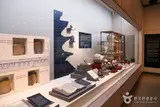
Excavation surveys of the Iksan Mireuksaji Temple Site were conducted over a long period from 1980 to 1996 by the National Research Institute of Cultural Heritage. During this process, the temple's scale and layout during the Baekje period were confirmed, and around 19,000 cultural artifacts spanning from its founding to the Joseon period were recovered. Afterward, in order to efficiently preserve, exhibit, and utilize the cultural heritage excavated from Mireuksaji for educational purposes, Jeollabuk-do took the lead in opening the Mireuksaji Relics Exhibition Hall in 1997. Meanwhile, in January 2009, a large quantity of sarira reliquaries was excavated during the dismantling and restoration of the Stone Pagoda of Mireuksaji Temple Site (National Treasure), and in July 2015, the Mireuksaji Temple Site and Wanggung-ri Historic Site were inscribed as UNESCO World Heritage Sites. Consequently, the need for systematic management and utilization of the cultural heritage excavated from Mireuksaji and the broader Iksan area grew, leading the existing provincial exhibition hall to be elevated to a national museum at the end of December 2015. Located southwest of Mireuksaji, the Iksan National Museum is an on-site museum situated within a historical site, offering diverse exhibitions and educational programs. In addition, it continuously pursues exhibition improvement projects to ensure a pleasant viewing experience for visitors and strives to accommodate visitors' convenience based on the public disclosure of its collections and information sharing. Source: Iksan National MuseumMoreLess
- 5
Wonjo Mireuksan Sundubu
원조미륵산순두부
Located near the Stone Pagoda of Mireuksaji Temple Site in Iksan, this traditional soft tofu restaurant is a year-round gourmet spot visited by both family travelers and locals. Guests can enjoy freshly made domestic raw tofu or soft tofu produced daily, along with various seasonal basic side dishes. In particular, the soft tofu stew features short-neck clams, boasting a refreshing and mildly spicy flavor. The seafood pajeon (scallion pancake) loaded with seafood and the firm seasoned acorn jelly salad (dotorimuk) are also great accompaniments. Injeolmi (rice cakes) are served with the meal, allowing you to enjoy a snack while waiting for the tofu dishes.MoreLess

- 6
Mireuksaji Temple Site, Iksan
익산 미륵사지
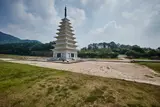
The founding of Mireuksa, the largest temple of Baekje, is recorded in the Samguk Yusa (Memorabilia of the Three Kingdoms). King Mu (the 30th King of Baekje, r. 600–641), known as Seodong before ascending the throne after marrying Princess Seonhwa of Silla, was traveling with the princess to visit Monk Jimyeong at Sajasaji Temple on Yonghwasan Mountain (now Mireuksan Mountain). At that moment, the Maitreya Triad suddenly emerged from a pond, which inspired the founding of Mireuksa Temple. It is said that halls (golden halls), pagodas, and corridors were built for each of the three statues. Alternatively, there is a view that the founding of Mireuksa had political purposes in addition to the faith of King Mu and Princess Seonhwa; namely, Mireuksa might have been established here in Geumma, the center of the Mahan territory, to expand Baekje's national power. Building Mireuksa, the largest temple of Baekje, would not only have demonstrated the pinnacle of Baekje's architectural and craft culture at the time, but as indicated in the Samguk Yusa records that King Jinpyeong of Silla sent artisans to assist, it likely brought together the advanced technologies of the Three Kingdoms. It is evident that Mireuksa served as the center of Maitreya faith in Baekje Buddhism, contrasting with Hwangnyongsa, the largest temple of Silla, which was the center of Avatamsaka (Hwaeom) thought. Unlike Hwangnyongsa's layout of one pagoda and three golden halls, Mireuksa features a layout of three pagodas and three golden halls. While Hwangnyongsa embodied Hwaeom ideology centered around the king, Mireuksa realized Maitreya thought in its layout. Mireuksa is rooted in the Maitreya belief of guiding even the general public to the Dragon Flower Tree realm (Yonghwa world). * Other Relics of Mireuksaji: Stone Pagoda and Flagpole Supports * There are two notable relics at Mireuksaji that add to its attractions: the Stone Pagoda of Mireuksaji Temple Site and the Mireuksaji Flagpole Supports. The Stone Pagoda of Mireuksaji Temple Site is a National Treasure standing at a current height of 14.24 meters, making it the oldest and largest stone pagoda in Korea. Most of the pagoda had collapsed, leaving only up to the 6th story on the northeast corner, though it is presumed to have originally had nine stories. Through excavations conducted by the Mahan-Baekje Culture Research Institute of Wonkwang University in 1974–1975, it was revealed that the eastern pagoda was a stone pagoda rather than a wooden pagoda, confirming the layout of twin east-west pagodas. The east pagoda was later confirmed to have had nine stories through further excavations and was restored as a 9-story pagoda (height 27.67 meters) in 1993. This stone pagoda is regarded as the finest in Korea because its style faithfully reproduces the wooden pagoda architecture popular prior to it using stone instead of wood. Flagpole supports refer to stone pillars erected on the left and right sides of a flagpole to support it. The Flagpole Supports at Mireuksaji Temple Site are designated as a Treasure, measuring 395 cm in height, and are estimated to have been built before the mid-Unified Silla period. Two supports stand facing each other from east to west with a gap of about 90 meters south of the stone pagoda.MoreLess
- 7
Westernlife Hotel
웨스턴라이프호텔
Westernlife Hotel is built on a site of around 23,000 m² with 2 basement levels and 12 floors above ground, operating modern, stylish guest rooms, banquet halls, and two large convention halls, as well as a spacious parking facility accommodating about 500 vehicles. Located in Iksan—a city of two thousand years of history where culture and history coexist, the capital of Baekje, and the mecca of jewelry—it is a premium business hotel offering friendly and attentive service as the city's first and finest hotel.MoreLess
- 8
Yongan Ecological Wetland
용안생태습지
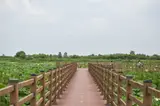
The Geumgang River Yongan District Ecological Stream is a massive 670,000 m² ecological wetland created along the Geumgang River in Nanpo-ri, Yongan-myeon, as part of the Four Major Rivers Project. Neatly built wooden decks allow for walking and cycling tours, and the park features Tree Frog Plaza, Beetle Plaza, Dragonfly Plaza, Butterfly Plaza, a bird observatory, an outdoor learning center, a plant observation garden, observation decks, and a reed experience zone. The ecological wetland of the Geumgang River serves as a haven for lotus flowers in summer, cosmos and silver grass in autumn, and migratory birds in winter. Next to Yongan Ecological Wetland lies the nation's largest model silver grass zone spanning roughly 1.8 million m², where the Geumgang Silver Grass Festival is held every autumn. It is a true healing travel destination where you can enjoy relaxing rest amid lush greenery.MoreLess
- 9Iksan Prison Set
익산교도소세트장
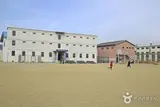
This is the only prison film set in Korea, built on the site of the former Namseong Branch of Seongdang Elementary School in Wacho-ri, Seongdang-myeon. Over 200 movies and dramas, including Holiday, IRIS, Legendary Witches, Miracle in Cell No. 7, and Inside Men, were filmed here. As you enter the set, posters of the works filmed here are displayed, proving its reputation as a 'magic box where movies are born.' Additionally, the natural grass on the playground is widely loved as a resting spot for tourists.MoreLess
- 10
Jinmi Sikdang
진미식당
[Selected as a 'Centennial Store' in 2018 by the Ministry of SMEs and Startups] Starting at Iksan Hwangdeung Market in 1931 and continuing to this day, Jinmi Sikdang is a restaurant specializing in Hwangdeung bibimbap. Its signature menus include yukhoe bibimbap—made by mixing each bowl individually with rice rinsed and warmed in flavorful broth, house-made fermented sauce, and fresh raw beef delivered daily—and seonjitguk (ox blood soup) cooked with minimal artificial seasonings to deliver rich flavor without any fishy smell. Sundaegukbap (blood sausage soup) and sundae are also popular items. Recognized as a Good Price Store, local traditional restaurant, and Iksan-si 'Generational Heritage Restaurant' (Daemullim Matjip), and featured in various media outlets, it is a famous restaurant visited by diners from all over the country.MoreLess

- 11
Agape Garden
아가페정원
Agape Garden is the 4th private garden registered in Jeollabuk-do, featuring 1,416 trees across 17 species including metasequoias, Korean white pines, and weeping Japanese maples. In 1970, the late Father Seo Jeong-su established Agape Home for the Aged, a senior welfare facility, and created an eco-friendly tree garden to ensure a healthy and happy life for the elderly residents. To share this evergreen forest, well-maintained like an arboretum, with citizens for relaxation and emotional enrichment, it was registered as a private garden in March 2021 and reborn as a civic resting space through maintenance projects. Each season brings a feast of beautiful blossoms such as daffodils, tulips, magnolias, and poppies. The walking trails framed like hedges by soaring metasequoia trees are impressive, and walking along the forest paths lined with ornamental trees such as junipers, pines, five-needle pines, weeping maples, and crape myrtles allows you to enjoy fresh natural air combined with the surrounding scenery, evoking a deep sense of nostalgia.MoreLess
Source: Korea Tourism Organization (TourAPI) · Machine-translated