1-Night, 2-Day Autumn Travel Course in Yeoncheon near Seoul
11 stops · Approx. 2 hours 55 minutes
A travel course in Yeoncheon, a security tourism destination! Experience Korean history indirectly at Typhoon Observatory and Yeongang Gallery, and admire the beauty of autumn flowers as you pass through Imjingang River Kochia Park and the Imjingang Columnar Joints. After visiting Baekhak Jayuro Resort, Horogoru Fortress, and Yeoncheon Gorangpogu History Park, stop by the main branch of Manghyang Bibim Guksu and C'est la vie Hanok Cafe, then conclude your Yeoncheon trip by relaxing at Jaein Falls.
- Duration
- Approx. 2 hours 55 minutes
- Distance
- 133km
Along the way
- 1Typhoon Observatory
태풍전망대
Typhoon Observatory was built on December 3, 1991, by the Invincible Typhoon Division. It is located on Suribong, the highest peak of Bikkisan Mountain in Jung-myeon, about 65 km from Seoul and 140 km from Pyeongyang. The observatory features a church, a Catholic church, a statue of the Virgin Mary, a Buddhist hall, and a bell tower where service members can hold religious gatherings. It also houses the Manghyangbi Monument for displaced persons, a Korean War memorial monument, and a monument honoring boy tank soldiers who fought in the Korean War.MoreLess
- 2
Yeongang Gallery
연강갤러리
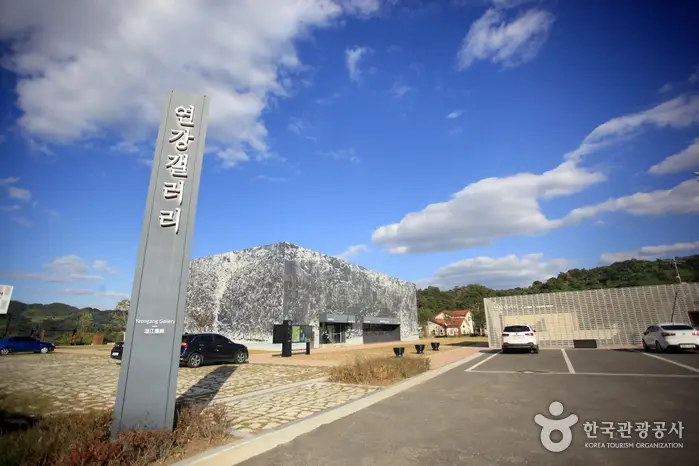
Yeongang Gallery is a place where you can enjoy the quiet rural scenery and the beautiful landscapes of the Imjingang and Hantangang rivers, elevated into art. It is the first art space built inside the Civilian Control Zone since the armistice, serving as a complex space where the ecology of Yeoncheon—fully preserved under the geopolitical conditions of a border area—meets contemporary culture and art.MoreLess
- 3
Imjingang River Kochia Park
임진강댑싸리공원
Imjingang River Kochia Park was created in front of the stone-mound tomb in Samgot-ri, Yeoncheon, covering an area of about 30,000㎡ planted with around 20,000 kochia (summer cypress) bushes. In addition to kochia, visitors can also see a variety of flowers such as sulfur cosmos, chrysanthemums, zinnia, globe amaranth, marigolds, Madagascar periwinkle, and canna. The kochia bushes begin to turn reddish from late August and are dyed in shades of pink, red, and orange in early September, creating an exotic atmosphere.MoreLess
- 4
Imjingang Columnar Joints (Hantangang River National Geopark)
임진강 주상절리 (한탄강 국가지질공원)
This is the only place in Korea where beautiful vertical columnar joints, looking like a folding screen, stretch for several kilometers heading north along the Imjingang River from the confluence where the Imjingang and Hantangang rivers meet. In autumn, the cliffs of the columnar joints are dyed with ivy and maple leaf mukdenia, and they appear even redder in the sunset, earning them the nickname Jeokbyeok (Red Cliff).MoreLess
- 5
Seogane Hanu Maeul
서가네한우마을
Seogane Hanu Maeul is a Korean beef specialty restaurant located in Jeongok-eup, Yeoncheon-gun. It offers Korean beef prime rib eye, Korean beef sirloin, and assorted Korean beef cuts as its main menu items, and its old-fashioned bulgogi is famous among meal options. It features a spacious parking lot and group seating, making it suitable for group gatherings.MoreLess
- 6
Baekhak Jayuro Resort
백학자유로리조트
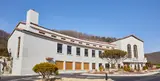
This comprehensive healing resort allows guests to enjoy clean nature and is equipped with amenities such as hiking trails, a garden, a convenience store, a karaoke room, an arboretum trail, a kids' water garden, the Eunhasu Camping Site, a convention center, and screen golf. It features 145 guest rooms across 5 to 6 room types accommodating 2 to 6 people, and rooms are offered in package deals according to promotions along with various discount events.MoreLess
- 7
Horogoru Fortress, Yeoncheon
연천 호로고루
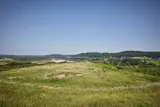
Horogoru is situated at an important transit point connecting Gaeseong and Seoul, built on top of a basalt cliff formed by a tributary flowing from Wondang-ri into the Imjingang River. Regarding the etymology of Horogoru, one theory suggests it was named because the surrounding terrain resembles a bottle gourd or calabash, while another suggests it comes from combining 'hol' (horo), meaning 'town,' and 'guru,' meaning 'fortress.' The entire perimeter of the fortress wall is 401 meters (161.9 m south wall, 146 m north wall, 93.1 m east wall), covering an interior area of 606㎡ atop a basalt cliff about 28 meters high. The east wall demonstrates a construction technique that skillfully combines the advantages of both stone and earthen fortifications by repeatedly compacting soil and building high stone walls on top.MoreLess
- 8
Yeoncheon Gorangpogu History Park
연천 고랑포구 역사공원
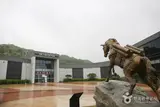
Since the Three Kingdoms period, this ferry port served as a central hub for the exchange of goods along the Imjingang River as a strategic stronghold. In the 1930s, through trade between Gaeseong and Hanseong (Seoul), it flourished to the extent that a branch of Hwashin Department Store opened, but it fell into decline following the Korean War and national division. Yeoncheon Gorangpogu History Park vividly embodies and reproduces the history and geographical characteristics of Gorangpogu. Visitors can experience realistic history and security education through virtual and augmented reality, and the park consists of a children's play area, multipurpose spaces (including dining areas), and a seminar room.MoreLess
- 9
Manghyang Bibim Guksu Main Branch
망향비빔국수 본점
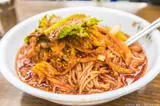
Located near Jeongok Station, Manghyang Bibim Guksu maintains a 50-year tradition using over 10 varieties of fresh vegetables and bedrock water, serving medium-thick noodles rather than the typical thin somyeon. The main branch of Manghyang Bibim Guksu is also famous as a filming location for the movie 'Steel Rain,' and nearby attractions include Jaein Falls and the Hantangang Flood Control Dam.MoreLess
- 10
C'est la vie Hanok Cafe
세라비한옥카페
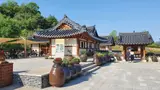
C'est la vie Hanok Cafe is a stylish hanok cafe located on the border between Gunnam-myeon and Jung-myeon in Yeoncheon-gun. It is located inside the Yeoncheon Miracle Town, a 100,000㎡ area featuring ecological wetlands, bunker houses, and a swimming pool. After passing the grand entrance lined with roughly 1,800 jangdok (earthenware jars) and climbing the long flight of stairs, you step through an imposing raised gate into the antique hanok. You can enjoy drinks and desserts in the front yard or inside a hanok room, both filled with a quiet and tranquil atmosphere and traditional hanok elegance. The foot bath room in the yard is free to use, and traditional folk games are also available to try. It is an ideal spot to relax and heal while staying in Miracle Town.MoreLess
- 11
Jaein Falls (Hantangang River National Geopark)
재인폭포 (한탄강 국가지질공원)
At Jaein Falls, a small stream flowing down from Jijangbong Peak to the north cascades over an approximately 18-meter-high basalt columnar joint cliff, creating a truly magnificent sight. The area around Jaein Falls is also known as a habitat for natural monument Manchurian trout (Eumeces/Pseudopungtungia) and the endangered species Silene capitata, and a beautiful love story associated with the waterfall's name has been passed down through generations.MoreLess
Source: Korea Tourism Organization (TourAPI) · Machine-translated