A 2-Day, 1-Night Travel Course to Explore Tranquil Yeonggwang
11 stops · Approx. 1 hour 34 minutes
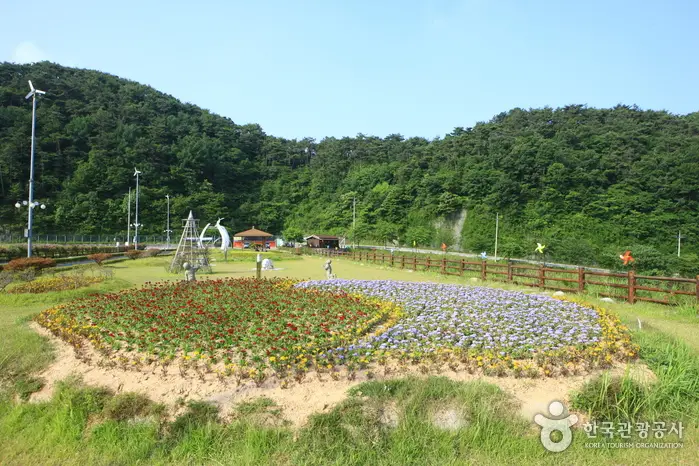
A travel course to enjoy in Yeonggwang, a city where pristine nature and a thousand years of history are alive and breathing! After passing Halmae Boribap and Bulgab Reservoir Waterside Park, experience culture at Bulgabdahyang, and take a drive along Baeksu Coastal Road while admiring the beautiful sunset! Immerse yourself in natural beauty at Beopseongpo Port, Supjaengi Garden, and Supjaengi Flower Hill, and continue along the route past the Birthplace of Baekje Buddhism and Wolbongjae to Mulmusan Happy Forest Barefoot Red Clay Trail and Yeonggwanghyanggyo Local Confucian School, enjoying delicious food, hands-on experiences, and healing in nature.
- Duration
- Approx. 1 hour 34 minutes
- Distance
- 68km
Along the way
- 1
Halmae Boribap
할매보리밥
Located in Bulgab-myeon, Yeonggwang-gun, Jeollanam-do, Halmae Boribap is a Korean restaurant offering meals such as barley rice (boribap), lacquer chicken (otdak), herbal baeksuk, and seafood scallion pancake (haemul pajeon). Located near the Bulgapsa Tourist Complex, it offers great accessibility to tourist sites. It is designated as a Safe Restaurant by the Ministry of Agriculture, Food and Rural Affairs.MoreLess
- 2
Bulgab Reservoir Waterside Park
불갑저수지 수변공원
This waterside park was developed as a tourist attraction around Bulgab Reservoir, the largest reservoir in the Gwangju and Jeollanam-do region. Eco-friendly wind-powered streetlights along the waterside road provide dynamic sights for visitors. Along a 2.8 km stretch of the waterside road, streetlights powered by wind turbines showcase vibrant colorful lighting at night and the dynamic motion of propellers by day, highlighting the beauty of Yeonggwang, the city of light.MoreLess
- 3
Bulgabdahyang
불갑다향
Bulgabdahyang develops rural education, etiquette programs, and tea ceremony experiences through the Dure Tourism initiative. Kang Hyun-sik, the representative of Bulgabdahyang, majored in industrial ceramic arts at Kunsan National University and is a successor to Baek San Kim Jeong-ok, a National Intangible Cultural Heritage holder, actively working as a ceramic artist in Bulgab-myeon, Yeonggwang-gun. Around the Bulgabdahyang workshop are major tourist attractions of Yeonggwang-gun, including Bulgapsa Temple, Sangsahwa Blooming Village, and Bulgab Waterside Park.MoreLess
- 4
Baeksu Coastal Road
백수해안도로
A 16.8 km coastal road stretching from Gillyong-ri, Baeksu-eup, Yeonggwang-gun to Seokgumi Village in Baegam-ri, it is a representative driving course on the west coast where uniquely shaped rocks, expansive tidal flats, and fiery sunsets come together to create breathtaking scenery.MoreLess
- 5
Beopseongpo Port
법성포
Beopseong was known as a great place to live—not only because open fish markets were held when abundant yellow corvina was caught in the Chilsan Sea, but also because grain warehouses for 12 counties were located here—forming a larger town than Yeonggwang-eup. Having burned down through numerous ordeals such as the Donghak Peasant Revolution and the Japanese Invasions of Korea (Imjin War), only traces of the fortress, the armory roof by the dock, and two water wells remain. In 1957, local residents restored Wollyangdae and Jewoljeong Pavilion, but they were lost to fire in 1974, leaving only foundation stones today. During the Joseon Dynasty, Beopseong was a key strategic point for naval forces, water transport, and tax collection, holding rich historical significance.MoreLess
- 6
Birthplace of Baekje Buddhism
백제불교최초도래지
According to oral tradition, Baekje Buddhism began when the prominent Indian monk 'Venerable Marananta' arrived at Beopseongpo Port in Yeonggwang to spread Buddhist teachings and founded Bulgapsa Temple. In 1998, academic research by Dongguk University confirmed Yeonggwang as the first arrival site of Baekje Buddhism. Jwau-du in Beopseongpo is where the Indian monk Marananta first set foot in 384 AD to introduce Buddhism to Baekje, and the site is currently being developed into a tourist destination to commemorate this.MoreLess
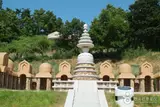
- 7Supjaengi Garden
숲쟁이공원
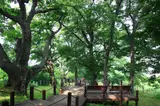
This forest was formed over more than 300 years from zelkova and other trees planted as an extension of Beopseongjin Fortress, built during the reign of King Jungjong of the Joseon Dynasty. It connects to the Birthplace of Baekje Buddhism via Supjaengi Flower Hill. It was selected as one of 'Korea's Beautiful Forests,' and the Beopseongpo Danoje Festival is held here every year. Walking through Supjaengi Garden, the blue sky, the sunlight filtering through the zelkova leaves, and the sound of chirping birds create a warm, delightful ambiance.MoreLess
- 8Supjaengi Flower Hill
숲쟁이꽃동산
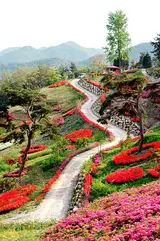
Located on the way from Supjaengi Garden to the Birthplace of Baekje Buddhism, this flower hill features walking trails where lush green tree groves and colorful flowers harmonize, offering lovely views of Beopseongpo. In 2022, a lance-leaved tickseed colony was newly established, dyeing the fields yellow in June. With a pavilion providing panoramic views of Beopseongpo, it is recommended as a relaxing destination to visit with family.MoreLess
- 9
Wolbongjae
월봉재
Located in Beopseong-myeon, Yeonggwang-gun, Jeollanam-do, Wolbongjae is a popular local restaurant famous for its bori gulbi (barley-aged dried yellow corvina) set meal. It serves bori gulbi set meals, soy sauce marinated crab (ganjang gejang) set meals, and more. Situated on Beopseongpo Gulbi Street, visitors can also purchase dried yellow corvina directly on site.MoreLess
- 10
Mulmusan Happy Forest Barefoot Red Clay Trail
물무산행복숲 맨발황톳길
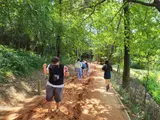
Selected as an Untact Tourist Destination by the Korea Tourism Organization, Mulmusan Happy Forest is a comprehensive forest welfare park equipped with forest walking trails, barefoot red clay paths, a children's forest experience center, a water play area, a cypress meditation center, a pine forest, an art garden, a family meditation center, a sky park, hiking paths, and exercise equipment. The barefoot red clay trail consists of both wet and dry red clay paths, allowing visitors to choose between walking on wet or dry red clay barefoot according to preference.MoreLess
- 11
Yeonggwanghyanggyo Local Confucian School
영광향교
Founded during the reign of King Gongmin of Goryeo, it was established to enshrine and pay tribute to ancestral tablets of prominent Confucian sages and to educate and cultivate local citizens. During the Joseon Dynasty, it received land, books, and servants from the state, and instructors taught a quota of 30 students; however, its educational function ceased following the implementation of the new educational system after the Gabo Reform. Designated as a Tangible Cultural Heritage of Jeollanam-do, it is managed by one Jeongyo (head) and several Jang-ui (staff members).MoreLess
Source: Korea Tourism Organization (TourAPI) · Machine-translated