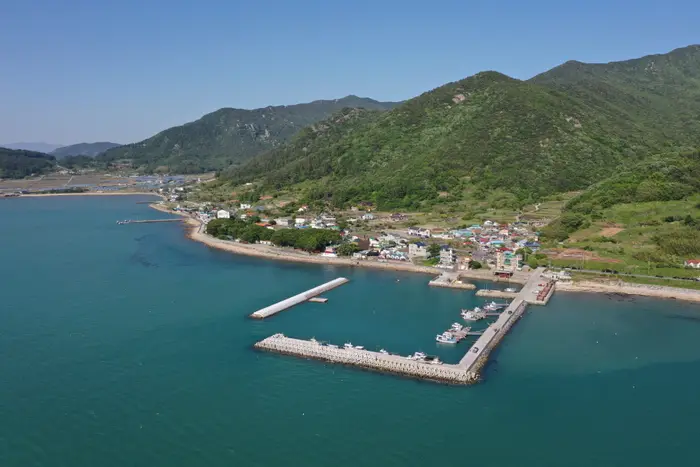
Namparang Trail (Namhae Section)
8 stops · 3 nights or more
The Namparang Trail is the southern coastal section of the Korea Dulle-gil trail, which connects the east, west, south, and north of Korea. Spanning 1,470 km across 90 courses, it is a long-distance walking trail that begins at Oryukdo Island in Busan and extends all the way to Ttangkkeut (Land's End) Village in Haenam. Enjoy the Namhae section of the Namparang Trail through the three themes below: Theme 1 (Feeling Sweat and Tears): Daraengi Village and Woncheonhang Port. Theme 2 (Comfort and Healing): Boriam Hermitage, Cypress Natural Recreation Forest, Jukbangnyeom (primitive bamboo weirs), and Jangpohang Port embracing an island within an island. Theme 3 (Retracing the Final Path of Admiral Yi Sun-sin): Gwaneumpo and Noryang Strait.
- Duration
- 3 nights or more
- Distance
- 49.6km
Along the way
- 1Gacheon Daraengi Village
가천 다랭이마을
Gacheon Daraengi Village in Namhae is nestled by the sea yet has not a single boat. This is because the village sits directly against steep coastal cliffs. Unable to build even a pier, let alone a breakwater, the villagers began cultivating the barren terrain for farming. That is how the terraced paddy fields (Scenic Site No. 15), crafted by stacking stone walls layer upon layer, came to be. An experience at Gacheon Daraengi Village begins with a stroll through these terraced fields, which vividly reflect the tenacious spirit of the Namhae people. Although the paddies are irregularly shaped, pleasant walking trails and observation decks are established between them for comfortable sightseeing. It takes just over an hour to tour the village highlights, including the famous Am-su (Male and Female) Rocks (Gyeongnam Folk Cultural Heritage No. 13), Rice Tomb (Bap-mudeom), suspension bridge, and pebble beach. While exploring, visitors can also hear charming and fascinating stories about the village's origins from local resident guides.MoreLess
- 2
Woncheonhang Port
원천항
Designated as a local fishing port, Woncheonhang Port is situated at the foot of Geumsan Mountain, a representative tourist attraction in Namhae-gun. It serves as the starting point for Course 10 (Aenggangdasup-gil) of the Namhae Barae-gil trail, and the Woncheon Breakwater inside the port is a famous fishing spot. It is a port offering a panoramic view of the curved bay known as "Aenggangman," named so because the sound of its breaking waves is said to resemble the chirping of a parrot. Nearby attractions include the terraced paddy fields of Gacheon Daraengi Village and Geumsan Boriam Hermitage. The port is also lined with raw fish restaurants and eateries serving delicious myeolchi ssambap (anchovy wrap set).MoreLess
- 3Namhae Geumsan Boriam Hermitage
금산 보리암(남해)
Known as Sogeumgang or Namhae Geumgang, Geumsan Mountain (704m) is the most prominent scenic mountain in the southern region. As the only mountainous park in Hallyeohaesang National Park, it features 38 spectacular views covered with bizarre and uniquely shaped rocks. Great Monk Wonhyo of Silla built Bogwangsa Temple on this mountain and called it Bogwangsan. Later, King Taejo Yi Seong-gye of Joseon held a 100-day prayer here in his youth before founding the Joseon Dynasty; in eternal gratitude for the sacred mountain, he renamed it Geumsan ("Silk Mountain"), signifying wrapping the entire mountain in silk. At its peak stands Boriam Hermitage, one of the three major prayer sanctuaries in Korea alongside Bomunsa Temple on Ganghwado Island and Hongnyeonam Hermitage of Naksansa Temple. Watching the burning dawn rise over the sea from Geumsan is said to require cultivating three years of virtue, offering an indescribable and majestic sense of ecstasy. [Source: Namhae Culture & Tourism]MoreLess
- 4
Namhae Cypress Natural Recreation Forest
국립 남해편백자연휴양림
Namhae Cypress Natural Recreation Forest is located at the northern edge of Hallyeohaesang National Park near the Namhae Sea, where dense hinoki cypress trees form a lush forest. Driving south with a relaxed mind, as if visiting a distant friend, leads to the Namhaedaegyo Bridge connecting the mainland to Namhae Island. After crossing the bridge, continue along National Route 19, turn left at the Idong-myeon 3-way intersection in Namhae-eup, and drive about 2.5 km to the intersection in front of Samdong Gas Station. Turn right here, drive 4 km to the Bonghwa 3-way intersection, and follow the signposts for "Namhae Cypress Natural Recreation Forest" for another 7 km to arrive at the recreation forest. Opened in 1998, Namhae Cypress Natural Recreation Forest covers an area of 2.27 million ㎡, accommodating a maximum of 1,000 visitors per day (optimally 400). Situated at the eastern foot of Geumsan Mountain (681m above sea level) north of Hallyeohaesang National Park, it offers the dual advantage of forest bathing and enjoying the superb scenery of the Namhae Sea. Walking for about an hour past the entrance while breathing fresh air among the cypress trees leads to an observatory, which showcases a stunning view where the islands of Hallyeohaesang National Park harmonize with Geumsan Mountain. The forest is equipped with recreational and convenience facilities including log cabins, campsites, a forest bathing area, an outdoor classroom, and accommodation facilities. Ascending to Boriam Hermitage on Geumsan Mountain, about 21 km away, allows visitors to trace the footsteps of Great Monk Wonhyo of Silla. Passing through the Ssanghongmun rock cave from Boriam and descending a stone staircase for about an hour leads to the roadside connected to Sangju Beach. Other cultural heritage sites in the area include the historic site of Seopo Kim Man-jung and Chungnyeolsa Shrine. An autumn trip is highly recommended—indulge in forest bathing filled with phytoncides released by the cypress trees, drive to nearby beaches to take in the coastal views, and enjoy fresh raw fish at eateries around Mijo Port or Namhaedaegyo Bridge.MoreLess
- 5
Jangpohang Port
장포항
Jangpohang Port belongs to Jindong-ri, Changseon-myeon, Namhae-gun. Changseon-myeon was originally a small island called Changseondo Island. Today, thanks to connecting bridges, it has become a convenient "island that is no longer an island." It is linked to Jijok Village in Namhae-gun via Changseongyo Bridge, opened in 1980, and was connected to the mainland to the northeast in 2003 through the Samcheonpodaegyo, Neukdodaegyo, and Changseondaegyo Bridges. Jangpohang Port is a quaint harbor located on the easternmost point of Changseondo Island, featuring a breakwater roughly 300 meters long. Only small fishing boats quietly come and go. The red and white lighthouses and the rocky coastal waters around the port are well-known fishing spots. Black sea bream, rockfish, and goldeye rockfish are readily caught along the rocks, so on weekends the port bustles with fishing boats ferrying anglers to prime spots. The port surroundings are always kept clean, well-tended by the local villagers. A golf course operates on the hill behind the port, and walking about 2 km alongside it brings you to Mosanggae Beach.MoreLess
- 6
Changseongyo Bridge and Jukbangnyeom Primitive Fishing Facility
창선교와 원시어업 죽방렴
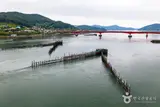
The Jijok Strait begins to surge vigorously twice a day, around noon and midnight. Whenever the tides shift, the current rushing through this narrow channel becomes overwhelmingly fierce. Changseongyo Bridge spans this very strait, connecting Jijok-ri in Changseon-myeon with Jijok-ri in Samdong-myeon. Measuring 438 meters in length and 14.5 meters in width, it was opened on December 20, 1995. The original Changseongyo Bridge was completed on June 5, 1980, but collapsed in 1992, leading to the construction of the present bridge. Beyond serving as a transportation artery, Changseongyo Bridge is a wonderful vantage point for observing the picturesque sunset and the traditional Jukbangnyeom fishing facilities operating below. A living folk cultural heritage preserving ancient fishing techniques, Jukbangnyeom involves driving oak posts roughly 10 meters long into the tidal flat and weaving bamboo slats into a screen-like net. Set in a V-shape facing the incoming current, it simply traps fish carried along by the rushing tide. Currently, only 23 units remain in the Jijok Strait of Namhae-gun, drawing great attention as a highly valuable cultural and tourism resource.MoreLess
- 7
Yi Sun-sin Historic Site at Gwaneumpo, Namhae
남해 관음포 이충무공 유적
Driving 4 km toward the center of the island from Namhaedaegyo Bridge leads to the Historic Site of Admiral Yi Sun-sin's Death at Gwaneumpo (Historic Site). Also known as "Iraksa," this is the very place where the body of Admiral Yi Sun-sin first arrived on land after he fell in victory during the Battle of Noryang. In the front courtyard of Iraksa, a monument inscribed with his final words stands tall toward the sky, bearing witness to history on the 400th anniversary of his martyrdom. Iraksa began taking shape as a sacred place of martyrdom in 1832, 234 years after the Admiral's death. It is said that Yi Hang-gwon, an 8th-generation descendant of Admiral Yi Sun-sin who became a naval commander (Tongjesa), erected a commemorative monument and pavilion here to honor the Admiral who defended the nation. Evergreen Korean red pines, rarely seen elsewhere across the nation, seem to revive that day from 404 years ago. Spanning 40 to 50 meters of path, these trees branch directly from the ground into anywhere from 4 to 10 stems. In 1832, 234 years after Admiral Yi's martyrdom, Tongjesa Yi Hang-gwon erected a monument (187 cm tall, 75.5 cm wide, 22 cm thick) to honor his spirit of utmost loyalty and devotion to the country. In June 1973, it was designated as a Historic Site under the name "Historic Site of Admiral Yi Sun-sin's Death at Gwaneumpo." The best time to travel to Namhaedaegyo Bridge and Chungnyeolsa Shrine is from early to mid-April when cherry blossoms begin to bloom. Driving alongside the blue sea under the pure white cherry blossoms offers a unique taste of Namhae culture. Taking a sightseeing cruise from Noryang Village dock to admire the archipelago is another delightful experience by the sea. After national liberation, around 7,000 Namhae residents voluntarily donated funds in 1950 to build gardens and an approach road. In 1965, former President Park Chung-hee bestowed calligraphic plaques reading "Iraksa (李落祠)" and "Daeseong-unhae (大星隕海)". In April 1973, the area was designated as a Historic Site and the grounds were purified. In 1991, the Cheommangdae Pavilion was erected, and on December 16, 1998, a monument inscribed in Hanja with Admiral Yi's final words, "The battle is urgent, do not let my death be known," was established in the courtyard. On the 400th anniversary of his death, Namhae-gun even reenacted the Battle of Noryang as part of a memorial event. * Cheommangdae Pavilion Following the Hallyeosudo waterway into the waters off Namhae Noryang brings Gwaneumpo into view. This is where Admiral Yi Sun-sin, Commander-in-Chief of the Naval Forces of Three Provinces, died during the Battle of Noryang at the end of the seven-year Imjin War. To allow visitors to overlook the spot where the Admiral fell, Namhae-gun built Cheommangdae as a two-story pavilion in 1990 at the end point of Mt. IAccount (500m). From Cheommangdae, the entire battlefield of Noryang can be taken in at a single glance. * Daeseong-unhae Could the yearning heart for the homeland be reflected in the pine trees? Entering the gate bearing the "Iraksa" signboard reveals a pavilion holding a plaque handwritten by former President Park Chung-hee, reading "Daeseong-unhae (大星隕海)," meaning "A great star has fallen into the sea." The pine trail connecting the pavilion to Cheommangdae spans 500 meters, flanked by glimpses of the sea shimmering between the pine boughs that enrich the ambiance.MoreLess
- 8
Namhaedaegyo Bridge
남해대교
Following Jejudo, Geojedo, and Jindo, Namhaedo is the fourth-largest island in Korea. Prior to the opening of the Changseon-Samcheonpodaegyo Bridge, the main gateway to Namhae was Namhaedaegyo Bridge, once celebrated as the largest suspension bridge in the Orient. Measuring 660 meters in length and 52 meters in height, this beautiful suspension bridge remains regarded as one of Korea's most scenic bridges, even long after its opening in 1973. The turbulent waters of the Noryang Strait crossed by Namhaedaegyo Bridge are living witnesses and a stage of Namhae's history. This is where the Battle of Noryang, the final battle of the Imjin War, unfolded, and a poignant crossing where countless exiles from the Goryeo to Joseon dynasties boarded small boats to reach their places of banishment. Before the bridge was built, Namhae residents had to cross the fierce currents of Noryang by rowboat or ferry, but for the past 30 years, cars have crossed in just 1 to 2 minutes. Crossing Namhaedaegyo Bridge to enter the island greets visitors with a cherry blossom tunnel. In spring, this canopy of blossoms forms a magnificent tunnel so thick it hides the sky.MoreLess
Source: Korea Tourism Organization (TourAPI) · Machine-translated