Seohaerang Trail (Seocheon & Boryeong Section)
9 stops · 3 nights or more
A must-visit walking trail in winter: Seocheon & Boryeong~ The Seocheon and Boryeong section of the Seohaerang Trail connects Seocheon, a region that becomes even more scenic in winter as the Geumgang River glistens amid reed fields, with Boryeong, where wondrous and delightful paths are hidden like treasures. Walk the trail, meet people along the way, and embrace the beauty found upon the path!
- Duration
- 3 nights or more
- Distance
- 40.1km
Along the way
- 1
Geumgang River Estuary Bank Tourist Site
금강하구둑 관광지
Located in Dangseon-ri, Maseo-myeon, Seocheon-gun, Chungcheongnam-do, the Geumgang River Estuary Bank Tourist Site is a renowned spot where visitors can observe migratory birds flocking to the estuary bank every year. The Geumgang River Estuary Bank is a large-scale hydraulic facility built where the majestic Geumgang River meets the sea and widens, also serving as a bridge connecting Seocheon in Chungcheongnam-do and Gunsan in Jeonbuk. Embracing vast reed beds and agricultural fields, the Geumgang estuary welcomes tens of thousands of migratory birds, including rare species such as Baikal teals, mallards, and Eurasian oystercatchers, creating a spectacular view. The morning mist rising at dawn is wonderful, and the sunset landscape at dusk is truly magnificent. Even during seasons when migratory birds are absent, travelers constantly visit to take in the serene and expansive scenery of the Geumgang estuary. Featuring Dream Land with amusement facilities like a four-season sledding slope, Viking ship, and carousel, as well as Game World and a drive-in theater, the Geumgang River Estuary Bank Tourist Site is well-equipped with amenities such as restaurants and parking lots, making it a great place to spend enjoyable time exploring the estuary bank. In particular, walking up to the observation deck along the trail in the back offers a sweeping panorama of the Geumgang estuary and Gunsan across the water. Along the riverside walking path in front of the tourist area, charming cafes and Gim In-jeon Park make it a popular spot for couples on dates. Many travelers also enjoy cycling along the adjacent bike path. Visitors can leisurely walk along the long riverside promenade to admire the sunlit waters and extend their stroll slightly to visit the Birds Ecology Exhibition Hall.MoreLess
- 2
Maryangpo Port
마량포구
Maryangpo Port, located in Seo-myeon, Seocheon-gun, sits on a peninsula jutting out into the sea, allowing visitors to view both the sunrise and sunset from a single location due to its unique geography. Because of this, Maryang-ri, where the port is situated, is also called 'Maryangpo Sunrise Village.' At the end and beginning of each year, numerous tourists gather from across the country to witness both the sunset and sunrise. The breakwater at Maryangpo Port is a prime fishing spot, and visiting the fish market at dawn allows travelers to witness fishermen auctioning off freshly caught seafood. Furthermore, various festivals are held at Maryangpo Port. With the Maryangpo Sunrise Festival in January, the Camellia & Webfoot Octopus Festival in March, and the Natural Flatfish & Sea Bream Festival in May, the area abounds with sights and culinary delights. Behind Maryangpo Port lies a camellia forest composed of around 70 camellia trees boasting an age of over 500 years. On summer evenings, small concerts are often held in the Maryangpo Port Plaza, adorned with glowing LED sculptures, creating a romantic atmosphere.MoreLess
- 3Seocheon Maryang-ri Camellia Forest
서천 마량리 동백나무 숲
* A Place to Encounter a Dense Camellia Forest * Designated as a Natural Monument, the Maryang-ri Camellia Forest in Seo-myeon is one of the Eight Scenic Views of Seocheon. Here, 85 camellia trees that are around 500 years old form a lush forest covering 8,265㎡. When visiting the camellia forest from late March to early May, visitors can fully enjoy the shy red camellia blossoms blooming between green leaves. Climbing up to Dongbaekjeong Pavilion at the summit offers a sweeping view of the blue West Sea and stunning sunsets. In particular, the seascape harmonized with Oryeokdo Island right in front offers the feeling of admiring an oriental painting. On the western side of the forest, only a few trees remain due to strong winds, while about 70 trees thrive on the eastern side. Belonging to the Theaceae family, camellia trees are warm-temperate evergreen broad-leaved trees that can grow up to 7 meters tall, but the trees here grow to around 2 meters in height and spread laterally due to the harsh coastal winds. According to legend, about 500 years ago, a naval commander of Maryang received an oracle in a dream telling him that planting clusters of coastal flowers would bring laughter and prosperity to the village. Upon visiting the seaside, he found the flowers and propagated them. Since then, the villagers gathered here every first month of the lunar calendar to hold rituals praying for bountiful catches and safety at sea. Today, this forest serves as a windbreak for the village. Moreover, due to geographical characteristics alongside Earth's rotation and revolution, this area has gained great popularity as a place to witness both sunrise and sunset on the west coast. Maryang-ri hosts a large-scale power plant, and following the back path of the plant up the stone steps of the hill leads to Dongbaekjeong Pavilion. The camellia trees growing on this hill stand slightly apart from each other with nearly spherical shapes. Although it is said to have been planted for windbreak purposes, it is difficult to find a substantial windbreak function today. * Another Attraction of the Maryang-ri Camellia Forest: Dongbaekjeong Pavilion * The Maryang-ri Camellia Forest is situated on a low coastal hill about 4.5 km away from Seodo Elementary School. Walking slightly further up the hill brings you to a cozy pavilion named Dongbaekjeong (冬栢亭), where around 80 camellia trees grow scattered around. Furthermore, the Maryang-ri Camellia Forest holds high phytogeographical value as one of the few camellia forests in Korea situated near the northern limit of camellia growth. It also holds high cultural value as a forest preserving legends and rituals for a bountiful catch, and is thus designated and protected as a Natural Monument. The camellia tree belongs to the Theaceae family and is distributed across warm regions such as Korea, Japan, and China. In Korea, it grows along the southern coast and islands. Flowers bloom in early spring and are extraordinarily beautiful; depending on their blooming period, they are called chunbaek (spring camellia), chubaek (autumn camellia), or dongbaek (winter camellia). The Maryang-ri camellia is an evergreen broad-leaved tree of the chunbaek type, featuring thick, glossy dark green leaves densely attached, creating a stunning appearance. Moreover, the red flowers blooming from late winter remain in full bloom until late spring, enhancing its beauty. * Maryang Dangjip: A Shrine for Rituals to the Dragon King * About 500 years ago, the villagers went fishing out to sea on rafts, but many often swept away and failed to return. An elderly woman who had lost her husband and children saw a dragon ascending to heaven from the sea and believed that disasters could be averted by venerating the Dragon King. Guided by an apparition of a white-haired elder, she found five tutelary deities placed in a casket on the sandy shore along with camellia seeds; she enshrined the deities in a shrine and planted the seeds nearby. The 85 camellia trees grew lushly, and the tradition of ascending to the shrine to hold ancestral rituals from the first to the third day of the lunar New Year has been passed down to this day, after which it is said that no one suffered misfortune at sea. The ritual progresses from Seonchangje, scripture recitation, daejabi (spirit pole holding), Madangje, Yongwangje, to Georije. Days before the ritual, one doe of rice per household is collected for expenses, dozens of flags wishing for a bountiful catch and a full haul are hoisted around the shrine, and preparations including costumes for the ritual host, hwajang (assistants to shipowners), and 2-3 danggul (pole holders) are completed.MoreLess
- 4Muchangpo Beach
무창포해수욕장
* A Sea Where the Miracle Sea Road Opens, Mesmerizing Sunset Scenery * Once a military storehouse during the Joseon Dynasty, Muchangpo Beach was the first beach to open on the west coast in 1928. With a 1.5 km long sandy beach, a water depth of 1-2 meters, a beach width of 50 meters, a water temperature of 22°C, and a 4-degree slope, the beach is surrounded by lush pine groves, allowing visitors to enjoy both sea bathing and forest bathing. In particular, 1.5 km in front of the sandy beach lies an optimal fishing spot featuring unique rock formations spanning about 6,600㎡, where the miraculous "Moses Miracle" phenomenon occurs as the sea road opens for 1 to 2 days during the spring tide each month. This mysterious sea road phenomenon along the 1.5 km section from Muchangpo Beach to Seokdaedo Island was previously thought to occur only during the Baekjung spring tide in summer. However, after confirming that it actually occurs twice every lunar month during spring tides and is completely safe for the public to enter, it was officially opened to the general public in 1996. The tall red lighthouse rising at the end of the long breakwater at Muchangpo creates a picturesque impression, and country house-style pensions located right in front of the sandy beach add to the romantic atmosphere. In addition, Daecheon Port is only a 20-minute drive away, offering fresh seafood and grilled clams at affordable prices. * Experience the Miracle Sea Road * Climbing the Muchangpo Observatory on the hill 50 meters from the entrance of Muchangpo provides a panoramic view of the marvelous opening of the sea road. The festival is held around mid-July to coincide with the opening of the sea road on the 15th and last day of the lunar month, offering various spectacles such as celebrity performances and fireworks, alongside arm wrestling contests, folk games, and clam digging contests. Diverse hands-on activities are provided, including 'Guessing the Weight of Seafood (Clams, etc.),' 'Miracle Sea Road,' 'Torchlight Parade,' and 'Clam Digging Contest.' Furthermore, the National Youth Dance Competition and Singing Contest also add great fun for young visitors.MoreLess
- 5
Galmaemot Historic Site of Martyrdom
순교성지 갈매못
Galmaemot, once a sandy coastal beach, was the execution ground where Bishop Antoine Daveluy, Father Martin-Luc Huin, Father Pierre Aumaître, Catechist Luc Hwang Seok-du, Catechist Joseph Jang Ju-gi, and numerous other unnamed martyrs were executed by decapitation during the Byeongin Persecution (March 30, 1866, on Good Friday). Regent Heungseon Daewongun chose this site as an execution ground partly due to a shaman's prophecy stating that during the impending royal wedding of Queen Myeongseong, the execution had to take place more than 200 ri away from the capital to avoid ill fortune, and also because Oeyeondo Island in the West Sea, where Russian and French fleets had attempted invasions, could be seen faintly in the distance. Some also suggest that as the nearby Ocheonseong Fortress was home to the Chungcheong Naval Headquarters—which was as influential as the Left and Right Naval Headquarters—criminals from across the nation may have historically been brought here for execution, unlike in other regions. Since 1927, when it was verified as a martyrdom site, the area began to be managed as a sacred ground; a martyrdom monument was completed in 1975, and a chapel in 1999 to welcome pilgrims. Historically known as a terrifying place that villagers strictly avoided, it was once inaccessible by land and reached only by boat from the nearby Ocheonseong Fortress. However, developed into a sacred site, numerous pilgrim groups now continuously visit via the road along Cheonsuman Bay in front of the chapel. Group pilgrims can reserve a mass at their convenience, and regular Sunday mass is held at 11:30 AM. The priest's sermon, "Make the place where you are a holy ground. I will go on a pilgrimage to your home," deeply touches pilgrims. Overlooking the West Sea islands and Cheonsuman Bay, this site features profoundly beautiful sunsets that evoke the blood shed by the holy martyrs.MoreLess
- 6
Maensapji (Hakseong-ri Dinosaur Footprint Fossil)
맨삽지(학성리 공룡발자국화석)
The dinosaur footprint fossils in Hakseong-ri, Boryeong were formed during the Cretaceous Period of the Mesozoic Era in a low-lying freshwater sedimentary environment adjacent to an alluvial fan. Later, the terrain was uplifted by crustal movements and subjected to continuous erosion. Within a small area near Maensapji (Bamseom Island), diverse sedimentary structures formed during the Cretaceous Period are developed, including dinosaur footprints, large mud crack structures, graded bedding, and trace fossils. Because the Hakseong-ri dinosaur footprint fossils in Boryeong are linked to a specific environment and era, they hold high academic value as precious materials for interpreting paleoenvironments such as living habitats and geological periods. Furthermore, Maensapji (Bamseom Island) offers high educational value by allowing visitors to directly observe and measure various geological phenomena covered in textbooks. Following an advance notice for cultural asset designation on January 20, 2019, it was officially designated as a Monument of Chungcheongnam-do on May 30, 2019.MoreLess
- 7Ocheon Port
오천항
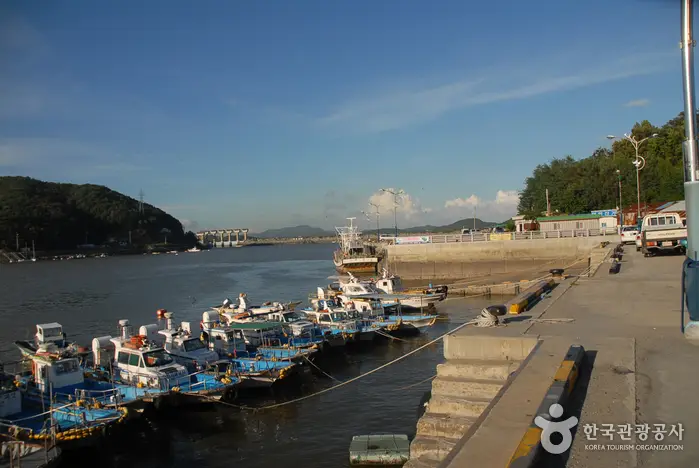
Ocheon has long been the center of life and daily activity in the northern region of Boryeong. This is reflected in the saying that all roads in northern Boryeong lead to Ocheon. In fact, there are three access routes entering Ocheon from Jupo, Jugyo, and Cheongso. Although its former glory has faded considerably, Ocheon Port continues to fulfill its role as a major fishing port in the Cheonsuman Bay area. Located deep inside the bay, Ocheon Port boasts excellent natural conditions to the extent that separate shelter facilities like breakwaters are unnecessary. Consequently, fishing vessels dock along a long coastal wharf without a breakwater. Visiting the Ocheon Traditional Market held on the 1st and 6th of each month reveals various fresh seafood. In particular, pen shells harvested through diving fisheries based at Ocheon Port are a specialty rarely found elsewhere, and fist-sized mussels are also immensely popular.MoreLess
- 8Chungcheong Suyeongseong Fortress in Boryeong
보령 충청수영성
Chungcheong Suyeongseong Fortress (忠淸水營城) is a stone fortress built high with stones to defend against foreign invaders entering via the West Sea. Built in the 4th year of King Jungjong of Joseon (1509) by Naval Commander Lee Jang-saeng, this magnificent 1,650m-long fortress enclosed the outer perimeter of the Chungcheong Naval Headquarters (Chungcheong Suyeong). Taking advantage of the turtle-shaped terrain, bastion towers (chiseong) or curved walls were established at high elevations to monitor activities across the sea and islands, making it a pivotal coastal defense stronghold. It featured four main gates facing the cardinal directions along with a minor west gate (Soseomun). Government buildings including the Dongheon, Yeongbojeong Pavilion (永保亭), Gwandeokjeong Pavilion (觀德亭), Daeseomnu Pavilion (待燮樓), Neungheogak Pavilion (凌虛閣), and Gosodae Platform (姑蘇臺) once stood here before collapsing, while the west gate Manghwamun (望華門) and buildings such as Jinhulyucheong (relief office), Janggyocheong (officers' quarters), and Gonghaegwan remain preserved. Manghwamun was constructed in an arch shape using trimmed granite, showcasing advanced stonemasonry. Ocheon Port (鰲川港) was a port trading with China since the Baekje Period known as Hoeipo (回伊浦); during the Goryeo Dynasty, numerous warships were stationed here to repel Japanese pirates; and in the 12th year of King Sejo (1466), the naval headquarters was established as the supreme command of the Chungcheong Navy to defend the west coast. Chungcheong Suyeongseong Fortress was decommissioned in the 33rd year of King Gojong (1896). According to records in the 『Sejong Sillok Jiriji』 (Geographical Appendix to the Veritable Records of King Sejong), in the early Joseon period, the warships and troops assigned to Chungcheong Suyeong and its subordinate bases reached 142 warships and a total of 8,414 naval personnel. Located along the west coast of Chungcheong-do, it protected grain transport ships heading to Hanyang, prevented incursions by Japanese pirates, and monitored foreign vessels in modern times. In the 29th year of King Seonjo (1596), Chungcheong Naval Commander Choe Ho led the headquarters and attached fleets to Hansando Island in the South Sea under the command of Naval Commander-in-Chief Won Gyun, but was killed in battle along with Commander Won Gyun on July 1 of the following year (1597) during a defeat against Japanese forces. Furthermore, Chungcheong Suyeongseong was frequented by Joseon Dynasty poets and calligraphers for its scenic beauty blending with the entrance of Cheonsuman Bay, with Yeongbojeong Pavilion inside the fortress being widely celebrated. Galmajindu outside the west gate was the site of military executions for Chungcheong Suyeong, where five Catholic priests were martyred during the Byeongin Persecution. Except for certain sections damaged in modern times due to road construction or coastal reclamation, the remaining fortress site and surrounding topography remain almost completely intact. As the military naval headquarters established for the Chungcheong area, it holds immense historical and academic value, illustrating the naval organization of Chungnam and its persistent relationship with naval garrisons deployed at strategic sea routes across the Chungcheong region. [Source: Boryeong City Culture & Tourism Website, Cultural Heritage Administration]MoreLess
- 9
Oseosan Mountain
오서산
Oseosan Mountain (790.7m), the third highest peak in Chungcheongnam-do, has long been called the "Lighthouse Mountain of the West Sea" because it served as a compass or lighthouse for ships navigating the waters of Cheonsuman Bay. The main ridge extending about 2 km around the peak is covered entirely in silver grass fields, making it a famous destination for silver grass trekking. In addition, Oseosan Mountain is located just 4 km away from Gwangcheon Station on the Janghang Line, making it highly popular for hiking trips via train. Named after its abundant crow and magpie populations—meaning "Crows' Nest"—it stands as the highest peak of the Geumbukjeongmaek Range where the Charyeong Mountains stretch westward. Inside, the famous Jeongamsa Temple is situated, attracting a steady stream of pilgrims. Meanwhile, beneath the mountain, expansive coastal plains and the blue West Sea come into view at a single glance, offering a serene and quiet atmosphere at all times. In particular, the greatest highlight of hiking Oseosan Mountain is the refreshing and invigorating feeling of looking out over the West Sea starting from around the 70% elevation mark. The section from Jeongamsa Temple to the peak is steep with intermittent rocky paths, allowing hikers to fully savor a satisfying hour-long trek, making it very popular among enthusiasts and family hikers alike. At the mountain peak, visitors can gaze out over the vast West Sea horizon and scattered islands stretching like a watercolor painting. Jeongamsa Temple is an ancient temple founded during the Goryeo Dynasty by Great Master Daeun, surrounded entirely by a lush forest of centuries-old zelkova trees.MoreLess
Source: Korea Tourism Organization (TourAPI) · Machine-translated