Namparang Trail (Yeosu Section)
9 stops · 3 nights or more
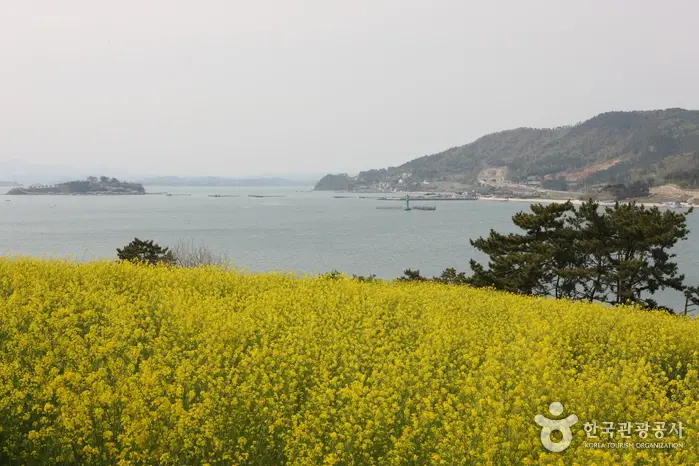
The 'Namparang Trail' is a 1,470 km trail extending from Oryukdo Island in Busan Metropolitan City to Ttangkkeut (Land's End) in Haenam-gun, Jeonnam Gwangju Integrated Special City. A path of youth to walk alongside the romance of the night sea, Yeosu, often called the Naples of Korea and surrounded by the sea on three sides, is an archipelago with around 400 charming islands floating picturesquely. Walking along this beautiful coastal city, the Yeosu section of Namparang Trail connects Yeongchwisan Mountain, Yeosu Marine Park, Soho Dongdong Bridge, and Nangdo Island, where you can experience the romance of Yeosu.
- Duration
- 3 nights or more
- Distance
- 40.1km
Along the way
- 1
Yeongchwisan Mountain (Yeosu)
영취산(여수)
Spanning across Samil-dong and Sangam-dong in Yeosu-si, Yeongchwisan Mountain is a low mountain with an elevation of 510 meters. Neither exceptionally high nor rugged, Yeongchwisan is famous nationwide because it is the first mountain in Korea where you can see azaleas dyeing the entire mountain red in spring. Along with Hwawangsang Mountain in Changnyeong and Muhaksan Mountain in Masan, Gyeongnam, it is counted as one of the country's top three azalea habitats. Tens of thousands of 30- to 40-year-old azalea trees grow wild across an area of about 330,000 square meters, making the entire mountain blaze in red every April. Since the mountain is low, family hiking is possible on any chosen course within about 4 hours. The best course to enjoy the azaleas starts from the forest road above Honam Oil Refinery or Sangam Elementary School, ascends to the summit of Yeongchwisan via the 450m Peak, descends to Bongujae Pass, and climbs back up to Jinraebong Peak. From Jinraebong Peak, it passes the helipad and the 439m Peak, turns right at the fork, and descends to Heungguksa Temple. For night/daybreak hikes without lodging, visitors start from Heungguksa Temple on the reverse course. The stretch from the 450m Peak to the summit offers the most splendid azaleas, but the trail can be rugged and dangerous in the dark, so you need to manage your hiking time carefully. Every April, Yeongchwisan hosts an azalea festival. During the festival period, various events such as the Yeongchwisan Mountain Spirit Ritual, youth writing contests, photo contests, Miss Azalea pageants, and local food stalls take place, providing sights and foods for spring excursionists coming for the azaleas. The name Yeongchwisan is presumed to be derived from Mount Grdhrakuta in India, where Shakyamuni Buddha gave his final sermon. Hiking maps sometimes distinguish between Yeongchwisan and Jinryesan; the National Geographic Information Institute officially announced on May 17, 2003, that the mountain's name was changed from to , but people still conventionally use the name Yeongchwisan, the name of the 439m Peak, as the mountain's name. As the main mountain of the Yeosu Peninsula, Yeongchwisan has long been recognized by locals as a sacred mountain where rain-praying rituals and sincere prayers were offered. Geumseongdae, a traditional prayer site, is located here, and Dosolam Hermitage was built beneath it and passed down to this day. Dongguk Yeoji Seungnam and Honam Yeosu Eupji record that there was a rain altar along with Dosolam Hermitage that was very efficacious, and the tradition continued until the late Joseon period with local magistrates holding rain rituals and leaving rain poems. In addition, Heungguksa Temple is nestled in the vast foothills of Yeongchwisan. As the name suggests, it was built to pray for the nation's prosperity and was founded in 1195 (the 25th year of King Myeongjong of Goryeo) by State Preceptor Bojo. Cultural heritages such as Daeungjeon Hall (Treasure), the Hanging Painting Behind Buddha of Daeungjeon Hall (Treasure), Wontongjeon Hall, and Palsangjeon Hall remain in Heungguksa Temple. In addition, Heungguksa is famous for having the only Buddhist monk naval force during the Imjin War, where around 300 monk sailors trained. Standing at the 510m summit, you can take in a panoramic view of the large and small islands of the South Sea and fishing boats, with Gwangyang Bay, the Yeocheon Industrial Complex, and to the northeast, Baegunsan Mountain and Myodo Island of Gwangyang clearly visible.MoreLess
- 2
Heungguksa Temple (Yeosu)
흥국사(여수)
As the name Heungguksa implies, meaning "if the nation flourishes, the temple also flourishes," this temple was founded to pray for the prosperity of the country. Founded in 1195 (the 25th year of King Myeongjong of Goryeo) by State Preceptor Bojo in the deep forest of Yeongchwisan Mountain near the Yeosu National Industrial Complex, Heungguksa Temple houses various cultural heritages such as Daeungjeon Hall, Wontongjeon Hall, and Palsangjeon Hall. Daeungjeon Hall of Heungguksa Temple (Treasure) features latticed doors that can be fully opened, the Hanging Painting Behind Buddha of Daeungjeon Hall is designated as a Treasure, and the graceful appearance of Honggyo Bridge at the entrance of Heungguksa fully demonstrates its value as a Treasure. In addition, there are seven other cultural assets including the Hanging Painting Behind Buddha in Daeungjeon Hall (Yeongsanhoesangdo), the Gwaebul Painting of Rocana Buddha, the Water-Moon Avalokiteshvara Painting, the Sixteen Arhats Painting, the Wooden Sakyamuni Buddha Triad, the Bronze Bell of Heungguksa Temple in Yeosu, and the Wooden Ksitigarbha Bodhisattva Triad and Ten Kings with Enshrined Relics. Heungguksa is also famous as the place where around 300 Buddhist monk naval forces trained during the Imjin War. Every year for a month starting in early April, Yeongchwisan blazes with crimson color. The ridge connecting Yeongchwibong Peak (439m) and Jinryebong Peak (510m) behind Daeungjeon Hall of Heungguksa creates a magnificent spectacle as the azalea colonies burst into buds with blood-red passion. The Yeongchwisan Azalea Festival is held during this period.MoreLess
- 3
Mipyeong Forest Park
미평산림욕장
- 4
Hallyeohaesang National Park (Odongdo Island)
한려해상국립공원 (오동도)
※ 2021-2022 100 Must-Visit Tourist Spots of Korea ※ Odongdo Island is so famous for camellias that thinking of Yeosu brings to mind Odongdo, and thinking of Odongdo brings to mind camellia flowers. It also serves as both the starting and ending point of Hallyeohaesang National Park. After parking at the entrance parking lot of Odongdo, just a 10-minute drive from downtown Yeosu, you can reach Odongdo by walking along the 768m breakwater path for about 15 minutes. Covering an area of 125,620.4 m² (38,000 pyeong), the island is lush with over 200 species of various evergreen trees, including camellias and sinudae bamboo, densely covering the sky. In addition, within the 16,529 m² (about 5,000 pyeong) lawn plaza, there are flower beds planted with about 70 kinds of wild flowers and a commemorative tree planting hill, making it useful as an outdoor learning center for children. The island's 3,000 camellia trees begin to bloom one or two blossoms as early as October, allowing you to see red flowers even in the dead of winter. By mid-February, about 30% are in bloom, reaching their peak in mid-March. The walking trails extending like a spiderweb across the island are very popular as dating courses for couples, and raw fish restaurants in the shopping complex offer fresh fish caught straight from the nearby South Sea. Transportation options from the entrance of Odongdo into the island include the Camellia Train, excursion ships, and motorboats. Excursion ships and motorboats depart from the pier at the entrance of Odongdo, allowing visitors to enjoy the beautiful scenery around the Odong coastline, Byeongpungbawi Rock, Yonggul Cave, and Jibungbawi Rock.MoreLess
- 5Goso-dong Mural Village
고소동 천사벽화마을
Goso-dong Mural Village is the oldest natural village in Yeosu, situated on a hill offering a panoramic view of the sea, Dolsandaegyo Bridge, and Geobukseondaegyo Bridge. During the Imjin War, it was also a historic place where Admiral Yi Sun-sin made battle plans and issued orders. On the occasion of the 2012 Yeosu Expo, Yeosu-si and the residents of Goso-dong joined forces to paint murals on the walls and turn the geographical advantage into a tourist attraction. Because the alley stretches 1,004 meters from Jinnanggwan Hall across the Goso-dong hill to Yeosu Marine Park, it is also called the Angel (1004) Mural Alley. The alley is divided into 7 sections, featuring murals depicting stories related to 'Ocean', the theme of the Yeosu Expo, along with the history, culture, and landscapes of the Yeosu region, as well as Admiral Yi Sun-sin and his naval forces. There are observatory rest areas where you can sit and catch your breath. The Shrine for the Monument of Admiral Yi Sun-sin's Victory inside the village is also a must-see. Here stand the Jwasuyeong Victory Monument (Tongje-igong Naval Victory Monument, Treasure) commemorating Admiral Yi Sun-sin's achievements, and the Tarubi Monument (Treasure) honoring his virtue. At the end of the mural alley lies Yeosu Marine Park. Frequently visited by Yeosu citizens for weekend outings, this park is especially beautiful at night.MoreLess
- 6Yi Sunsin Square
이순신광장
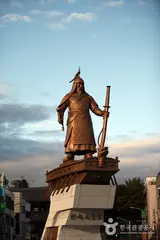
Located in Jungang-dong, Yeosu-si, Yi Sunsin Square is a place with many attractions where visitors can see and feel the historic scene, including materials on Admiral Yi Sun-sin who led the Imjin War to victory and introductions to the righteous armies of the time. The square is the starting point of a historic and cultural tourism belt linked with surrounding historic sites such as Jinnamgwan Hall, where Admiral Yi Sun-sin devised battle plans and issued military orders, and hosts the 'Turtle Ship Festival,' Korea's oldest patriotic cultural festival, every May. The most eye-catching structure here is a life-size replica of the Turtle Ship. It was designed not just as an exterior model, but so visitors can tour the interior. Entering the Turtle Ship, you can feel the dynamic appearance of the naval forces and vivid scenes from the Imjin War, as well as try simple experiences. There were three Turtle Ships that played active roles during the Japanese invasion, built respectively at Jeollajwasuyeong, Bangdapjinjik, and Suncheonbu Shipyard, and the location of this Turtle Ship is precisely where the Jeollajwasuyeong Shipyard once stood. On one side of Yi Sunsin Square, there is a mural depicting the life of Admiral Yi Sun-sin and the process of the Imjin War. Every Saturday, regular performances such as the Naval Departure Ceremony, Ganggangsullae, and Municipal Choir performances are held.MoreLess
- 7Soho Dongdong Bridge
소호동동다리
A wooden deck walkway over the water to stroll while taking in the wonderful night view of the sea, featuring a 742-meter coastal walkway built over the seaMoreLess

- 8
Nangdo
낭도
Nangdo Island is said to have been named Nangdo using the Chinese character for wolf (낭/狼) because the island's topography resembles a fox. Nangdo's beach is suitable for family visitors to enjoy swimming and camping. Sado Island, neighboring Nangdo, features various attractions such as the Korean version of the Miracle of Moses where seven islands—Jeungdo, Chudo, Jangsado, Nakkeut, Yeonmok, and Jungdo—connect, as well as dinosaur footprints and columnar jointing.MoreLess
- 9
Nangdohang Port
낭도항
Nangdo Island is a small island located between Hwayang-myeon in Yeosu-si and Yeongnam-myeon in Goheung-gun. While it was previously accessible only by boat, access has become convenient with the opening of bridges connecting the mainland and the islands. Nangdo Port on Nangdo Island is a national fishing port that served as a fishing outpost and emergency shelter for fishing boats during bad weather. Since its connection to the mainland, many tourists continue to visit to purchase the local specialty Nangdo Makgeolli or enjoy the beautiful nature of Nangdo Port. In the future, it is planned to be reorganized into a tourist area including a passenger ferry pier and seafood sales facility.MoreLess
Source: Korea Tourism Organization (TourAPI) · Machine-translated