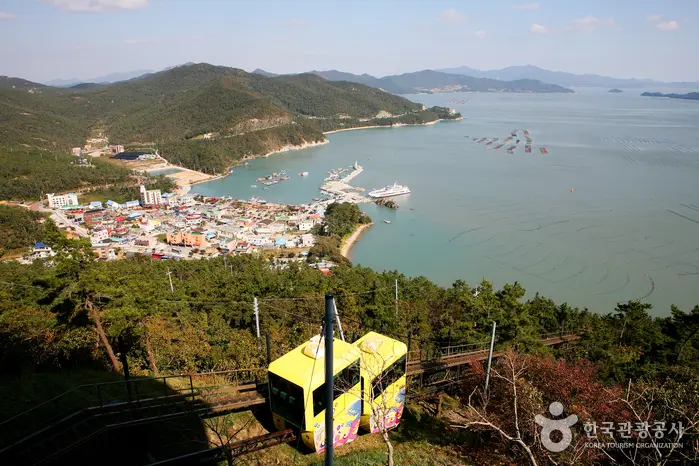
Namparang Trail (Haenam, Gangjin Section)
8 stops · 3 nights 4 days
The Namparang Trail is Korea's longest walking trail, stretching 1,470 km from Oryukdo Island in Busan to Ttangkkeut (Land's End) in Haenam-gun, Jeonnam Gwangju Consolidated Special City. Among its segments, the Haenam-Gangjin section is a course that leads from Ttangkkeut in Haenam to Gangjin, known as the prime destination for Namdo cultural exploration. Visitors can immerse themselves in stunning natural scenery at the Haenam Ttangkkeut Tower, the mystical and beautiful Mihwangsa Temple, and Dosolam, a small hermitage hidden among uniquely shaped rocks. After soaking in the natural beauty, one can follow the footsteps of Dasan Jeong Yak-yong, passing Nogudang, the ancestral home of the Haenam Yun clan (his mother's side), and walking up from Baengnyeonsa Temple to Dasan Chodang. If you wish to stroll along forest paths, you can also walk the Reed Forest Path at Gangjinman Ecological Park and the Bamboo Forest Path at Baekundong Garden, one of the three major traditional gardens in the Honam region.
- Duration
- 3 nights 4 days
- Distance
- 62.2km
Along the way
- 1
Ttangkkeut Tourist Attraction
땅끝관광지
Ttangkkeut (Land's End), where the sea and sky meet, is the place where the Baekdudaegan Mountain Range dashed southward to make its final grand movement before coming to a halt. It is both the beginning and the end of the Baekdudaegan, where the energy of the Korean Peninsula is said to be most densely concentrated. For this reason, Ttangkkeut has long been revered as a site of the most auspicious energy and a gateway to the heavens, where many ancient sages and artists held sacred rituals to receive energy. A local legend in Ttangkkeut Village says that if you stand here and make a wish toward the sky and the sea, your wish will come true and hope will blossom. With such symbolic significance, Ttangkkeut attracts numerous tourists from all over the country as the start of hope and the departure point for nationwide pilgrimages. It is also an important strategic point and transit route in maritime culture.MoreLess
- 2
Dosolam Hermitage
도솔암
Located on Dosolbong, the highest peak of Dalmasan Mountain, Dosolam is one of the twelve hermitages belonging to Mihwangsa Temple. According to the Sinjeung Dongguk Yeoji Seungnam (New Augmented Geographic Survey of Korea), it is known as a thousand-year-old sanctuary founded by Great Master Uisang, the founder of the Hwaeom Sect. Surrounded by rocky ridges, Dosolam is a popular destination for tourists and photographers alike, offering azaleas in April, royal azaleas in May, daylilies in June, autumn foliage, and splendid snowy landscapes in winter. The area around Dosolam on Dalmasan Mountain is known as Dalma Dosol, one of the Eight Scenic Views of Haenam and regarded as Haenam's foremost scenic spot. Although it was destroyed by Japanese invaders during the Jeongyu Jaeran (Japanese Invasion of 1597), it was rebuilt in just 32 days in 2002 by Monk Beopjo of Woljeongsa Temple.MoreLess
- 3Mihwangsa Temple
미황사
Located on the western side of Dalmasan Mountain (489m), often called the Geumgangsan of the South Sea, Mihwangsa Temple is the southernmost temple on the mainland of Korea, established in 749 during the 8th year of King Gyeongdeok of Silla. During the height of Buddhism, it served as a cradle of the faith, home to many monks and overseeing 12 surrounding hermitages. Mihwangsa continued to prosper throughout the middle and late Joseon period. However, about 100 years ago, after Abbot Honheo led a drumming troupe (Gungodan) by boat to Wando and Cheongsando to raise funds for reconstruction and suffered a shipwreck, the temple gradually fell into ruin. A century after its decline, Monks Jiun, Hyeongong, and Geumgang, who currently reside at Mihwangsa, visited the vacant and ownerless temple in 1989. They restored Myeongbujeon, Samseonggak, Manhadang, Dalmajeon, and Budoam, which remained only in traces, and rebuilt the dilapidated Sesimdang. Through dedicated efforts spanning over a decade, Mihwangsa has been renewed into one of the most beautiful temples in Korea. Today, the complex comprises Daeungbojeon (Treasure), Eungjindang (Treasure), Myeongbujeon, Samseonggak, Manhadang (Zen meditation hall), Dalmajeon (monks' quarters), Sesimdang (training center), Yosachae (support quarters), Hyangjeokjeon (guest rooms), Ansimnyo (support quarters), Jaharu (pavilion), and Hasimdang. Set against the backdrop of the magnificent Dalmasan Mountain and splendid sunsets over the West Sea, Mihwangsa always offers visitors delightful scenery. The temple site and the layout of Daeungbojeon, harmoniously situated against the mountain ridge, provide a sense of peace and comfort. In particular, the cornerstones of Daeungbojeon are carved with marine creatures rarely seen elsewhere, such as turtles and crabs. The temple also houses a Gwaebul (hanging scroll painting; Treasure), 18th-century murals on the interior walls and ceilings of Daeungbojeon and Eungjindang, and statues of Bodhisattvas, Arhats, Dongja (youth attendants), and guardian deities in Eungjindang and Myeongbujeon. In the front yard of Daeungbojeon, a long stone basin is always filled with clear water. Walking past it into the path on the right forest trail through pines and camellias for about 10 minutes leads to the stupa field. Each stupa is carved with turtles, crabs, birds, lotus flowers, and goblin faces, offering unadorned expressions in the quiet mountain. The hike to the mountain peak takes about an hour from the temple, and the jagged, uniquely shaped rocks resemble giant standing decorative stones. The sunset view over the Dadohae archipelago and the West Sea from here is breathtaking, and a lush camellia garden unfolds right below the temple. * Cultural Heritages - Daeungjeon Hall (Treasure), Eungjindang Hall (Treasure), Gwaebul (Treasure) Daeungbojeon is the main hall of Mihwangsa Temple. It enshrines Sakyamuni Buddha in the center, flanked by Amitabha Buddha and Bhaisajyaguru (Medicine Buddha). It was rebuilt in 1598 and repaired in 1660, 1754, 1982, and 2007. The interior girders and ceiling are adorned with Sanskrit letters and paintings of the Thousand Buddhas, whose beauty is often compared to the murals of the Ajanta Caves in India and the Mogao Caves in Dunhuang, China. Eungjindang is a hall that enshrines the 16 Arhats among the disciples of Sakyamuni Buddha who were gifted with supernatural powers. 'Eungjin' is the Chinese translation of the Sanskrit word 'Arhat,' referring to those who have clearly realized the true nature of existence and attained liberation. Destroyed during the Jeongyu Jaeran, it was reconstructed along with Daeungjeon and stands today. The interior walls feature ink-wash paintings of Arhats, renowned for their graceful, fluid brushwork that captures the state of Zen.MoreLess
- 4
Nogudang House
녹우당
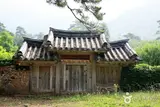
This is the house where Gosan Yun Seon-do lived. It is a mid-15th-century building constructed when Yun Seon-do's fourth-generation ancestor, Hyojeong (1476–1543), settled in Yeondong. The house is situated on an auspicious site, backed by Deokeumsan Mountain and facing Byeorubong Peak with Pilbong Peak to its right. Upon entering the main gate, you immediately reach the sarangmadang (front yard), where the sarangchae (men's quarters) sits in front and a small pond is located in the southwest corner of the wall. The sarangchae was originally a house in Suwon, Gyeonggi-do, granted to Yun Seon-do by King Hyojong, and moved here in 1668 (the 9th year of King Hyeonjong). Entering through the east gate behind the sarangchae reveals the anchae (women's quarters) arranged in a 'ㄷ' shape. A shrine is located inside the eastern wall behind the anchae, while the Gosan Shrine and Eochoun Shrine are located outside the wall. A ginkgo tree planted at the time of construction stands at the entrance as a symbol of Nogudang, and a 500-year-old nutmeg tree forest (Natural Monument) thrives on the mountain behind. The site preserves designated cultural heritages such as the Self-Portrait of Yun Du-seo (National Treasure), Sanjung Singokjip (Treasure), and Eobu Sasasajip, along with over 3,000 artifacts. Nogudang well exemplifies the structure of upper-class Joseon housing, with its anchae and sarangchae forming an 'ㅁ' shape and accompanied by haengnangchae (servants' quarters).MoreLess
- 5
Dasan Chodang
다산초당
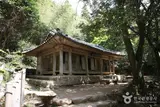
Located at the foot of Mandeoksan Mountain overlooking Gangjinman Bay, Dasan Chodang is the exile site of Jeong Yak-yong, a great scholar who synthesized the Silhak (Practical Learning) movement in the late Joseon Dynasty. The pen name 'Dasan' was taken from the mountain behind Gyuldong in Gangjin, where he stayed. Exiled to Gangjin in 1801, Dasan spent roughly 18 years in exile, authoring over 600 voluminous books including Mongmin Simseo and Gyeongse Yupyo. Here, he synthesized the Silhak philosophy of seeking truth from facts (Silsa Gusi), aiming to transform the nominal, metaphysical Neo-Confucian scholarship of the Joseon era into practical, scientific thought. Dasan Jeong Yak-yong was born as the fourth son of Jeong Jae-won, who served as the Magistrate of Jinjumok. He passed the civil service examination at the age of 28 and served in posts such as Examiner at Yemungwan, Royal Military Attache at the Ministry of War (Byeongjo Chamji), and Third Minister at the Ministry of Punishments (Hyeongjo Cham-ui). Following the Sinyu Persecution of 1801, he was exiled to Janggi in Gyeongsang-do, and subsequently exiled again to Gangjin due to the Hwang Sa-yeong Silk Letter Incident. He spent his first eight years at a tavern outside the east gate of Gangjin-eup, Boeunsanbang at Goseongsa Temple, and the house of his disciple Yi Hak-rae. In the spring of 1808, he moved his residence to Dasan Chodang, where he lived for about 10 years until his release in September 1818, teaching disciples and writing. Most of Dasan's greatest achievements were accomplished here. After collapsing due to age, Dasan Chodang was restored in 1957 by the Dasan Relics Preservation Society. Later, Dongam (where Dasan resided) and Seoam (the lodgings for his disciples) were also restored. Dasan Chodang also features the 'Four Views of Dasan': Jeongseok Rock, where Dasan personally carved the characters '丁石'; Yakcheon, a medicinal spring he found to brew tea; Dajo, a flat rock used for brewing tea; and Yeonji Seokgasan, a miniature stone mountain built in the middle of a pond. Additionally, there is a pavilion named Cheon-il-gak, built on the spot where Dasan comforted his longing for his hometown and for his second older brother, Yak-jeon, who had been exiled to Heuksando Island.MoreLess
- 6
Baengnyeonsa Temple (Gangjin)
백련사(강진)
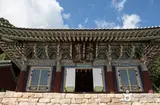
The original name of Baengnyeonsa Temple was Mandeoksa, which is said to have been founded by National Preceptor Muyeom during the reign of King Munseong of Silla. Later, in the 7th year of King Huijong of Goryeo, National Preceptor Wonmyo (Monk Yose) rebuilt the temple on its old site and gained great fame through the Baengnyeon Gyeolsa (White Lotus Association), leading to its current name, Baengnyeonsa. The Baengnyeon Gyeolsa flourished for 120 years, producing eight National Preceptors of Goryeo (Wonmyo, Jeongmyeong, Wonhwan, Jinjeong, Wonjo, Wonhye, Jingam, and Mogam). It is also well known as a place where Dasan Jeong Yak-yong, during his exile in Gangjin, formed a friendship transcending religion and age with Venerable Aam Hyejang. Baengnyeonsa's greatest pride is its camellia forest, designated as a Natural Monument. Beyond the collapsed Haeanghotoseong earthen wall next to the historic monument, large camellia trees form a dense forest spanning approximately 10,000 square meters, within which four stupas from the Goryeo and Joseon periods are scattered as if playing hide-and-seek. The thick, evergreen foliage creates a serene, tranquil atmosphere even in broad daylight throughout all four seasons. From November, when the camellias bloom in full, the quiet forest turns crimson, offering an inspiring sight. Passing through this camellia forest on the walking path toward Dasan Chodang, tea fields cultivated by Baengnyeonsa and colonies of wild tea bushes can be found. The mountain where Baengnyeonsa was located was called 'Dasan' (Tea Mountain) due to these wild tea fields that had grown naturally since the Goryeo period. For this reason, Jeong Yak-yong adopted 'Dasan' as his primary pen name to signify his time living in exile here. This is also the place where Venerable Aam Hyejang and Dasan Jeong Yak-yong forged a beautiful bond, exchanging ideas on Confucianism and Buddhism.MoreLess
- 7
Gangjinman Bay
강진만
With Wolchulsan Mountain to the north, Gugangpo Port and the sea to the south, along with scattered islands, mudflats, mountains, rivers, and plains, the land of Gangjin is always breathtaking to behold. National Route 23, which runs past Gangjin-eup down the eastern edge of Gangjinman Bay toward Maryang overlooking Gogeumdo Island, as well as Baengnyeonsa Temple, Dasan Chodang, and the sea reeds lining the coast on the western side, all form extraordinarily beautiful scenery. In particular, after viewing the waters of Gugangpo from Cheon-il-gak right next to Dongam at Dasan Chodang, following the walking trail along the waist of Mandeoksan Mountain reveals an expansive panorama of the vast Gugangpo Sea and the lower village before reaching Baengnyeonsa Temple. Situated close to the shore, Baengnyeonsa Temple offers an unobstructed view overlooking the sea, much like Jeonggusa Temple on Ganghwado Island and Manghaesa Temple in Gimje. Across the calm waters, the land of Doam-myeon on the other side stretches faintly like an island, while small islands within the bay, covered in evergreens, resemble overturned round gourds. The coastal scenery within the bay is deeply heartwarming, and when the tide goes out, creatures like crabs and mudskippers can be seen crawling across the mudflats.MoreLess

- 8
Baekundong Garden
백운동원림
Created during the mid-Joseon period by the recluse scholar Yi Dam-ro (1627–1701), who carved the characters 'Baekundong (白雲洞)' onto a rock beside the valley, this garden is a traditional villa garden that retains its original prototype, harmoniously combining natural and artificial landscapes with an exquisite layout. Baekundong means 'a village where the water flowing down from Wolchulsan Mountain turns into mist and rises up into clouds,' and it is said that Yaksaam and Baekunam Hermitages once stood here. Offering views of the rocky peaks along the Wolchulsan ridge, it embodies the classic style of traditional Honam gardens. It also sits along the path of the Samnam-gil Trail, which begins in Haenam. The current structures were reconstructed based on historical records: after visiting in 1812 and being captivated by its beauty, Dasan had his disciple Monk Choui paint a landscape and left behind poems celebrating the 12 Scenic Views of Baekundong Garden, which served as the basis for reviving this historic traditional villa in the Honam region. Reluctant to let the water flowing from Okpanbong Peak simply drift away, Yi Dam-ro created a nine-curved winding water channel (Yusanggoksu) and erected a pavilion. Simply resting one's eyes on the valley where flowers and trees harmonize, and then shifting the gaze toward the peaks, allows visitors to fully appreciate its sublime aesthetic charm. Baekundong Valley is designated as a Local Cultural Heritage of Gangjin and, along with Soswaewon in Damyang and Seyeonjeong on Bogildo Island in Wando, is regarded as one of the three major gardens of the Honam region and an important cultural asset illustrating the secluded scholar culture of the mid-Joseon period.MoreLess
Source: Korea Tourism Organization (TourAPI) · Machine-translated