Incheon's Brilliantly Shining Day and Night
5 stops · 2 Days, 1 Night
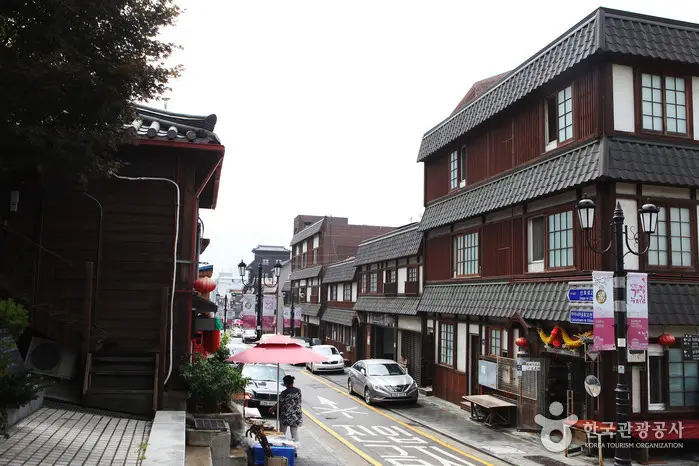
This course allows you to experience Incheon's history, culture, and arts during the day, followed by its even more dazzling nightscapes. Along Gaehangjang (Open Port Area) Street, modern culture and art blend seamlessly with the history of Incheon's open port era, while Songwol-dong Fairy Tale Village invites you to immerse yourself in childhood wonder. Songdo Central Park, reminiscent of an exotic foreign port city, features an artificial seawater lake. Lined with luxury hotels, shopping malls, and restaurants, it is a famous spot renowned for its stunning night views. After discovering Incheon's history and arts, witnessing the lives of merchants at Sorae Port leaves a touching and lasting impression, with the flavors of the West Sea serving as a delightful bonus.
- Duration
- 2 Days, 1 Night
- Distance
- 31.9km
Along the way
- 1Gaehangjang (Open Port Area) Street
개항장 거리
This is a meeting place of history and culture from the open port era, preserving traces of 126 years since the opening of Incheon Port in 1883. Here, modern architecture is preserved as it once was, including the Jung-gu Office (former Japanese Consulate), the Incheon Branch of the First Bank of Japan, the Incheon Branch of the 18th Bank of Japan, and the Incheon Branch of the 58th Bank of Japan. Visitors can also see and hear the traces of history firsthand at places such as Nippon Yusen Kaisha (NYK Line), Incheon Art Platform, and Jemulpo Club. Incheon Cultural Tourism Commentators are stationed here to provide guided commentary by reservation. The opportunity to enjoy a walking tour with in-depth explanations makes it very popular among families and tour groups.MoreLess
- 2Songwol-dong Fairy Tale Village
송월동 동화마을
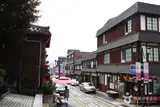
Songwol-dong was originally called Solgol or Songsan due to its abundance of pine trees, and later received its current name because the moon viewed between the pine trees had a charming ambiance. After Incheon Port opened in 1883, foreigners, including Germans, began residing here, forming a wealthy village. However, decades ago, young people began leaving and only elderly residents remained, leading the village to lose its vitality and decline, with vacant houses left neglected. To improve these poor living conditions, flower paths were created and walls were painted with classic world fairy tale themes, transforming the area into a fairy tale village.MoreLess
- 3Wolmido Island
월미도
Wolmido Island rarely appeared in history until the late Joseon Dynasty, aside from a record stating that a temporary palace (haenggung) was established there in the 4th year of King Hyojong (1653). The temporary palace was said to have been located at the site of Imhaesa Temple on the eastern coast, but this cannot be confirmed today. The late 1920s to the 1930s marked the heyday of the Wolmido resort, during which it is said that practically all Koreans and Japanese, young and old, men and women, knew the name Wolmido. Since the creation of Culture Street in July 1989, Wolmido has become known as a venue for culture and arts, a place of meeting and exchange, and an arena for performances and recreation, establishing itself as a representative landmark synonymous with Incheon. On holidays, hundreds of thousands of people flock here from various areas. The street is lined with a harmonious mix of cafes, raw fish centers, and more, allowing visitors to choose and enjoy foods to their taste while overlooking the refreshing sea. Located 1 km off the coast of Incheon with a circumference of 4 km, Wolmido has transformed into an island-like peninsula, firmly establishing itself as a relaxation area for citizens of Incheon and neighboring regions. Because tidal flats are not exposed even at low tide, visitors can always enjoy the sea waters, and the surrounding raw fish restaurants offer West Coast delicacies that make international tourists' mouths water. In addition, Culture Street features designated sections for visitors, including the "Meeting and Exchange Plaza," "Culture and Arts Plaza," and "Performance Plaza," enhancing visitor convenience while contributing to fostering civic cultural awareness and promoting regional art and culture.MoreLess
- 4Songdo Central Park
송도 센트럴파크
Located between high-tech business districts and residential complexes within the International Business District, the core of Songdo International City, Songdo Central Park was built using state-of-the-art methods to prevent urban heat island effects and efficiently recycle rainwater. It was the first park in Korea to draw in seawater to create a water park, and water taxis are in operation. With luxury hotels nearby and shopping malls within close reach, it is widely acclaimed as a resort and tourist destination.MoreLess
- 5Sorae Port
소래포구
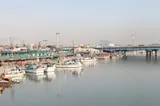
Located in Namdong-gu, Incheon, Sorae Port is one of the most accessible travel destinations in the Seoul Metropolitan Area to experience the sea. Sorae Port has a painful past, and it is a tourist attraction shaped by that very history. The development history of Sorae Port began in the late 1930s when a railway was constructed to exploit high-quality salt, a raw material for gunpowder, from this area. After liberation, displaced persons gathered here to catch shrimp using one or two non-powered boats, made salted fermented seafood (jeotgal), and boarded the Suin Line train carrying salted shrimp on their heads and backs from early dawn to sell in Incheon, Suwon, Bupyeong, Seoul, and beyond, building their livelihoods.MoreLess
Source: Korea Tourism Organization (TourAPI) · Machine-translated