UNESCO-Designated Mireuksaji and Wanggung-ri Historic Sites Course
8 stops · 2 Days, 1 Night
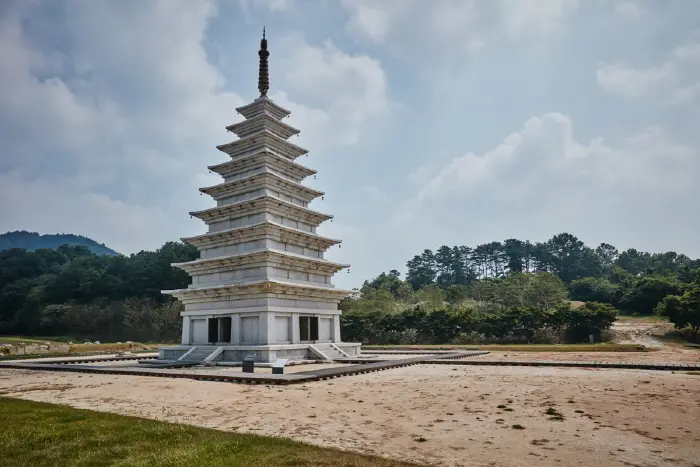
Mireuksaji Temple Site and Wanggung-ri Historic Site are part of the Baekje Historic Areas inscribed on the UNESCO World Heritage list. As the most famous historic sites in Iksan, their historical value is immense. Visiting both locations is a great way to experience the culture of Baekje. Hwasan Catholic Church was completed in 1907 to commemorate Father Kim Dae-geon's landing at Hwangsan Ferry during the reign of King Hyeonjong of the Joseon Dynasty. It is considered a holy ground in the Catholic Church of Korea. Iksan Prison Set is a prison film set built on the site of an abandoned school, where numerous movies and dramas, such as , , and others, were filmed.
- Duration
- 2 Days, 1 Night
- Distance
- 51.2 km
Along the way
- 1
Mireuksaji Temple Site, Iksan
익산 미륵사지
The founding of Mireuksa Temple, the largest Buddhist temple in Baekje, is recorded in the Samguk Yusa (Memorabilia of the Three Kingdoms). Ma-dong, who later became King Mu (the 30th king of Baekje, r. 600–641) after marrying Princess Seonhwa of Silla, was on his way with the princess to visit Buddhist Monk Jimyeong at Sajasa Temple on Mt. Yonghwasan (now Mireuksan Mountain). At that moment, the Maitreya Triad suddenly appeared from a pond, which inspired the founding of Mireuksa Temple. It is said that hall (Geumdang), pagoda, and corridor structures were built for the Triad. On the other hand, some view that the founding of Mireuksa was driven not only by the faith of King Mu and Princess Seonhwa, but also by political purposes. That is, it is presumed that Mireuksa was erected in Geumma, the center of the Mahan power, to expand Baekje's national power. In building Mireuksa, the largest temple of Baekje, the architectural and craft standards of Baekje at the time were likely demonstrated at their pinnacle. Moreover, as seen in the Samguk Yusa record stating that King Jinpyeong of Silla sent numerous artisans to assist, the technologies of the Three Kingdoms were brought together. It is clear that Mireuksa was the focal point of Maitreya faith in Baekje Buddhism, contrasting with Hwangnyongsa Temple, the largest in Silla, which was the center of Avatamsaka (Hwaeom) thought. While Hwangnyongsa has a layout of one pagoda and three main halls, Mireuksa has a unique layout of three pagodas and three main halls. Hwangnyongsa embodied Avatamsaka thought centered on the king, whereas Mireuksa embodied Maitreya philosophy in its temple layout. Mireuksa is grounded in the Maitreya faith of leading even the common people to the Yonghwa world.MoreLess
- 2Iksan National Museum
국립익산박물관
Iksan National Museum is located to the southwest of Mireuksaji Temple Site (Historic Site No. 150), which was the largest Buddhist temple of the Three Kingdoms period. Excavation surveys of Mireuksaji took place from 1980 to 1996. In 1997, it opened as the Jeollabuk-do Provincial Exhibition Hall to preserve and exhibit about 19,000 cultural artifacts ranging from the Three Kingdoms period to the Joseon Dynasty recovered during the excavations. In January 2009, around 1,100 sarira reliquaries were unearthed during the dismantling and repair process of the Stone Pagoda at Mireuksaji (National Treasure No. 11). In July 2015, Mireuksaji was inscribed as a UNESCO World Heritage site. As the historical value of Mireuksaji and the Iksan area was newly highlighted, it was converted into the National Mireuksaji Relics Exhibition Museum in December 2015, and was renamed Iksan National Museum in February 2019. The History and Culture Room and Architecture and Culture Room exhibit various collections illustrating the founding and transformation of Mireuksa Temple. In the History and Culture Room, visitors can examine Buddhist crafts, including sarira reliquaries, and the lifestyle of the temple across different eras. In the Architecture and Culture Room, architectural components such as roof tiles from the Baekje Sabi period to the Joseon Dynasty are displayed.MoreLess
- 3Iksan Prison Set
익산교도소세트장
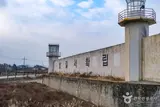
This is the only prison set in Korea, built on the site of the former Namseong Branch of Seongdang Elementary School in Wacho-ri, Seongdang-myeon. Over 200 movies and dramas have been filmed here, including the films 'Holiday', 'Iris', 'Legendary Witches', 'Miracle in Cell No. 7', and 'Inside Men'. Upon entering the set, posters of the films shot here are on display, as if proving the saying 'a magic box where movies are born.' In addition, the natural lawn laid on the schoolyard is popular as a resting space for tourists.MoreLess
- 4
Wanggung-ri Historic Site, Iksan
익산 왕궁리유적
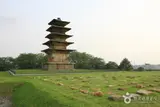
Designated as Historic Site No. 408 on September 17, 1998, this site covers an area of 216,862 square meters. Also called 'Wanggung-ri Fortress Site', it is associated with theories of being the capital of Mahan, the capital transfer or secondary capital of King Mu of Baekje, the site of Bodeokguk by Anseung, or the capital of Gyeon Hwon of Later Baekje. Excavations suggest that this site was developed across at least three periods (late Baekje to late Unified Silla). Two roof tile kilns presumed to date from the Unified Silla period were discovered 30 meters east of the stone pagoda. In particular, fortress artifacts thought to be a rectangular flatland fortress centered around the hilly area surrounding the pagoda were found. The shape of the fortress is gradually being revealed through ongoing excavations. In addition, structures made by laying flat stones about 1 meter wide inside and outside the fortress wall were found, serving as valuable material for fortress research. With the discovery of the Five-story Stone Pagoda in Wanggung-ri (National Treasure No. 289), artifacts revealing the temple layout, and the surrounding rectangular fortress, it has emerged as an important historic site supporting the theory of capital relocation or secondary capital in Iksan during late Baekje.MoreLess
- 5
Hwasan Catholic Church (Nabawi Catholic Church)
화산천주교회(나바위 성당)
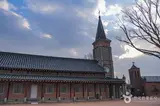
Nabawi Catholic Church was built to commemorate Father Kim Dae-geon's arrival at Hwangsan Ferry with Bishop Fé麵rreol and Father Daveluy in the 11th year of King Hyeonjong of Joseon (1845), following his ordination to the priesthood in China. Initiated by Father Vermorel (Joseph, Jang Yak-seul), the first parish priest, construction began in 1906 and was completed in 1907. Father Poisnel of Myeongdong Cathedral helped with the cathedral's design, and the construction was undertaken by Chinese builders. Nabawi Catholic Church was designated as a holy place by the Korean Catholic Church because Saint Kim Dae-geon, Korea's first priest, preached here for the first time. The building is an early church structure that harmoniously blends Western cathedral architecture with Korean traditional architecture in terms of the introduction and development of Catholicism in Korea. Due to its historical significance and architectural style, Nabawi Catholic Church is designated as a state-designated cultural heritage (Historic Site No. 318).MoreLess
- 6Iksan National Museum
국립익산박물관
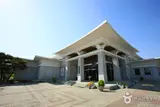
Iksan National Museum is located to the southwest of Mireuksaji Temple Site (Historic Site No. 150), which was the largest Buddhist temple of the Three Kingdoms period. Excavation surveys of Mireuksaji took place from 1980 to 1996. In 1997, it opened as the Jeollabuk-do Provincial Exhibition Hall to preserve and exhibit about 19,000 cultural artifacts ranging from the Three Kingdoms period to the Joseon Dynasty recovered during the excavations. In January 2009, around 1,100 sarira reliquaries were unearthed during the dismantling and repair process of the Stone Pagoda at Mireuksaji (National Treasure No. 11). In July 2015, Mireuksaji was inscribed as a UNESCO World Heritage site. As the historical value of Mireuksaji and the Iksan area was newly highlighted, it was converted into the National Mireuksaji Relics Exhibition Museum in December 2015, and was renamed Iksan National Museum in February 2019. The History and Culture Room and Architecture and Culture Room exhibit various collections illustrating the founding and transformation of Mireuksa Temple. In the History and Culture Room, visitors can examine Buddhist crafts, including sarira reliquaries, and the lifestyle of the temple across different eras. In the Architecture and Culture Room, architectural components such as roof tiles from the Baekje Sabi period to the Joseon Dynasty are displayed.MoreLess
- 7
Hwasan Catholic Church (Nabawi Catholic Church)
화산천주교회(나바위 성당)
Nabawi Catholic Church was built to commemorate Father Kim Dae-geon's arrival at Hwangsan Ferry with Bishop Féarreol and Father Daveluy in the 11th year of King Hyeonjong of Joseon (1845), following his ordination to the priesthood in China. Initiated by Father Vermorel (Joseph, Jang Yak-seul), the first parish priest, construction began in 1906 and was completed in 1907. Father Poisnel of Myeongdong Cathedral helped with the cathedral's design, and the construction was undertaken by Chinese builders. Nabawi Catholic Church was designated as a holy place by the Korean Catholic Church because Saint Kim Dae-geon, Korea's first priest, preached here for the first time. The building is an early church structure that harmoniously blends Western cathedral architecture with Korean traditional architecture in terms of the introduction and development of Catholicism in Korea. Due to its historical significance and architectural style, Nabawi Catholic Church is designated as a state-designated cultural heritage (Historic Site No. 318).MoreLess
- 8Iksan Prison Set
익산교도소세트장
This is the only prison set in Korea, built on the site of the former Namseong Branch of Seongdang Elementary School in Wacho-ri, Seongdang-myeon. Over 200 movies and dramas have been filmed here, including the films 'Holiday', 'Iris', 'Legendary Witches', 'Miracle in Cell No. 7', and 'Inside Men'. Upon entering the set, posters of the films shot here are on display, as if proving the saying 'a magic box where movies are born.' In addition, the natural lawn laid on the schoolyard is popular as a resting space for tourists.MoreLess
Source: Korea Tourism Organization (TourAPI) · Machine-translated