East Sea Surfyy Beach Course Where Dazzling Sceneries Harmonize
5 stops · 2 Days, 1 Night
Yangyang, Gangwon-do, is a pristine region where the dazzling sceneries of Seoraksan Mountain and the East Sea harmonize beautifully. The area is filled with charming places, from Naksansa Temple, known as one of Korea's top three Gwaneum (Avalokitesvara) sacred sites, and Hajodae Observatory, which boasts fantastic views, to the beautiful seaside Hyuhyuam Hermitage and Songi Valley Natural Recreation Forest where you can experience the fresh energy of the forest. The bountiful Yangyang Traditional Market and the Songi (Pine Mushroom) Festival, along with wild vegetable bibimbap at Osaek Mineral Spring and exotic delicacies tasted at Surfyy Beach, create truly special memories of Yangyang.
- Duration
- 2 Days, 1 Night
- Distance
- 32.2km
Along the way
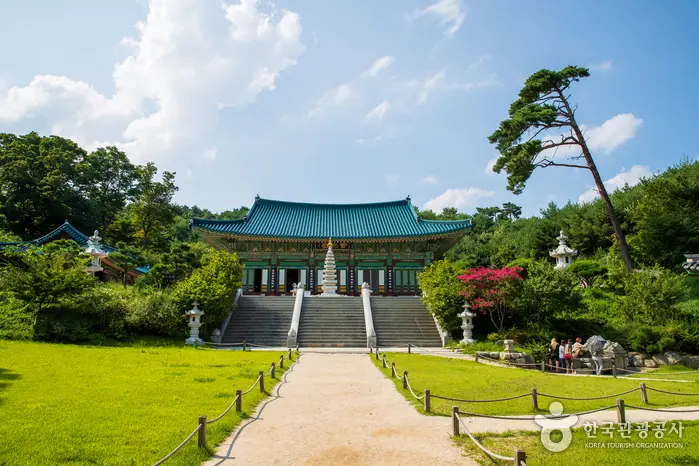
- 1Naksansa Temple
낙산사
Located on the northern coast of Yangyang-gun with Obongsan Mountain in the background, Naksansa Temple was founded by the eminent Silla monk Uisang after receiving a revelation from Gwaneum Bodhisattva. One day, hearing a rumor that Gwaneum Bodhisattva was staying in a coastal cave, Uisang visited this place in person to see her. After praying for many days on a seaside rocky cliff, he received a Cintamani (wish-fulfilling jewel) from the Dragon of the East Sea and a crystal prayer bead from Gwaneum Bodhisattva, which he enshrined here at Naksansa Temple. Later, a pavilion named Uisangdae was built on the cliff where Master Uisang practiced asceticism, and a temple named Hongryeonam was established next to the spot where Gwaneum Bodhisattva rose from the sea on a red lotus. Today, this place is revered as one of Korea's four major Gwaneum sacred grounds, attracting many Buddhist pilgrims.MoreLess
- 2
Yangyang Traditional Market (4th, 9th)
양양전통시장 (4, 9일)
Yangyang is geographically adjacent to Seoraksan Mountain and Odaesan Mountain, boasting abundant local specialties due to its unique soil and climate conditions. In addition, as distinct products are produced in coastal and mountainous areas, an exchange economy naturally developed between the two regions. Transportation is also convenient, with roads connecting the Yeongdong and Yeongseo regions, as well as routes heading towards Yeongbuk and southern Yeongdong, attracting even more merchants. The items mainly sold at the market vary with each season.MoreLess
- 3
Songi Valley Natural Recreation Forest
송이밸리자연휴양림
Songi Valley Natural Recreation Forest operates accommodation facilities such as the Forest Culture Recreation Center and Forest Cabins, and introduces the history and transition of domestic wood culture through the Wood Culture Experience Center. It operates a free exhibition hall for viewing and enjoyment, and offers various DIY woodcraft experience programs. In addition, it runs the Songi Hall where visitors can learn everything about pine mushrooms, as well as observe and learn about various processed foods made with pine mushrooms and traditional food manufacturing processes.MoreLess
- 4
Surfyy Beach
서피비치
Surfyy Beach, where surfing, camping, and music coexist, is an impressive destination that feels just like an exotic beach abroad, featuring a 1-kilometer-long dedicated surfing beach as well as designated swimming and bodyboard zones for vacationers.MoreLess
- 5
Hyuhyuam Hermitage
휴휴암
Follow the Yeongdong Expressway all the way to Gangneung, take the Donghae Expressway toward Sokcho, drive about 5 km toward Sokcho from the Hyeonnam IC, and pass Namae Port to find Hyuhyuam Hermitage, a hidden scenic wonder along National Route 7 in Gwangjin-ri, Hyeonnam-myeon, Yangyang-gun, Gangwon-do. Hyuhyuam is a temple built only about a decade ago; looking down toward the sea from behind the temple, a wide rock shaped like a turtle spreads out like a flat bench in the water. There is also a naturally formed rock that looks like a reclining Buddha, alongside a mysterious turtle-shaped rock that appears to be bowing toward the Buddha. Furthermore, on the cliff to the right of the Buddha rock sit two large rocks side by side called Jungbawi (Monk Rocks), which are even more wondrous as they resemble monks holding a moktak and bowing in prayer toward the Buddha rock below.MoreLess
Source: Korea Tourism Organization (TourAPI) · Machine-translated