Exploring Yeonggwang's Historic Buddhist Heritage and Beautiful Nature
5 stops · 2 Days, 1 Night
Yeonggwang, the first arrival point of Baekje Buddhism! Set off on a trip to Yeonggwang, where you can experience the history of profound Buddhist culture. Exploring beautiful nature along the Baeksu Coastal Road and Supjaengi Forest is a bonus. The magnificent sunset over the West Sea will present you with unforgettable memories.
- Duration
- 2 Days, 1 Night
Along the way
- 1
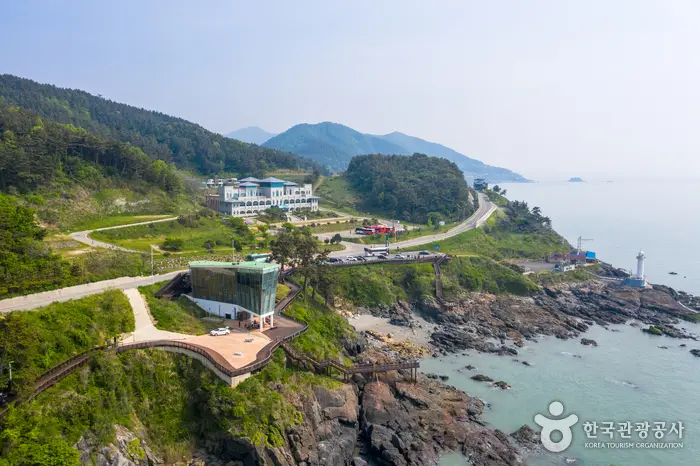
Baeksu Coastal Road
백수해안도로
Baeksu Coastal Road, which comprises National Route 77 and County Road 14, is one of the famous scenic coastal drives in Jeollanam-do. Driving along the road, magnificent rocks towering between coastal cliffs and reefs scattered here and there create dynamic changes in the landscape. Stretching 16.8 km from Giryong-ri, Baeksu-eup to Seokgumi Village in Baegam-ri, Yeonggwang-gun, this coastal road offers a panoramic view of the scenic beauty of the Chilsan Sea. In particular, the sunset over the West Sea is a breathtaking sight rivaling the sunrise in Ilsan over the East Sea, captivating visitors and drawing continuous footsteps throughout all four seasons.MoreLess
- 2
Naesanseowon Confucian Academy
내산서원
It was designated as a Jeollanam-do Monument on October 20, 1977. In 1635 (the 13th year of King Injo), it received a royal charter under the name Yonggyesa Shrine, and was renovated in 1702 (the 28th year of King Sukjong). Later demolished due to the Seowon Abolition Order by Regent Heungseon Daewongun, it was relocated and rebuilt at its current location in Ssangun-ri, Bulgab-myeon, Yeonggwang-gun, Jeollanam-do in 1974. Recently, as part of the project to re-examine the 400th anniversary of the Imjin War, site maintenance projects were carried out step by step starting in 1992. Situated facing south against the backdrop of a low hill, it follows the traditional layout of 'education in front, shrine in back' arranged along the central axis of the outer three-gate entrance and Yonggyesa Shrine in the order of the outer gate, Naesanseowon Academy, the inner three-gate entrance, and the shrine. Along the surrounding foot of the mountain are several graves of the Gang clan, and following the path up the mountain behind the academy leads to the tombs of Gang Hang and his two wives. The shrine is cozy and simple, measuring three kan across the front and two kan along the side with a gabled roof, while the academy building measures four kan across the front and three kan along the side with a hip-and-gable roof. The outer three-gate entrance appears to have been built in recent years. The Jangseogak library of Naesanseowon houses the woodblocks of 《Ganggam Hoeyo》 and manuscript copies of 《Sueunjip》, 《Unjerok》, 《Munseon》, and 《Ganyangnok》.MoreLess
- 3
Birthplace of Baekje Buddhism
백제불교최초도래지
Regarding the transmission of Buddhism to the Korean Peninsula during the Three Kingdoms period, the introduction route and the place of the first teaching are clear for Goguryeo (Envoy Fu Jian of Former Qin in the 2nd year of King Sosurim) and Silla (Mukhonja during the reign of King Nulji Maripgan). In contrast, the route and first point of arrival for Baekje Buddhism remained uncertain, though oral tradition held that Baekje Buddhism began when the eminent Indian monk Marananta arrived at Beopseongpo in Yeonggwang, taught the Buddhist Dharma, and founded Bulgapsa Temple. In 1998, through academic verification conducted by Yeonggwang-gun (Dongguk University), it was confirmed that the land of Yeonggwang was indeed the first arrival point of Baekje Buddhism. Jwau-du in Beopseongpo is where the Indian monk Marananta first set foot in 384 AD after traveling through Eastern Jin in China to transmit Buddhism to Baekje, and the site has been developed into a tourist attraction to commemorate this event. In the name Beopseongpo, 'Beop' (法) refers to Buddhism and 'Seong' (聖) refers to the saint, Marananta.MoreLess
- 4
Chilsan Tower
칠산타워
As the tallest observatory in Jeollanam-do at 111 meters, it symbolizes the harmony and unity of the 11 towns and townships in Yeonggwang-gun.MoreLess

- 5Supjaengi Garden
숲쟁이공원
This refers to an artificial forest mainly composed of zelkova trees created on the ridge of the hillside connecting Beopseong to Hongnong. At San 821-1, Beopseong-ri and San 28-1, Jinnae-ri, zelkova trees, Korean hornbeams, and nettle trees grow, with zelkova trees accounting for 90% of the entire forest.MoreLess

Source: Korea Tourism Organization (TourAPI) · Machine-translated