A Journey Embracing All of Daegu's History, Charm, and Flavors
11 stops · 3 Days, 2 Nights
Daegu is a city blessed with history, beauty, and rich culinary culture. Exploring all its attractions—spanning from the Three Kingdoms period and the Joseon Dynasty to modern history—takes more than a three-day, two-night trip. Spend your days touring historical landmarks and your evenings taking in the stunning night views at spots selected among the 100 Night Tourism Sites. Cap off your days with Daegu's iconic flavors at Gopchang Alley and Dakttongjip Street.
- Duration
- 3 Days, 2 Nights
Along the way
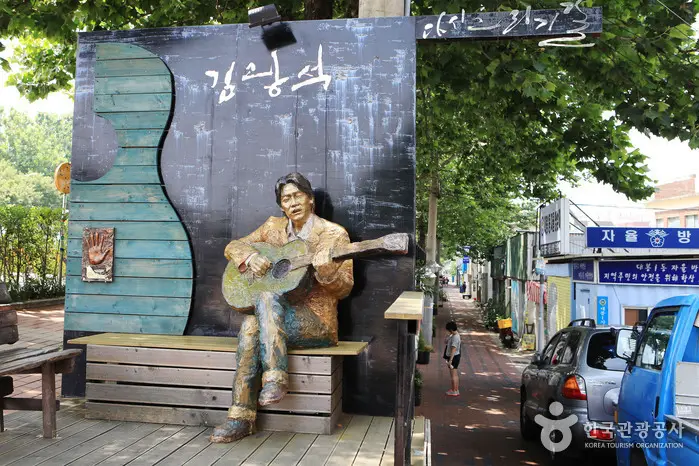
- 1Kim Kwang-seok Road (Kim Kwang-seok Mural Street)
김광석 길 (김광석다시그리기길)
Kim Kwang-seok Road is a mural street themed around the life and music of the late singer Kim Kwang-seok, created in the alleys near Bangcheon Market in Daebong-dong, where he once lived. Started in November 2010 as part of the 'Bangcheon Market Moonjeonseongsi Project,' Jung-gu Office and 11 artist teams participated in its development. Along the 350-meter-long wall, various murals and sculptures depict Kim Kwang-seok, including scenes of him serving noodles at a street cart or gazing out at the sea, alongside his song lyrics. Every autumn, the 'Kim Kwang-seok Singing Contest' is held in the Bangcheon Market and Dongseong-ro areas to commemorate the late singer.MoreLess
- 2
Daegu Modern History Alley (Journey into Modern Times)
대구 근대골목(근대로의 여행)
Daegu Modern History Alley offers an experiential journey where visitors can encounter living history while strolling through Daegu's historic alleys. Daegu suffered relatively little damage during the Korean War compared to other regions, allowing pre- and post-war lifestyles and structures to be well preserved. These alleys are important historical sites that also radiate the warmth and memories of past generations.MoreLess
- 3Apsan Observatory (Apsan Cable Car)
앞산전망대 (앞산케이블카)
Located in Nam-gu, Daegu, Apsan Observatory is a major tourist landmark offering a panoramic view of downtown Daegu. The observatory structure is regarded as an architectural success that weaves together urbanity, nature, history, and the future. Beyond being a popular tourist destination, it also serves as a living educational space for Daegu citizens to reflect on their city.MoreLess
- 4Anjirang Gopchang Alley
안지랑 곱창골목
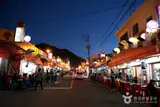
Formed along the road leading from Anjirang Five-way Intersection to Apsan Anjirang Valley in Nam-gu, Daegu, Anjirang Market has gained renewed vitality with its array of seasoned gopchang (small intestines) eateries. Starting around 1979 with Chungbuk Restaurant near Anjirang Market, more livelihood-oriented shops opened following the 1998 Asian financial crisis, leading to the alley seen today. It serves as an affordable relaxation spot for everyday people and has evolved into a vibrant street popular with younger crowds. In 2012, it was designated one of the nation's Top 5 Thematic Food Alleys by the Ministry of Culture, Sports and Tourism.MoreLess
- 5
Daegu Bullo-dong Ancient Tombs
대구 불로동 고분군
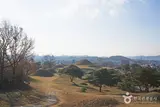
Around 200 ancient burial mounds are located in the hills around Bullo-dong, Dong-gu, where the Geumhogang River flows. The name Bullo-dong, meaning 'no elders,' originated during the Battle of Dongsu (also known as the Battle of Gongsan), when King Taejo Wang Geon fled to this area after being defeated and found that only children remained while the adults had evacuated. These tombs, presumed to date from the Three Kingdoms period, are designated Historic Site No. 262. Surveyed during the Japanese colonial period under the name Haean-myeon Ancient Tombs (as the area then belonged to Haean-myeon, Dalseong-gun, Gyeongbuk), these burial mounds are believed to be the communal cemetery of the indigenous ruling class that governed this area in the Three Kingdoms period.MoreLess
- 6
Ayang Railroad Bridge
아양기찻길
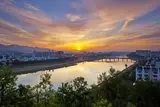
Having served as the Ayang Railroad Bridge crossing the Geumhogang River for 78 years, this abandoned rail bridge was reborn as a new tourist destination called Ayang Railroad Bridge, preserving its historical and industrial cultural heritage value while transforming it into a downtown leisure and cultural space for citizens. Measuring 277 meters in length, 14.2 meters in height, and 427.75 square meters in total floor area, it features an observatory, gallery, digital bridge museum, and cafe. Highly praised for combining public design with historical restoration, it won Germany's Red Dot Design Award and is currently in the spotlight as a popular filming location for television dramas. Nearby attractions include the 10-ri Cherry Blossom Path, the Song Monument, Dongchon Amusement Park, and Onggijonggi Happy Village.MoreLess
- 7Pyounghwa Market Dakttongjip Street
대구 평화시장 닭똥집 골목
Pyounghwa Market Dakttongjip Street boasts a history of more than 40 years since 1972. As the name suggests, it is a food street specializing in dishes made of dakttongjip (chicken gizzards). It was originally developed in the 1970s as an affordable snack to accompany drinks for laborers at the day-labor market in front of Daegu Pyounghwa Market. Unlike pan-fried gizzards, they are deep-fried like fried chicken, making them crispy, delicious, and budget-friendly. Furthermore, Pyounghwa Market Dakttongjip Street was designated the nation's 3rd 'Kind Street' by the Community Chest of Korea, recognized for alley merchants banding together to join the Kind Shop campaign and practice charitable giving.MoreLess

- 8
Daegyeonsa Temple
대견사
Located at San 1-2, Yong-ri, Yuga-myeon, this temple was reconstructed on a site where only a three-story stone pagoda, stone walls, a well, and rock-carved Buddha reliefs remained. With a budget of 5 billion KRW from Donghwasa Temple, the site covers 3,633㎡ with a building area of 186㎡ across four buildings: Daeungjeon Hall (64.17㎡), Seondang Hall (58.32㎡), the administrative office (58.32㎡), and Sansingak Shrine (5.04㎡), completed on March 1, 2014. It is famous as the temple where Monk Ilyeon served as the chief abbot for 22 years after passing the state Buddhist examination at age 22 in 1227, conceptualizing and compiling materials for the Samguk Yusa (Memorabilia of the Three Kingdoms). Forcibly closed down during the Japanese colonial period by the Japanese Government-General to suppress the national spirit, it was rebuilt on March 1, 2014, after about 100 years by Dalseong-gun to restore national cultural heritage. Daegyeonsa Temple is a Jeokmyeolbogung (hall without a Buddha statue) because it enshrines genuine sarira (relics) of the Buddha. The relic enshrined here was gifted and transferred from Kurukude Temple in Sri Lanka by Donghwasa Temple in November 2013; it is one of four relics preserved at Dowa Temple in Sri Lanka since 103 AD and kept at Kurukude Temple since 1881.MoreLess
- 9Dodongseowon Confucian Academy
도동서원
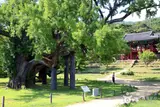
Dodongseowon Confucian Academy is dedicated to Hanhoendang Kim Gwoeng-pil, one of the Five Wise Men of Joseon honored in the National Confucian Shrine (Munmyo). It was originally established at the eastern foot of Biseulsan Mountain in Hyeonpung by local Confucian scholars in 1568 (the 1st year of King Seonjo's reign) under the name Ssanggyeseowon. Five years after its founding, in 1573 (the 6th year of King Seonjo), it received a royal charter plaque under the same name, but was destroyed by fire during the Imjin War. In 1604 (the 37th year of King Seonjo), local Sarim scholars rebuilt the shrine at its present location and called it Borodongseowon. Renowned scholar Yi Hwang praised Kim Gwoeng-pil as the 'head of Eastern Neo-Confucian studies.' In 1607 (the 40th year of King Seonjo), the academy was granted the royal charter plaque 'Dodongseowon,' and the village name was also changed to Dodong-ri. Dodongseowon was one of the 47 major academies nationwide that escaped destruction during the Daewongun's academy abolition policy, and it has been preserved to this day under the devoted care of Sarim scholars and descendants.MoreLess
- 10
Hyeonpung Market (5th, 10th)
현풍장 (5, 10일)
Established in 1918, Hyeonpung Market boasts a 90-year history. In terms of scale, it was one of the representative five-day markets in Daegu and Gyeongsangbuk-do, and since September 2011, it has also operated a weekend market on Saturdays and Sundays. It is widely used by residents of neighboring areas such as Goryeong, Changnyeong, and Cheongdo. The market is located about 600 meters from Hyeonpung-myeon Office, with the Dalseong-gun Public Health Center next to it, and approximately 4 km from Hyeonpung IC. The Hyeonpung region where the market \nis located is famous for its scenic beauty with Biseulsan Mountain (1,084m) and the Nakdonggang River nearby, and transportation is convenient as the national highway between Masan and Daegu and the provincial highway between Jinju and Daegu intersect in the southwestern part of the township. Furthermore, it is a traditional open-air market where visitors can shop for agricultural and specialty products in connection with local tourist spots (such as Dalseongbo Weir, Hyeonpung Stone Ice Storage, Hyeonpung Hyanggyo, Yugasa Temple, Sojaesa Temple, Biseulsan Natural Recreation Forest, Dodongseowon Confucian Academy, Gwak Mang-udang's Tomb, and Sip-ijeongnyeogak Pavilion). On market days, it turns into a bustling grand market where various local specialties and produce from neighboring Yuga-myeon, Guji-myeon, Nongong-eup, Goryeong, Changnyeong, and Cheongdo are gathered.MoreLess
- 11Dalseong Marsh
대구 달성습지
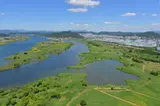
Dalseong Marsh is a river wetland covering a total area of 2㎢ (approx. 605,000 pyeong) located at the confluence of the Nakdonggang River, Geumhogang River, Jincheoncheon Stream, and Daemyeongcheon Stream. A rare floodplain wetland, it is a treasure trove of natural ecology where diverse flora and fauna can be observed throughout all four seasons. It consists of open wetlands, closed wetlands, and waterway wetlands. Rapeseed mustard flowers bloom in spring, coreopsis in summer, and silver grass and reeds create spectacular vistas in autumn. Migratory birds are another key attraction. Before weeds and mulberry trees took over and when sandy beaches spread across Dalseong Marsh, it was a paradise for migratory birds including the hooded crane, a Natural Monument. Today, visitors can see migratory birds such as egrets and grey herons, as well as the narrow-mouthed toad, designated a Class II Endangered Wildlife Species.MoreLess
Source: Korea Tourism Organization (TourAPI) · Machine-translated