Mokpo, a Delightful and Heartwarming Journey
9 stops · 1 Night 2 Days
- Duration
- 1 Night 2 Days
- Distance
- 55.2km
Along the way
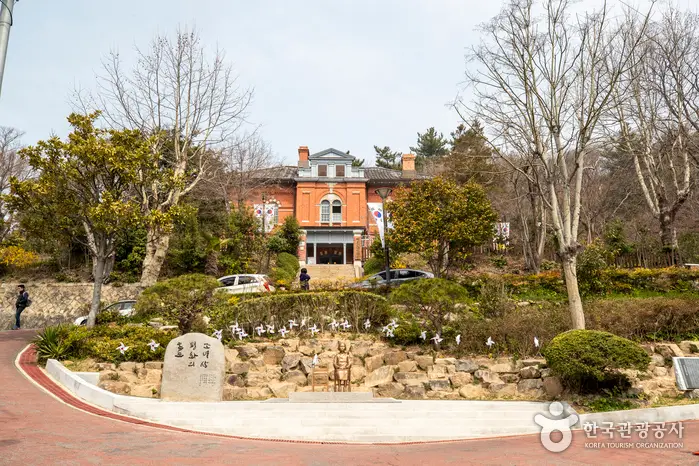
- 1Modern History Street (Mokpo Modern History Museum Halls 1 & 2, Japanese-Style Houses, etc.)
근대역사의 거리(근대역사관 1,2관, 적산가옥 등)
A historical exhibition hall often called a treasure trove of modern history, where you can explore everything from the beginnings of Mokpo to its modern history. The two-story building features exhibitions across a total of seven themes. As the oldest building in Mokpo, it was constructed as the Japanese Consulate in Mokpo when the Port of Mokpo opened in 1987. After liberation, it was used as Mokpo City Hall from 1947, the (former) Japanese Consulate in Mokpo from 1974, and the Mokpo Cultural Center from 1990. Following the recent relocation of the Mokpo Cultural Center, it opened as Hall 1 of the Mokpo Modern History Museum in 2014.MoreLess
- 2Yudalsan Mountain (Lee Nan-young Song Monument, Opodae, etc.)
유달산(이난영 노래비, 오포대 등)
Another name for Yudalsan Mountain is 'Yeongdalsan,' named so because it was believed to be a place where souls pass through. It is the mountain where the great ridge of the Noryeong Mountain Range surges up for the last time as it reaches the southern tip of the Muan Peninsula, marking the very last peak of the Noryeok Mountain Range and the southwestern land's end connecting to Dadohae (the archipelago). It is home to many scenic pavilions such as Daehangnu, Dalseonggak, Yuseongak, and Soyojeong. There are many attractions including the monument to singer Lee Nan-young's 'Tears of Mokpo' and Korea's first outdoor sculpture park, while the Yudalsan Ring Road offers panoramic views of downtown Mokpo and Dadohae.MoreLess
- 3Gohado Observatory and Coastal Deck
고하도 전망대 및 해안데크
With views of the wide open blue sea, Yudalsan Mountain standing 228 meters above sea level as the symbol of Mokpo, the romantic Port of Mokpo as the gateway to Dadohae, and Mokpodaegyo Bridge known for its beautiful sunsets, you can enjoy the beautiful natural scenery and stunning coastal landscapes simultaneously from both sea and land along the coastal deck that makes you feel as if you are walking on the water.MoreLess

- 4Dancing Sea Fountain Show
춤추는 바다분수 공연
The Mokpo Dancing Sea Fountain is the world's first extra-large floating musical fountain, creating a magnificent spectacle through the harmony of water, light, and music. Every night, it presents a grand and fantastic performance accompanied by a laser show with a storyline, set to sweet melodies, colorful lights, and dancing water jets on a water screen over the calm sea. In addition, it creates precious memories for visitors through various participatory programs such as sharing audience stories and hosting proposals.MoreLess
- 5Mokpo Gatbawi Rock and Love Gate
목포 갓바위 및 러브게이트
Designated as Natural Monument No. 500, Gatbawi Rock is a welded tuff formed from hardened volcanic ash, resembling two people standing side by side wearing traditional Korean hats (satgat). While it could previously only be viewed by taking a boat out to sea, a pedestrian bridge built over the ocean now allows visitors to view Gatbawi Rock directly and much more closely from the water.MoreLess
- 6
Samhakdo Theme Park
삼학도 테마공원
Long ago, three maidens from a village fell in love with the dashing spirit of a young warrior training in martial arts on Yudalsan Mountain. As they visited him frequently, the young warrior, falling behind in his studies, pleaded with them: 'I love you as well, but this hinders my training. Please leave this place and wait on another island until my studies are finished.' Following his request, the three maidens went to another island, but while waiting for the warrior, they passed away from longing, reincarnating into three cranes that flew around Yudalsan Mountain, crying sorrowfully. However, unaware of this, the young warrior drew his bow toward the three cranes, and tragically, the three cranes fell into the sea in front of Yudalsan Mountain and died. Later, three islands rose where the cranes had fallen, and people began calling them 'Samhakdo,' meaning the islands of three cranes. In 2007, Samhakdo was restored close to its original form, and a 740-meter waterway was created and filled with seawater. Five cozy bridges over the waterway add to the charm, and walking paths and bicycle trails along the waterway attract many citizens.MoreLess
- 7Seosan-dong Poetry and Painting Alley & Bori Madang
서산동 시화골목 및 보리마당
The movie "1987," which depicts the June Democratic Struggle of 1987, was a moving film chronicling a major milestone in democratization and subsequently attracted 은 visitors. Take a trip to Seosan-dong, the filming location of the small hillside grocery store where 'Yeon-hee,' an incoming college freshman of the class of '87, lived in the movie. Just a short walk up from Yeonhui's Supermarket leads to the Poetry and Painting Alley. Local poets and painters from Mokpo participated in delightfully painting old scenes on the narrow uphill alley walls, interspersed with pretty poems. Seosan-dong Bori Madang & Poetry and Painting Village is so beautiful that the views of the port, the sea, and the Seosan-dong village looking down from atop Bori Madang are often compared to Santorini, Greece.MoreLess
- 8Skywalk, Daebandong 201, Mokpodaegyo Bridge
스카이 워크, 대반동 201, 목포대교
Mokpodaegyo Bridge is evaluated as having opened a new chapter in marine bridge engineering technology by applying the '3-way cable method' for the second time in the world and the first time in Korea. Although it required high-level design and construction technology, it provides an open, panoramic view to motorists. The main towers and cables of Mokpodaegyo Bridge were built in the shape of two cranes, the city bird of Mokpo, flying up from the sea off Mokpo, creating a visual effect where the cables look as if cranes are flapping their wings as drivers cross the bridge. In addition, nighttime scenery and lighting are installed to create a magnificent, beautiful spectacle where the shape of the cranes can be felt even more clearly.MoreLess

- 9
Former Dongbonwonsa Temple and CLB Bakery
동본원사 및 CLB베이커리
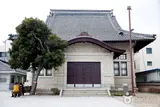
The building of the Ogeori Cultural Center was built as the Mokpo branch temple of Dongbonwonsa, the first Japanese Buddhist temple to enter Mokpo after the opening of Mokpo Port in 1897. A missionary station was initially established near the site of the Japanese Consulate in the treaty port area, and it was relocated to its current site in 1904. After liberation, it was managed by Jeonggwangsa Temple and was used as the Jungang Church building starting in 1957. It was registered as Registered Cultural Heritage No. 340 in 2007, and is currently utilized as the Ogeori Cultural Center for the citizens of Mokpo, the city of arts. In the courtyard of the building, a monument stands noting that this is a historic site related to the May 18 Democratization Movement.MoreLess
Source: Korea Tourism Organization (TourAPI) · Machine-translated