Best Photo Spot Pohang Travel Course!
7 stops · 2 Days, 1 Night
- Duration
- 2 Days, 1 Night
Along the way
- 1Railway Forest & The Garden of Fire
철길숲 & 불의정원
The 4.3 km railway section between Hyoja Station in Nam-gu and the old Pohang Station, where trains ran for about 100 years, was decommissioned following the relocation of Pohang KTX Station in 2015. Passing through residential areas, the railroad tracks were transformed into an urban forest. Water features such as artificial waterfalls and musical fountains, along with steel art installations, captivate visitors, making it an exemplary model of forward-looking urban regeneration and green eco-city development.MoreLess
- 2
Pohang Cruise
포항크루즈
Through Pohang City's ecological restoration project, the water route of Dongbin Naehang Port, which had been blocked for decades, was restored to its former state, creating a 1.3 km stream-like canal connecting the entrance of the Hyeongsan River to Songdogyo Bridge. Built in the middle of a city for the first time in Korea, Pohang Canal brought urban regeneration and ecological restoration. Linked with Pohang's new attractions—such as dining and shopping at Jukdo Market (the largest traditional market in Korea), Dongbin Naehang Port, Yeongildae Observatory, Songdo Beach, and the night view of POSCO—it has established itself as a must-visit destination. Visitors are encouraged to enjoy Pohang's diverse attractions in a more special way aboard the Pohang Cruise.MoreLess
- 3Pohang Canal
포항운하
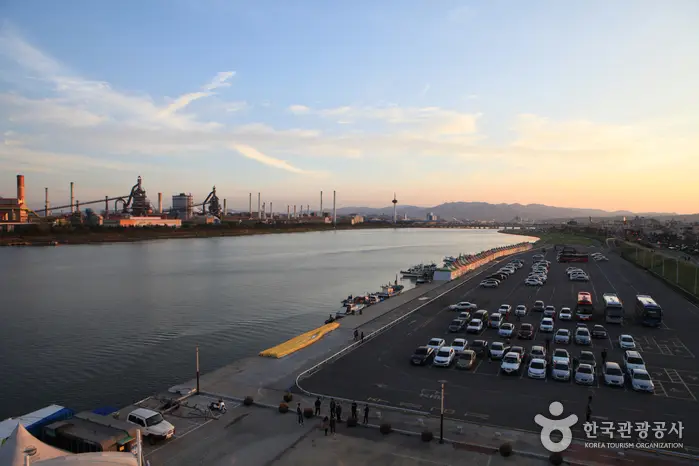
Completed in January 2014, Pohang Canal is a waterway connecting Dongbin Bridge, located between Songdo-dong and Jukdo 1-dong in Pohang-si, with the Hyeongsan River from north to south. While the canal itself is 1.3 km long, it extends to 8–10 km when connected to sea routes. Restored from an old waterway and ecological environment, this space has been reborn as a public park and new tourist attraction. It is perfect for enjoying a romantic cruise along the waterway flowing through the city and is also frequented by many as a walking trail.MoreLess
- 4Homigot Sunrise Square
호미곶 해맞이광장
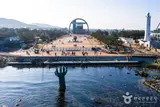
Geographically corresponding to the tail of the tiger on the Korean Peninsula map, it is the easternmost point of the mainland and where the sun rises earliest. Nationally designated sunrise festivals were held here twice, on January 1 of 2000 and 2001, and the Korean National Sunrise Festival continues to be held grandly every year.MoreLess
- 5
New Millennium Memorial Hall
새천년기념관
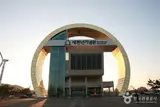
Built to commemorate the nationally designated sunrise event of 2000 and to realize the dreams and hopes of Pohang's new millennium through the 'Yeongil Bay Renaissance,' the New Millennium Memorial Hall inspires pride among Pohang citizens and has established itself as a new landmark of Homigot and a tourist destination for domestic and international visitors.MoreLess
- 6
Guryongpo Gwamegi Cultural Center
구룡포과메기문화관
It was established to widely promote Guryongpo gwamegi (semi-dried Pacific saury/herring) by introducing its history, fishing and manufacturing processes, and health benefits. The center features exhibition halls on each floor where visitors of all ages can experience, learn about, and enjoy Guryongpo.MoreLess

- 7Guryongpo Japanese House Street
구룡포 일본인 가옥거리
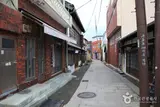
Famous as a filming location for the drama 'When the Camellia Blooms,' Guryongpo Japanese House Street is where Japanese people came to live after the Joseon-Japan Trade Regulations were signed in 1883. Pohang City developed and restored the area, where only a few houses once remained, into today's 'Japanese House Street.'MoreLess
Source: Korea Tourism Organization (TourAPI) · Machine-translated