
Enjoy Scenery, History, and Experiences All in One! An Energetic Trip to Uiseong
6 stops · 1 Night 2 Days
Uiseong is a travel destination where beautiful nature blends seamlessly with rich hands-on experiences. First, visit Korea Appleeries, which produces apple wine, to create your own wine through a personalized winemaking experience. Then, try learning and experiencing curling firsthand at the Uiseong Curling Center, the training ground for 'Team Kim,' who delivered an astonishing performance at the PyeongChang Winter Olympics. Gounsa Temple, beautiful in all four seasons, is a must-visit course on any trip to Uiseong. It is also great to add some relaxation to your journey by walking through the forest of old trees at Sachon-ri Garosup Forest. As Uiseong is famous for garlic, you can taste various garlic-based dishes at the Uiseong Traditional Market, so be sure to stop by and savor the authentic flavors of Uiseong. The Uiseong area was once home to the ancient state of 'Jomunguk'; excavated relics can be viewed at the Uiseong Jomunguk Museum, and the Jomunguk Historic Site is also well-maintained for visitors to feel the ancient history.
- Duration
- 1 Night 2 Days
- Distance
- Approx. 60km
Along the way
- 1
Uiseong Curling Center
의성컬링센터
A curling arena located in downtown Uiseong-eup, Uiseong-gun, Gyeongsangbuk-do, this is the venue that nurtured 'Team Kim' (the Gyeongbuk Athletic Association women's curling team), who sparked a curling sensation at the 2018 PyeongChang Winter Olympics. It serves as a professional training ground for elite curling athletes, while also offering access to general public clubs and experiential programs. Operated directly by Uiseong-gun since 2019, it allows visitors to enjoy curling at the most affordable rates in Korea, offering equipment rentals, facility rentals, and lessons.MoreLess

- 2
Gounsa Temple
고운사
* Gounsa, a Large-Scale Temple with History and Tradition * Gounsa Temple is the head temple of the 16th District of the Jogye Order of Korean Buddhism. It was founded in the 1st year of King Sinmun of Silla (681) by Master Uisang. At the time of its founding, it was named Gounsa (高雲寺), but about 200 years later, when scholar Choe Chi-won (pen name Goun [孤雲]) practiced asceticism here and built Gaunnu Pavilion and Uhwaru Pavilion, the temple was renamed Gounsa (孤雲寺) after his pen name. During the reign of King Heongang, Monk Doseon erected the Bhaisajyaguru Buddha (Medicine Buddha) and a stone pagoda. During the Goryeo Dynasty, in 948 (the 3rd year of King Jeongjong), Monk Unjujotong rebuilt the temple, and in 1018 (the 9th year of King Hyeonjong), Master Cheon-u renovated it again. Later, during the Joseon Dynasty, in 1695 (the 21st year of King Sukjong), Haengok and Taeun repaired it. Afterward, when it burned down in 1835 (the 1st year of King Heonjong), Mansong, Hoam, Suyeol, and others rebuilt it. Additionally, during the Imjin War (Japanese invasions), it served as an advance base for Monk Samyeongdaesa's monk-soldier army to store grain and care for wounded soldiers, and under Japanese colonial oppression, it was one of the nation's 31 head temples, playing a central role in patriotic Buddhism. Today, Gounsa is a large-scale temple consisting of 30 buildings. * Various Sights of Gounsa Temple from Iljumun Gate to Uhwaru Pavilion * The first building that appears after passing through Iljumun Gate is Gaunnu Pavilion, built by Choe Chi-won, a scholar of late Silla. In ancient times, abundant valley water flowed beneath this pavilion. Thus, stone pillars were set in the sections submerged in the stream, and wooden pillars were connected above them to support the pavilion. Although water no longer flows as it once did and the pavilion cannot fully showcase its original charm, the elaborate beauty of the building itself remains intact. On the wall of Uhwaru Pavilion, built by Choe Chi-won standing beside it, is a large painting of a tiger—a masterpiece whose appearance changes depending on the viewing angle. On the hill beside Daeungjeon Hall sits Gogeumdang, a historic Zen meditation hall, and next to Gogeumdang stands a stylish, small hall that was originally used as the main hall, now called Nahanjeon Hall. In front of Nahanjeon Hall stands the Three-story Stone Pagoda of Gounsa Temple, boasting a neat appearance at 2.5 meters tall, designated as Gyeongsangbuk-do Cultural Heritage Material No. 28. In Yaksajeon Hall, turned to the left of Daeungjeon Hall, is enshrined the Stone Seated Sakyamuni Buddha, renowned for the outstanding carving technique of its nimbus, designated as Treasure No. 246. Myeongbujeon Hall at Gounsa Temple enshrines the Ten Kings of the Underworld and is frequently visited by many as it is known as an efficacious prayer site. [Key Cultural Heritages] 1) Stone Seated Sakyamuni Buddha of Gounsa Temple (Treasure No. 246) 2) Gaunnu Pavilion of Gounsa Temple (Tangible Cultural Heritage No. 151) 3) Three-story Stone Pagoda of Gounsa Temple (Cultural Heritage Material No. 28)MoreLess
- 3
Sachon-ri Garosup Forest, Uiseong
의성 사촌리 가로숲
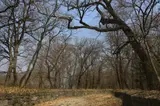
About 600 years ago, at the end of the Goryeo Dynasty, the progenitor of the Andong Kim Clan moved from Andong to Sachon. Following the principles of feng shui (geomancy), which held that an empty western side would prevent prominent figures from being born, this forest was planted to supplement the weak energy on the west side of the village. There is also a legend that the mother of Ryu Seong-ryong (Seoae) went into labor and gave birth to him in this forest while visiting her maiden home in Sachon. Designated as Natural Monument No. 405, this 33,862㎡ forest owned by the Andong Kim clan comprises around 500 ancient, large trees of about 10 species, including zelkova, forming a dense single-story forest. Serving as a habitat for gray herons, this forest holds great academic value, scenic significance as a landscape village forest created based on feng shui, and is a natural cultural heritage that reflects the ancestors' views on nature and Confucian values.MoreLess
- 4
Uiseong Traditional Market (2nd, 7th)
의성전통시장 (2, 7일)
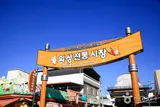
Uiseong Market is a traditional market located around 962 Dodong-ri, Uiseong-eup. The 5-day market opens on the 2nd, 7th, 12th, 17th, 22nd, and 27th of every month. It began as a periodic market in 1946, where shops and street vendors conduct business. Major traded products include garlic, onions, safflower, red peppers, and sesame seeds. In Uiseong Market, the 'Chicken Feet Alley'—where people line up amidst thick smoke—is famous. Some even say, 'You'll regret it if you don't try it at least once.' If you need a quick bite, you can easily enjoy a bowl of noodles or mukchae (acorn jelly soup) at a tented food stall reminiscent of 1970s–80s school sports days.MoreLess
- 5
Jomunguk Historic Site in Uiseong
의성 조문국사적지
Geographically located on an important transportation route connecting Gyeongju to the Han River basin, Uiseong must have been recognized by Silla as a crucial strategic area, a fact corroborated by the large-scale ancient tumuli remaining in Uiseong today. The Geumseongsan Ancient Tombs are currently administratively divided into Daeri-ri, Tap-ri, and Hakmi-ri, but they form a single continuous, large-scale ancient tomb cluster built along a single ridge. Constructed between the late 4th century and the mid-6th century, these tombs underwent a total of seven excavation surveys by professional excavation institutions. It is confirmed that around 374 ancient tombs are distributed throughout this area, including a tomb believed to be that of King Gyeongdeok of Jomunguk.MoreLess

- 6
Uiseong Jomunguk Museum
의성 조문국 박물관
The Uiseong area is where the ancient state of Jomunguk existed, and various related relics have been unearthed from the 374 ancient tombs distributed near the museum site. To systematically survey, collect, exhibit, and preserve the history and artifacts of Jomunguk and the Uiseong region, Uiseong-gun established the museum, completing construction in October 2012 and opening on April 25, 2013. The Uiseong Jomunguk Museum consists of one basement level and three above-ground floors. It features permanent exhibition halls, special exhibition rooms, a children's archaeological excavation experience zone, an auditorium, storage rooms, machinery rooms, and an outdoor performance stage. It houses around 1,500 collection pieces, mainly ancient artifacts excavated from the tumuli. With a water play area opened in July 2018, it serves as a summer vacation spot in northern Gyeongsangbuk-do. The Uiseong Imagination Playground is also scheduled to officially open in July 2020, with plans to operate dinosaur footprint exploration, curator experience programs, air pockets, and a book café.MoreLess

Source: Korea Tourism Organization (TourAPI) · Machine-translated