A Trip Blending Rich History and Vibrant Festivals, Fun Naju!
5 stops · 2 Days, 1 Night
Explore the history and culture of Naju by visiting Geumseonggwan Hall, a guesthouse of Naju-mok; Naju Moksanaea, which preserves the original form of Joseon-era government office architecture; and the Naju National Museum, home to the Korea Mahan Culture Festival celebrating the brilliant ancient Mahan culture that flourished along the Yeongsangang River basin. You can also experience Naju with all five senses aboard a Hwangpodotbae boat on the Yeongsangang River. If you need some healing, Bitgaram Observatory, emerging as a new landmark of the region, is highly recommended. Taking the monorail up to simply gaze at the beautiful scenery of Naju will make for a delightful journey.
- Duration
- 2 Days, 1 Night
- Distance
- 37.58 km
Along the way
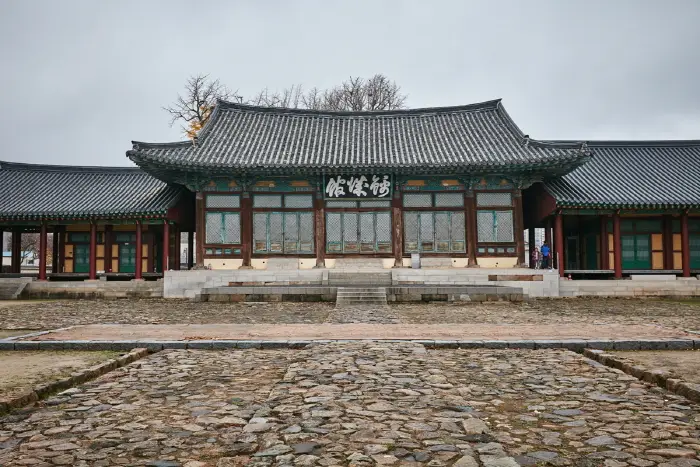
- 1Naju Geumseonggwan Hall
나주 금성관
This building served as the guesthouse of Naju-mok, where rituals honoring the king were held on the 1st and 15th of every month, and banquets were hosted whenever foreign envoys or high-ranking government officials visited. It was first built between the 6th and 10th year of King Seongjong's reign (1475–1479) by Lee Yu-in, who served as the magistrate of Naju-mok, and has reached its present state through several renovations. MoreLess
- 2Naju Moksanaea
나주 목사내아
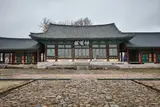
Naju Moksanaea was the official residence of the Naju-mok magistrate during the Joseon Dynasty. It features a floor plan similar to the main quarters (anchae) of high-class residences. The main quarters were built in the 25th year of King Sunjo's reign (1825) in a traditional U-shaped hanok layout. Naju Moksanaea is currently designated as Jeollanam-do Cultural Heritage Material No. 132. Naju is an ideal destination for cultural heritage exploration as many Joseon-era government office buildings remain. MoreLess
- 3Naju National Museum
국립나주박물관
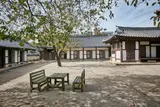
The Naju National Museum was established to preserve and exhibit archaeological materials preserved in the Yeongsangang River basin and to serve as a storage repository for cultural heritage excavated and buried in the Honam region. As the first national museum located in a rural setting rather than an urban center, the Naju Museum also seeks to function as a historical park offering busy modern people time to relax through a slow-paced experience. The Naju National Museum is an open cultural space based on a new concept combining advanced technology with the cultural domain.MoreLess
- 4
Naju Hwangpodotbae
나주 황포돛배
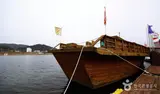
A Hwangpodotbae refers to a boat fitted with sails dyed with yellow ocher that was used to transport all kinds of daily necessities, such as rice, salt, seaweed, and fermented skate, along the waterways of the Yeongsangang River back when seawater flowed up and down the river. With the development of overland transportation, the construction of an upstream dam in 1976, and the completion of the Yeongsangang River Estuary Bank, the Yeongsangang Hwangpodotbae disappeared after the last boat departed in 1977. Resurrected in 2008 after about 30 years in its majestic and dignified former appearance, the Hwangpodotbae now sails up and down the Yeongsangang River carrying memories of the past. MoreLess
- 5
Bitgaram Observatory
빛가람 전망대
Standing tall as a landmark of Naju Innovation City, Bitgaram Observatory offers a panoramic view of the Innovation City at a glance. Along with Cultural Park No. 4 (520,000㎡), an artificial lake, and various hands-on activity facilities developed together with the observatory, it provides visiting tourists with a wide variety of things to enjoy.MoreLess

Source: Korea Tourism Organization (TourAPI) · Machine-translated