Echoes of Democratization Resounding in the City of Light
4 stops · 1 hour
May 18, 1980. The citizens of Gwangju raised their voices against military dictatorship. A ten-day democratization movement unfolded, demanding the "lifting of martial law and the release of democratic leaders." Even after 35 years, the pain and sorrow of the citizens who fell to martial law troops' bullets have not faded. In Gwangju, the spirit of that day and the voices of that time have been sublimated into art, lingering in squares, cemeteries, and parks throughout the city. Follow the echoes of that fateful day.
- Duration
- 1 hour
- Distance
- 27.6km
Along the way
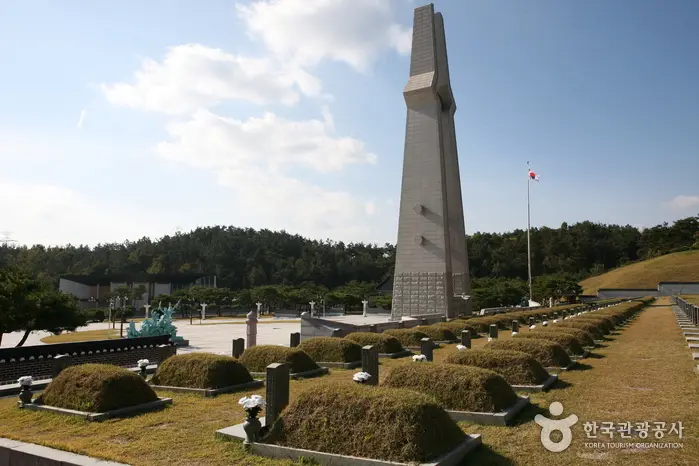
- 1May 18th National Cemetery
국립 5.18 민주묘지
This park in Buk-gu, Gwangju is also known as the May 18 Cemetery. With the launch of the civilian government, the May 18 Democratic Uprising was re-evaluated, and a movement to develop the May 18 victims' cemetery into a sacred ground for democracy arose among concerned citizens. With support from the central government, Gwangju Metropolitan City established the May 18 Cemetery on a 165k㎡ site at San 34, Unjeong-dong, Buk-gu, Gwangju.MoreLess
- 2
Gwangju Art Street
광주 예술의 거리
Just as Seoul has Daehak-ro and Insa-dong Street, and Busan has the BIFF Square (PIFF Street), different regions feature streets that showcase the city's unique characteristics. The representative street of Gwangju Metropolitan City is Gwangju Art Street. Art Street was created to inherit and develop the traditions of Gwangju, a city of arts and the cultural and artistic center of the Honam region.MoreLess
- 3Gwangju National Museum
국립광주박물관
Opened on December 6, 1978, to promote the traditional culture of the Gwangju and Jeonnam regions, the museum preserves and manages around 90,000 artifacts and has contributed to the cultivation of Korean culture through approximately 100 academic surveys. In addition, around 150 diverse exhibitions and customized educational programs illuminate the history of Gwangju and Jeollanam-do, serving as a complex cultural space that shares Korea's history and culture with local residents.MoreLess
- 4
May 18th Historic Site (5·18 Freedom Park)
5·18 자유공원
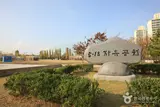
May 18 Freedom Park is a place that preserves and promotes materials related to the May 18 Gwangju Democratization Movement. The Sangmudae military courtroom and guardhouse, which served as the site of military trials during the May 18 Uprising, were relocated about 100 meters from their original location to the May 18 Freedom Park and restored to their original state.MoreLess
Source: Korea Tourism Organization (TourAPI) · Machine-translated