Paju, Healthy and Delicious 'Jangdan Soybeans'
4 stops · Approx. 1 hour
Jangdan soybeans are a specialty of the Imjingang River region. Along with ginseng grown in the Jangdan area, they are part of the 'Jangdan Sambaek' (three white treasures of Jangdan) that were presented to the royal table. Haemaru Village, a small settlement within the Civilian Control Zone, has been restricted to the general public for over 50 years, making it an ecological treasure trove where numerous plants and animals thrive in lush forests. Here, visitors can engage in both nature study and security tours. Making tofu with local Jangdan soybeans and stargazing within the DMZ are the most popular activities. A single day feels too short to explore all the nearby attractions, including Dorasan Observatory, Pyeonghwa Nuri, and Heyri Art Valley.
- Duration
- Approx. 1 hour
- Distance
- 33.06km
Along the way
- 1
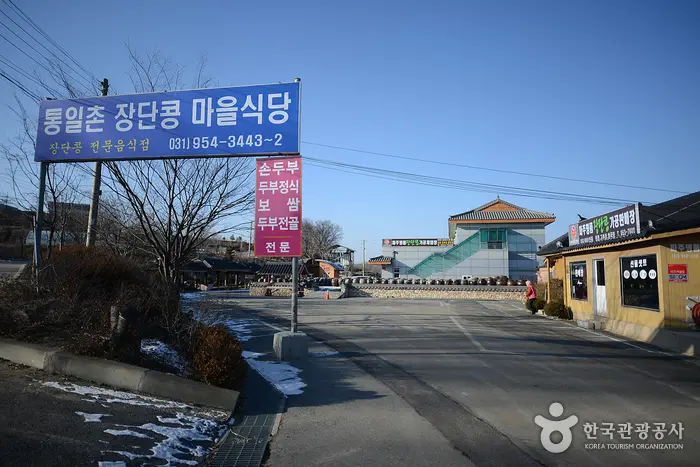
Tongilchon Jangdan Soybean Village (Haemaru Village)
통일촌 장단콩마을(해마루촌)
Jangdan Soybean Village is a slow-food experience village and an agricultural cooperative formed by community members who joined together with the shared goal of protecting local soybeans and domestic produce and sharing them with many people.MoreLess
- 2Dorasan Observatory
도라산전망대
Located at the northernmost point of the Military Demarcation Line on the western front, this unification and security tourism site was built by the Ministry of National Defense in 1986 with a budget of about 300 million won after the Songaksan OP (Observation Post) was closed.MoreLess
- 3
Imjingak Pyeonghwa Nuri
임진각 평화누리
This unification and security tourism destination is home to the Gyeonggi Peace Center, which conveys the importance of peace and the environment. It also features the 'Iron Horse Wants to Run' (railway terminus), the Mangbaedan altar for displaced families from North Korea, the Memorial Monument for the Diplomats Martyred at Aung San in Myanmar, the Bridge of Freedom—a key Korean War relic opened to the public after about 50 years—along with the Unification Pond modeled after the Korean Peninsula, the Peace Bell, and the U.S. Forces Korean War Monument.MoreLess
- 4Heyri Art Valley
헤이리 예술마을
In 1997, during the process of planning a 'Book Village' connected with Paju Book City, cultural figures and artists from various other fields joined in, expanding the concept into a 'Culture and Art Village.'MoreLess
Source: Korea Tourism Organization (TourAPI) · Machine-translated