Engraving the Spirit of Patriotism in the Sacred Grounds of National Defense
3 stops
This site was built in 1924 by Kim Ju-hui, the Namjeopju (head of a jeop, an organizational unit of Donghak), to expand the religion's reach. From 1925, using this place as a base, he sought to revive the religion across the northern Gyeongbuk region—including Sangju, Mungyeong, and Yecheon—while evading surveillance by the Japanese colonial government.
- Distance
- 33.97km
Along the way
- 1
Sangju Donghak Hall
상주동학교당
This site was built in 1924 by Kim Ju-hui, the Namjeopju (head of a jeop, an organizational unit of Donghak), to expand the religion's reach. From 1925, using this place as a base, he sought to revive the religion across the northern Gyeongbuk region—including Sangju, Mungyeong, and Yecheon—while evading surveillance by the Japanese colonial government.MoreLess
- 2
Imran Bukcheon Battleground
임란북천전적지
;\">The Imran Bukcheon Battleground is a sacred site of national defense where around 900 soldiers were martyred after the central and local reserve forces of Joseon engaged in a pitched battle against the main Japanese forces during the Imjin War.MoreLess
- 3General Jeong Gi-ryong Historic Site
정기룡장군유적지
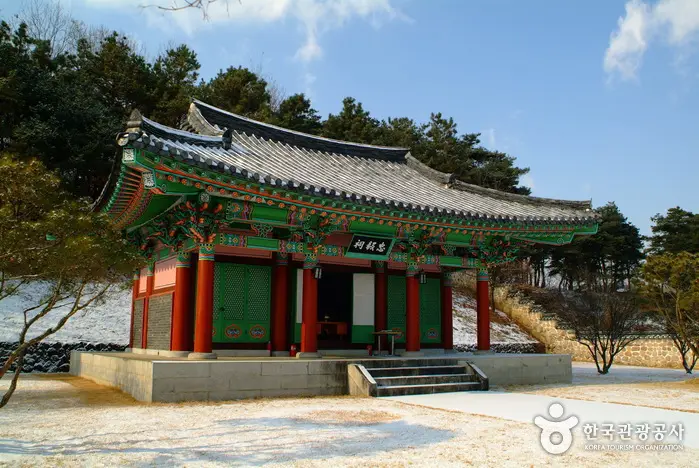
Chunguisa is a shrine housing the spirit tablet of General Jeong Gi-ryong, a military officer during the reign of King Seonjo of the Joseon Dynasty who rendered distinguished service as a master commander of land battles during the Imjin War.MoreLess
Source: Korea Tourism Organization (TourAPI) · Machine-translated