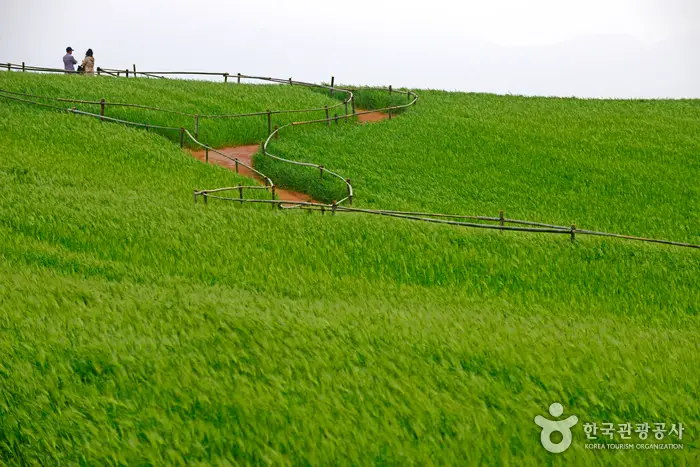
Becoming the 'Goblin's Bride' in a Buckwheat Field
8 stops
This is a rare, expansive farm cultivating barley fields across a sprawling area of approximately 500,000 square meters. In spring, visitors can enjoy the nation's largest barley fields, and in autumn, beautiful buckwheat fields.
- Distance
- 22.68km
Along the way
- 1
Hagwon Farm
학원농장
This is a rare, expansive farm cultivating barley fields across a sprawling area of approximately 500,000 square meters. In spring, visitors can enjoy the nation's largest barley fields, and in autumn, beautiful buckwheat fields.MoreLess
- 2
Gochangeupseong Walled Town
고창읍성
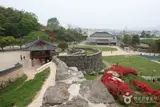
Gochang, home to Gochangeupseong Walled Town (Moyangseong Fortress), Seonunsa Temple, Dongni Shin Jae-hyo, and Midang Seo Jeong-ju, originated as "Morobiri-guk," one of the 54 small states of Mahan during the Samhan period. It was known as "Moryangburi-hyeon" or "Moyang-hyeon" during the Baekje period and has been called "Gochang-hyeon" since the Goryeo Dynasty.MoreLess
- 3
Hagwon Farm
학원농장
This is a rare, expansive farm cultivating barley fields across a sprawling area of approximately 500,000 square meters. In spring, visitors can enjoy the nation's largest barley fields, and in autumn, beautiful buckwheat fields.MoreLess
- 4
Mujanghyeon Government Office and Walled Town
무장현관아와읍성
According to the Mujang-eupji (Town Chronicle of Mujang) discovered in 1915, Military Commander Kim Jeo-rae mobilized about 20,000 residents, including commoners and monks from various villages, to construct the town wall in four full months from February to May 1417 (the 17th year of King Taejong's reign in the Joseon Dynasty). Meanwhile, it is also a historic site where the Donghak Peasant Revolution first broke out in 1894.MoreLess
- 5
Mujanghyeon Government Office and Walled Town
무장현관아와읍성
According to the Mujang-eupji (Town Chronicle of Mujang) discovered in 1915, Military Commander Kim Jeo-rae mobilized about 20,000 residents, including commoners and monks from various villages, to construct the town wall in four full months from February to May 1417 (the 17th year of King Taejong's reign in the Joseon Dynasty). Meanwhile, it is also a historic site where the Donghak Peasant Revolution first broke out in 1894.MoreLess
- 6
Gochang Dolmen Museum
고창고인돌박물관
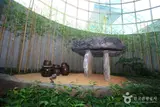
Gochang Dolmen Museum provides a comprehensive look at various Bronze Age artifacts, daily lifestyles, and global dolmen culture. The permanent exhibition hall features visitor guidance and symbolic exhibition spaces for the entire facility. By condensing the thematic exhibition content into symbolic displays, it sparks interest and curiosity, encouraging an engaging and active viewing experience.MoreLess
- 7
Gochangeupseong Walled Town
고창읍성
Gochang, home to Gochangeupseong Walled Town (Moyangseong Fortress), Seonunsa Temple, Dongni Shin Jae-hyo, and Midang Seo Jeong-ju, originated as "Morobiri-guk," one of the 54 small states of Mahan during the Samhan period. It was known as "Moryangburi-hyeon" or "Moyang-hyeon" during the Baekje period and has been called "Gochang-hyeon" since the Goryeo Dynasty.MoreLess
- 8
Gochang Dolmen Museum
고창고인돌박물관
Gochang Dolmen Museum provides a comprehensive look at various Bronze Age artifacts, daily lifestyles, and global dolmen culture. The permanent exhibition hall features visitor guidance and symbolic exhibition spaces for the entire facility. By condensing the thematic exhibition content into symbolic displays, it sparks interest and curiosity, encouraging an engaging and active viewing experience.MoreLess
Source: Korea Tourism Organization (TourAPI) · Machine-translated