A Treasure Trove of Cultural Heritage Comparable to Gyeongju
4 stops
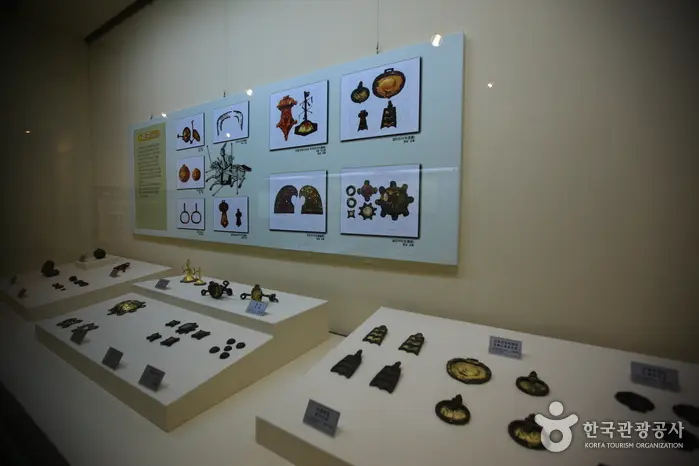
A total of 276 artifacts across 166 types from the Gaya and Silla periods (85 earthenware pieces, 42 pieces of horse tack, 50 accessories, 53 weapons, and 46 other items) are on display, primarily consisting of relics excavated from the Gyo-dong and Gyeseong Ancient Tombs.
- Distance
- 13.42km
Along the way
- 1
Changnyeong Museum
창녕박물관
A total of 276 artifacts across 166 types from the Gaya and Silla periods (85 earthenware pieces, 42 pieces of horse tack, 50 accessories, 53 weapons, and 46 other items) are on display, primarily consisting of relics excavated from the Gyo-dong and Gyeseong Ancient Tombs.MoreLess
- 2
Changnyeonghyanggyo Local Confucian School
창녕향교
Although the exact founding date is unknown, it was rebuilt during the reign of King Hyojong. After being destroyed by a fire in 1913, Daeseongjeon Shrine, Dongmu (East Shrine), and Seomu (West Shrine) were rebuilt the following year, and Punghwaru Pavilion was repaired in 1926 followed by Myeongnyundang Lecture Hall in 1959.MoreLess
- 3
Changnyeong Seokbinggo (Stone Ice Storage)
창녕석빙고
The earthen mound of this ice storage remains nearly intact, with its exterior resembling a giant ancient tomb. It was built elongated from north to south, perpendicular to the stream flowing behind it.MoreLess
- 4
Yeongsan Mannyeongyo Bridge (Yeongsan Hoguk Park)
영산만년교(영산호국공원)
The rainbow-shaped bridge at the park entrance is Mannyeongyo Bridge (Treasure No. 564), which holds high academic value as it showcases the arch bridge construction techniques of the southern region during the late Joseon period.MoreLess
Source: Korea Tourism Organization (TourAPI) · Machine-translated