Experience the Ecology of Changnyeong with All Five Senses
4 stops
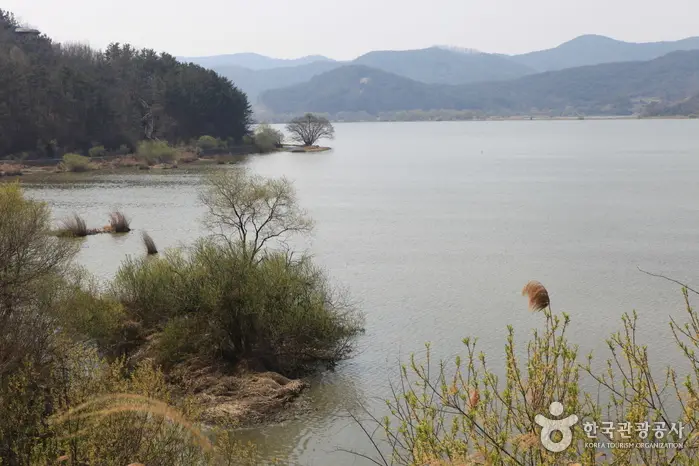
Upo Wetland is Korea's largest natural wetland. The term 'wetland' encompasses all four wetlands: Mokpo, Sajipo, and Jjokjibeol, in addition to Upo Wetland, which is the largest. This
- Distance
- 17.76km
Along the way
- 1Upo Wetland
우포늪
Upo Wetland is Korea's largest natural wetland. The term 'wetland' encompasses all four wetlands: Mokpo, Sajipo, and Jjokjibeol, in addition to Upo Wetland, which is the largest. ThisMoreLess
- 2
Upo Wetland Eco Center
우포늪생태관
The Upo Wetland Eco Center preserves and researches records of various wetland wildlife, such as birds, fish, mammals, amphibians, and reptiles, and displays them to the public. It also reminds us that humans are part of nature and provides lessons on how to live in harmony with the natural environment.MoreLess

- 3
Changnyeong Upo Gasiyeonkkot Village
창녕우포가시연꽃마을
While its administrative name is Sindang-ri, it refers to Jaengban and Dakgae, two natural villages located to the north and south of Local Road No. 1080. Jaengban was named so because the land resembles a serving tray (jaengban), while Dakgae got its name because the shape of the village resembles a chicken.MoreLess
- 4
Hwawangsan County Park
화왕산군립공원
Connecting Hwawangsan Mountain (756.6 m) and Gwallyongsan Mountain (also known as Guryongsan, 739.7 m), this park boasts numerous cultural heritages and scenic natural landscapes, attracting many tourists (hikers).MoreLess
Source: Korea Tourism Organization (TourAPI) · Machine-translated