Muju Summer Vacation Special Experience Course
4 stops · 1 day
While Muju is often associated with winter ski trips, it actually has plenty of sights and activities to enjoy throughout the area. Bandi Land, which highlights Muju's unpolluted, pristine environment, offers a variety of hands-on experiences for children. Visitors can also explore Taekwondowon, representing Korea's premier martial art, where they can discover everything about Taekwondo, from its spirit to its historical footprint.
- Duration
- 1 day
- Distance
- 8.66km
Along the way
- 1
Old Walls of Jijeon Village, Muju
무주 지전마을 옛 담장
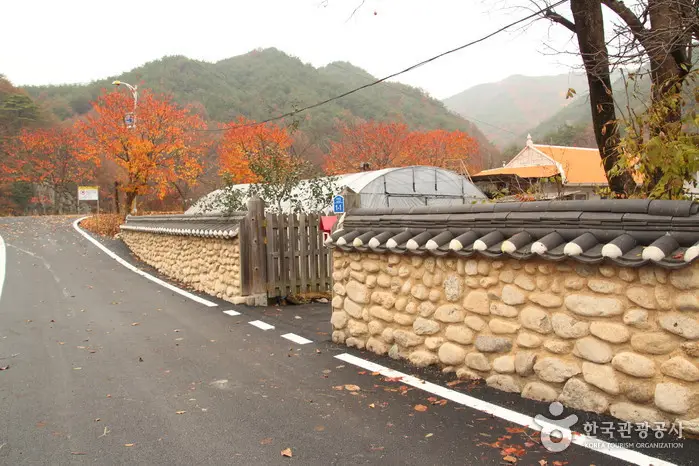
Walls can be categorized into those that serve their original function of defining property boundaries and those that serve as exterior walls, and most walls in this village fulfill their original function. The earthen and stone walls, which make up the majority, were built by laying a mixture of soil and natural stones flat. These connected walls provide visual continuity, and their tops are finished with cement tiles rather than traditional Korean roof tiles.MoreLess
- 2
Bandi Land
반디랜드
Bandi Land is an experiential learning and educational space where visitors can experience, learn about, and observe fireflies. It features an Insect Museum showcasing rare insects, the Firefly Research Institute, a youth campsite, log cabins, and natural firefly habitats.MoreLess
- 3National Taekwondowon
국립태권도원
Taekwondowon is a space for practicing the 'Great Che (Physical), In (Cognitive), and Ji (Mastery)' philosophy to cultivate well-rounded individuals through physical training and continuous exploration of Taekwondo. It offers 45 diverse programs themed around Taekwondo education, training, hands-on experiences, and cultural exchange.MoreLess

- 4
Gwaneumsa Temple (Muju)
관음사(무주)
Located at the foot of Baegunsan Mountain in Socheon Village, Seolcheon-myeon, Gwaneumsa is a Buddhist nun (bhikkhuni) temple affiliated with the Jogye Order. It began as a propagation center in 1938 and developed into a temple in 1940 under Monk Seok Ssang-dong. Centered around Beopbojeon Hall, which was rebuilt in 1974 by Monk Gwanjeong Seong Hyo-rye, it features Mogusil (a Zen meditation room) and monks' living quarters (Yosa) alongside it.MoreLess
Source: Korea Tourism Organization (TourAPI) · Machine-translated