Gangjin: On the Trail of Dasan, the Genius Silhak Scholar
3 stops · 1 day
This trail follows the footprints of Dasan Jeong Yak-yong to Dasan Chodang in Gangjin, where the genius thinker's arduous 18-year exile began. The camellia blossoms blooming along the path seem to soften the harshness of his life in exile. Supported by his maternal relatives, the remaining appearance of Dasan Chodang suggests his life in exile was relatively stable. Don't forget to take a walk along the quiet path that connects Dasan Chodang to Baengnyeonsa Temple.
- Duration
- 1 day
- Distance
- 3.25 km
Along the way
- 1
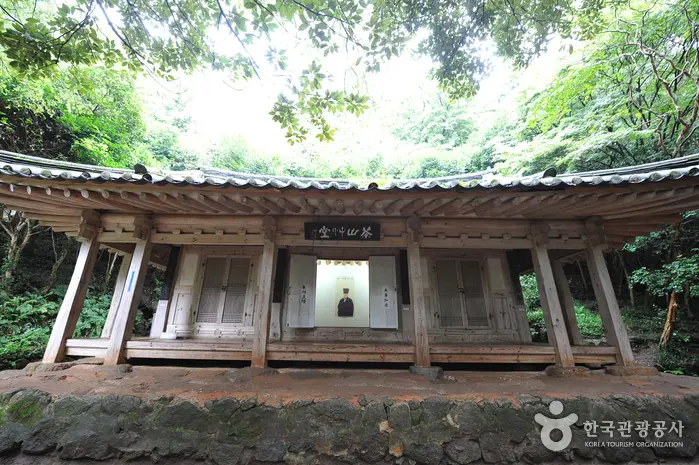
Dasan Chodang
다산초당
This is the place where Dasan Jeong Yak-yong, a representative Silhak (Practical Learning) scholar of the late Joseon Dynasty, was exiled in 1801 and lived for about 18 years. Here, he authored over 500 books, including Mokminsimseo (Mind of Governing the People) and Gyeongseyupyo (Design for Good Governance), synthesizing the Silhak philosophy of seeking truth from facts (Silsagusi) to shift the empty theoretical and idealistic academic trends of Neo-Confucianism toward practical and scientific thought. MoreLess
- 2
Camellia Forest at Baengnyeonsa Temple, Gangjin
강진 백련사 동백나무 숲
Dasan Jeong Yak-yong lived in exile at Dasan Chodang, and it is presumed that he enjoyed appreciating this camellia forest when traveling to and from Baengnyeonsa Temple. A camellia forest grows naturally in colonies in front of Baengnyeonsa Temple. Originally, Torreya nucifera (nutmeg trees) were more abundant, but they were cut down during the construction of Suwon Hwaseong Fortress. In addition, Styrax japonicus (Japanese snowbell) and giant timber bamboo grow here and there, alongside thick oriental cork oaks and muku trees.MoreLess
- 3
Baengnyeonsa Temple (Gangjin)
백련사(강진)
Baengnyeonsa Temple was founded in 839 during the reign of King Munseong of Silla by Buddhist Monk Muyeom of Muju. Later, in the 7th year of King Huijong of Goryeo, National Preceptor Wonmyo (Yose) rebuilt it into a complex of about 80 bays. Over 120 years in the late Goryeo Dynasty, the temple produced eight National Preceptors. It played a central role in reviving stagnant Buddhism by establishing a community practice based on Cheontae thought. Baengnyeonsa Temple also features a teahouse called Seondawon, where you can leisurely enjoy a cup of tea. MoreLess
Source: Korea Tourism Organization (TourAPI) · Machine-translated