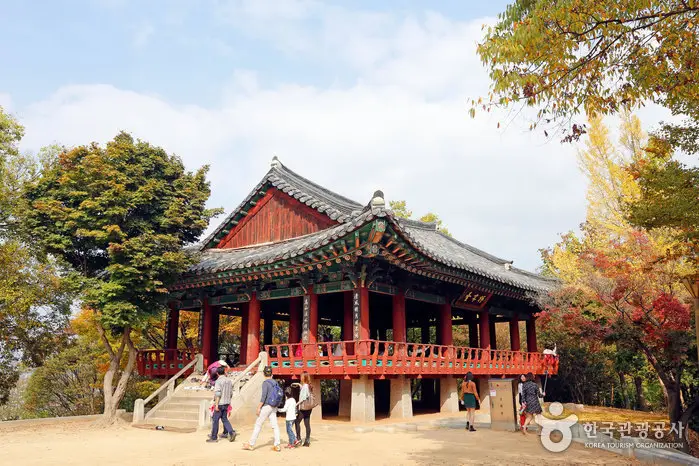
UNESCO Treasure Hunt Course in Jeonju
10 stops · 5 hours
Few cities possess as much cultural heritage as Jeonju. The Korean traditions of clothing, food, and housing are seamlessly blended into daily life. The trio of Hanbok (traditional clothing), Hansik (traditional cuisine), and Hanok (traditional houses) has become a spectrum of traditional culture spotlighted around the globe. Set off to discover Jeonju's UNESCO cultural heritage, drawing the eyes of the world.
- Duration
- 5 hours
- Distance
- 3.66km
Along the way
- 1Omokdae and Imokdae Historic Sites
오목대와 이목대
Omokdae is the place where Yi Seong-gye stopped to celebrate his victory on his way back after defeating Japanese invaders at Hwangsan Mountain in Unbong in the 6th year of King U of Goryeo (1380), at the site where his ancestor Mokjo had lived. Later, Emperor Gojong erected the Taejo Gohwangje Jupil Yuji Monument in his own calligraphy. Across the pedestrian bridge from here is Imokdae, where a monument and pavilion were erected about 80 meters below the building's location. The monument is engraved with "Mokjo Daewang Gugeo Yuji," written in Emperor Gojong's own calligraphy.MoreLess
- 2
Jeonju Traditional Culture Center
전주전통문화관
Nestled beside Hanbyeongnu Pavilion, the Jeonju Traditional Culture Center is the heart of Jeonju Hanok Village, ambitiously prepared by Jeonju City aiming to soar as a cultural tourism city in the 21st century. It is a place where the spirit of Jeonju—loving traditional sounds and welcoming others—comes alive, comprehensively encompassing things to see, eat, and enjoy.MoreLess
- 3
Jeonju Traditional Culture Center
전주전통문화관
Nestled beside Hanbyeongnu Pavilion, the Jeonju Traditional Culture Center is the heart of Jeonju Hanok Village, ambitiously prepared by Jeonju City aiming to soar as a cultural tourism city in the 21st century. It is a place where the spirit of Jeonju—loving traditional sounds and welcoming others—comes alive, comprehensively encompassing things to see, eat, and enjoy.MoreLess
- 4Jeonjuhyanggyo Local Confucian School
전주향교
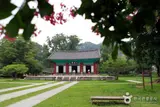
The Daeseongjeon Shrine of Jeonjuhyanggyo Local Confucian School is designated as Jeollabuk-do Tangible Cultural Heritage No. 7 and enshrines the ancestral tablets of the Five Sages, Ten Philosophers, and Six Worthies of the Song Dynasty. In addition, the Dongmu and Seomu (East and West Shrines) enshrine the spirit tablets of Yu Ruo, Fu Buqi, Fu Sheng, Dong Zhongshu, Han Yu, Li Tong, and 18 Sages of Korea.MoreLess
- 5Omokdae and Imokdae Historic Sites
오목대와 이목대
Omokdae is the place where Yi Seong-gye stopped to celebrate his victory on his way back after defeating Japanese invaders at Hwangsan Mountain in Unbong in the 6th year of King U of Goryeo (1380), at the site where his ancestor Mokjo had lived. Later, Emperor Gojong erected the Taejo Gohwangje Jupil Yuji Monument in his own calligraphy. Across the pedestrian bridge from here is Imokdae, where a monument and pavilion were erected about 80 meters below the building's location. The monument is engraved with "Mokjo Daewang Gugeo Yuji," written in Emperor Gojong's own calligraphy.MoreLess
- 6Gyeonggijeon Shrine
경기전
This is a representative historic site associated with King Taejo Yi Seong-gye, who founded the Joseon Dynasty. Designated as Historic Site No. 339, the grounds house the Royal Portrait of King Taejo (designated as Treasure No. 931) and Jogyeongmyo Shrine (designated as Tangible Cultural Heritage No. 16). It was founded in the 10th year of King Taejong (1410) to enshrine the portrait of King Taejo, the founder of the Joseon Dynasty. MoreLess
- 7Jeonju Pungnammun Gate
전주 풍남문
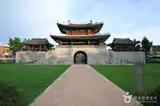
The name Pungnammun implies that it is the south gate of Jeonju, the home of Pungpae. The south gate of Jeonjuseong Fortress is none other than Pungnammun Gate. Symbolizing Jeonju, the royal capital of Later Baekje and the birthplace of the Joseon Dynasty, Pungnammun is a historic fortress gate and a landmark of Jeonju restored in modern times to retain its ancient appearance.MoreLess
- 8Gyeonggijeon Shrine
경기전
This is a representative historic site associated with King Taejo Yi Seong-gye, who founded the Joseon Dynasty. Designated as Historic Site No. 339, the grounds house the Royal Portrait of King Taejo (designated as Treasure No. 931) and Jogyeongmyo Shrine (designated as Tangible Cultural Heritage No. 16). It was founded in the 10th year of King Taejong (1410) to enshrine the portrait of King Taejo, the founder of the Joseon Dynasty.MoreLess
- 9Jeonju Pungnammun Gate
전주 풍남문
The name Pungnammun implies that it is the south gate of Jeonju, the home of Pungpae. The south gate of Jeonjuseong Fortress is none other than Pungnammun Gate. Symbolizing Jeonju, the royal capital of Later Baekje and the birthplace of the Joseon Dynasty, Pungnammun is a historic fortress gate and a landmark of Jeonju restored in modern times to retain its ancient appearance.MoreLess
- 10Jeonjuhyanggyo Local Confucian School
전주향교
The Daeseongjeon Shrine of Jeonjuhyanggyo Local Confucian School is designated as Jeollabuk-do Tangible Cultural Heritage No. 7 and enshrines the ancestral tablets of the Five Sages, Ten Philosophers, and Six Worthies of the Song Dynasty. In addition, the Dongmu and Seomu (East and West Shrines) enshrine the spirit tablets of Yu Ruo, Fu Buqi, Fu Sheng, Dong Zhongshu, Han Yu, Li Tong, and 18 Sages of Korea. MoreLess
Source: Korea Tourism Organization (TourAPI) · Machine-translated