King Taejo Yi Seong-gye Founds Joseon and Establishes Jongmyo and Sajik
3 stops · 4 hours
During the Joseon Dynasty, abandoning the "Jongmyo and Sajik" meant letting the nation fall into ruin. Jongmyo refers to the royal ancestral shrine housing the spirit tablets of past kings and queens, while Sajik refers to the altars where rites were performed to the deities of the earth and grains to pray for abundant harvests. Jongmyo and Sajik served as the foundation supporting the state and were the most sacred spaces to pray for national peace and prosperity. King Taejo Yi Seong-gye designated Hanyang as the new capital and established Jongmyo Shrine even before Gyeongbokgung Palace. With Jongmyo built to the left (east) and Sajik to the right (west) of Gyeongbokgung Palace, exploring these sites offers a look back at the beginnings of the Joseon Dynasty.
- Duration
- 4 hours
- Distance
- 3.21km
Along the way
- 1
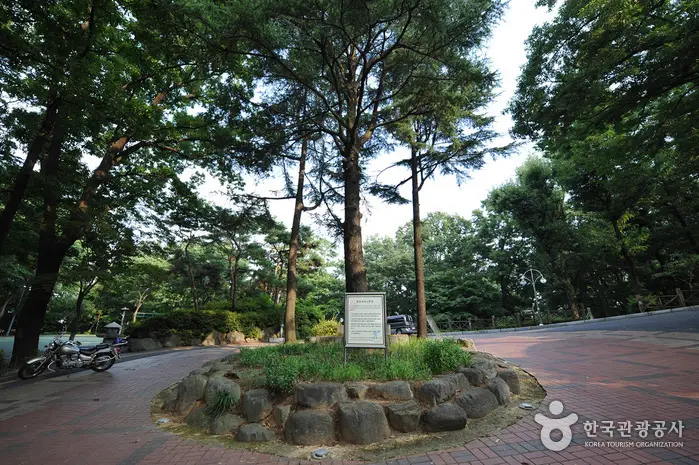
Sajik Park
사직공원
Sajik Park is centered around Sajikdan Altar (Historic Site No. 121), which was built first along with Jongmyo Shrine in 1395 by King Taejo Yi Seong-gye of Joseon. In the name "Sajik," "Sa" represents the god of the earth, and "Jik" represents the god of the five grains; Sajikdan is the altar where ancestral rituals were held to pray for bountiful harvests. The park features a children's playground, statues of Yulgok Yi I and Shin Saimdang, an archery range (Hwanghakjeong), and a municipal children's library.MoreLess
- 2Gyeongbokgung Palace
경복궁
Gyeongbokgung Palace was built in 1395 by King Taejo Yi Seong-gye as the main royal palace of the new Joseon Dynasty. Located further north compared to Donggwol (Eastern Palace, Changdeokgung Palace) and Seogwol (Western Palace, Gyeonghuigung Palace), it was also referred to as Bukgwol (Northern Palace). Gyeongbokgung Palace (Historic Site No. 117) boasts the grandest scale and architectural beauty among the five major palaces. Kings who held their coronation ceremonies at Geunjeongjeon Hall in Gyeongbokgung Palace include the 2nd King Jeongjong, 4th King Sejong, 6th King Danjong, 7th King Sejo, 9th King Seongjong, 11th King Jungjong, and 13th King Myeongjong.MoreLess
- 3Jongmyo Shrine
종묘
Jongmyo is a royal ancestral shrine housing the spirit tablets of the successive kings and queens of the Joseon Dynasty, as well as those posthumously honored. After founding the Joseon Dynasty and relocating the capital from Gaegyeong to Hanyang, King Taejo Yi Seong-gye built Jongmyo simultaneously with Gyeongbokgung Palace, demonstrating how important Jongmyo was to the new dynasty. Following the Chinese custom of building ancestral shrines to the east of the palace, it was constructed to the east of Gyeongbokgung Palace. However, Jongmyo was adapted to fit Korean realities and established itself as a cultural heritage bearing uniquely Korean characteristics.MoreLess
Source: Korea Tourism Organization (TourAPI) · Machine-translated