A Time Capsule of Aragaya's History
5 stops · 8 hours
Because Haman is an unfamiliar travel destination, the Marisan Ancient Tombs may also be relatively unknown. Along with Geumgwan Gaya, the Marisan Ancient Tombs are a representative relic of Aragaya, which symbolizes Gaya culture. When people think of Gaya culture, Gimhae or Goryeong usually come to mind first, but the Marisan Ancient Tombs in Haman form an open-air museum comparable even to the ancient tombs of Gyeongju.
- Duration
- 8 hours
- Distance
- 18.51km
Along the way
- 1
Haman Museum
함안박물관
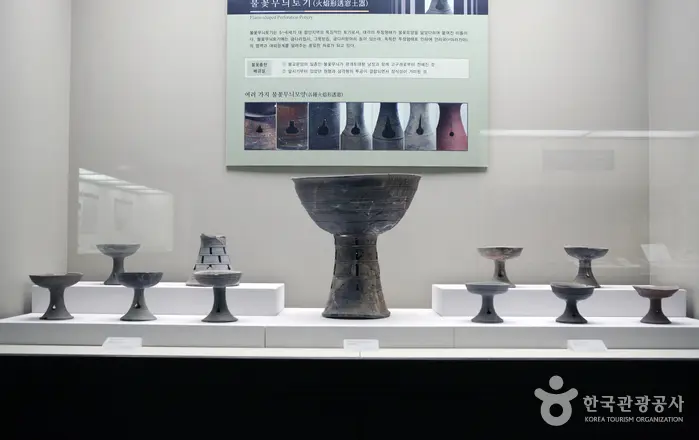
Haman Museum is a county-run museum set against the backdrop of the Marisan Ancient Tombs (Historic Site No. 515) of Aragaya. It exhibits various artifacts from the Gaya period, including Korea's first excavated horse armor, flame-patterned pottery, cartwheel-shaped pottery, and barbed iron plates with bird ornaments, offering a comprehensive look at Aragaya's history and outstanding culture. In addition, various local cultural assets of Haman, such as the wooden tablets of Seongsansanseong Fortress, Docheonjae Danseojukbaek, and Yeongjongdaewang Gukhyulboksangdo, are on display. Outdoors, an Ara Hongryeon (ancient red lotus) pond blooming after 700 years and a dolmen park offer unique sights.MoreLess
- 2Marisan Ancient Tombs
말이산고분군
A relic that reveals Aragaya culture, the Marisan Ancient Tombs in Haman are located in a basin that is high in the south and low in the north, surrounded by the Nakdonggang and Namgang Rivers to the north and west, and mountains over 600 meters high to the south and east. Located in the area of Dohang-ri and Malsan-ri in Gaya-eup, the former capital of Aragaya, these tumuli vividly showcase the splendid Gaya culture.MoreLess
- 3
Mujinjeong Pavilion
무진정
Mujinjeong is a pavilion built on a hill to appreciate nature and the arts. It was erected in 1567 (the 22nd year of King Myeongjong of the Joseon Dynasty) by the descendants of Jo Sam (pen name Mujin) to honor his virtue, and named Mujinjeong Pavilion after his pen name. The current structure was rebuilt in April 1929; featuring a simple and modest hipped-and-gabled roof without any decorations or sculptures atop the pillars, it retains the pavilion style of the early Joseon period. Measuring 3 bays in front and 2 bays on the sides, it features long front and rear eaves (toe) and an ondol (floor-heated) room in the central bay. MoreLess
- 4
Haman Beef Gukbap (Daegu Sikdang)
함안 소고기국밥(대구식당)
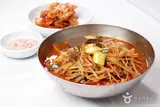
At the old Haman Market, there is Gukchon Village, which specializes in Gyeongsang-do style beef soup with rice (sogogi-gukbap). Among the restaurants, this establishment has been run by two generations for over 40 years. Characterized by adding a modest amount of congealed ox blood compared to other places, the rich broth made by boiling beef bones, brisket, shank, tripe, and eye of round harmonizes with radish, bean sprouts, and green onions to create a rich umami flavor truly worthy of an authentic Gyeongsang-do style beef gukbap eatery. The tender boiled beef slices (suyuk) lightly dipped in vinegar soy sauce are another specialty of this house.MoreLess
- 5
Agyangnu Pavilion
악양루
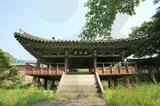
Agyangnu Pavilion (岳陽樓) is situated in a location with exceptional views; the Namgang River flows below the pavilion, and a wide field along with the embankment of Beopsu-myeon can be seen in a single glance. It is said that the pavilion was named after "Yueyang," a scenic spot in China. It was restored after the Korean War and renovated in 1963 to its current form. Measuring 3 bays in front and 2 bays on the sides, the building features a hipped-and-gabled roof that resembles the Chinese character '八' (pal) when viewed from the side.MoreLess
Source: Korea Tourism Organization (TourAPI) · Machine-translated