Buyeo, the Precious Home of Baekje Culture
4 stops · 1 day
Buyeo is a place where Baekje's most exquisite culture coexists with the poignant history of its fall. It is the region holding the greatest wealth of Baekje culture, renowned for being 'frugal yet not shabby, splendid yet not extravagant.' Discover the true 'Baekje style' in Buyeo, where the spirit of Baekje breathes in every step and glance.
- Duration
- 1 day
- Distance
- 38.50km
Along the way
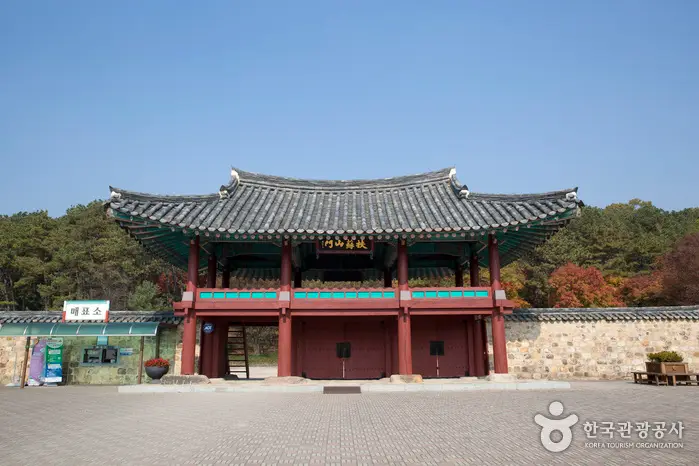
- 1Gwanbuk-ri Relics and Busosanseong Fortress [UNESCO World Heritage]
관북리유적과 부소산성[유네스코 세계유산]
Upon entering Buyeo, the first thing that catches your eye is Busosan Mountain to the north of the downtown area, rising gently to an elevation of 106 meters and covered in dark, lush woods. Busosan Mountain, the guardian mountain of Buyeo, is steeped in the history of Baekje and the stories of its royal court everywhere you turn—including Nakhwaam Rock, where many Baekje women jumped like flower petals to their deaths to preserve their chastity; Baekhwajeong Pavilion; Sajaru Pavilion; Banwollu Pavilion; Gungnyeosa Shrine; Goransa Temple; Busosanseong Fortress (Historic Site No. 5); Yeong-illu Pavilion, where people welcomed the sunrise; Samchungsa Shrine, dedicated to the loyal Baekje subjects Seongchung, Heungsu, and Gyebaek; Gunchangji, the site of grain storehouses; the pit-dwelling barracks site of Baekje soldiers; and earthen fortresses that catch your gaze at every turn.MoreLess
- 2
Ancient Tombs in Neungsan-ri, Buyeo [UNESCO World Heritage]
부여 능산리 고분군 [유네스코 세계유산]
Located in Neungsan-ri, Buyeo-eup, Buyeo-gun, Chungcheongnam-do, these tombs date back to the Baekje period and are situated halfway up the southern slope of Neungsan-ri Mountain (121 meters above sea level). The site has a typical cemetery topography chosen according to feng shui principles. With the mountain behind serving as the main guardian mountain, it features the Azure Dragon to the east, the White Tiger to the west, and the mountain in Yeomchang-ri in front serving as the Vermilion Bird to the south. It is a south-facing royal cemetery with Neungsanrichun Stream flowing westward about 200 meters in front. The cluster consists of three tombs in the front row, three in the back row, and one additional tomb discovered at the highest point in the very back, making a total of seven ancient tombs today.MoreLess
- 3Seodong Park and Gungnamji Pond
서동공원과 궁남지
Gungnamji Pond (Historic Site No. 135) was created by King Mu of Baekje, famous for his love story with Princess Seonhwa, as part of a detached palace to the south of the royal palace. It is the first artificial pond in Korea and is named Gungnamji based on records in the Samguk Sagi (History of the Three Kingdoms). According to the Samguk Sagi, in the 35th year of King Mu's reign (634), 'a pond was dug to the south of the palace, water was brought in from over 20 li away, willows were planted around it, and an island was built in the middle of the pond to imitate Mount Bangjangseonsan, one of the three mythical mountains of Chinese legend.' The present pond was restored between 1965 and 1967 and is about one-third the size of the original natural swamp.MoreLess
- 4
Muryangsa Temple (Buyeo)
무량사(부여)
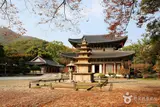
Located in Oesan-myeon, Buyeo-gun, Chungcheongnam-do, the thousand-year-old Muryangsa Temple nestles at the foot of Mansusan Mountain. Founded during the reign of King Munmu of Silla by National Preceptor Beomil, the temple has reached today after several renovations. As the country's foremost Amitabha prayer retreat, passing through the Sacheonwangmun Gate reveals Geungnakjeon Hall of Muryangsa Temple, designated as Treasure No. 356, straight ahead. Sacheonwangmun Gate offers the best view to appreciate Muryangsa's beauty, where the two-story Geungnakjeon Hall (with no interior floor division), the Five-story Stone Pagoda (Treasure No. 185), and the Stone Lantern (Treasure No. 233) line up in a magnificent row. The Clay Seated Amitabha Buddha Triad of Geungnakjeon Hall (Treasure No. 1565) also boasts majestic grandeur. Muryangsa Temple is also where Kim Si-seup (pen name Maewoldang), one of the Saengyuksin (six loyal subjects of Joseon), passed away; his stupa and portrait remain on the temple grounds. Although administratively part of Buyeo-gun, it is closer to downtown Boryeong.MoreLess
Source: Korea Tourism Organization (TourAPI) · Machine-translated