A Hwasun Travelogue Full of Fun, Education, and Memories
4 stops · 1 Night 2 Days
Hwasun is home to the UNESCO World Heritage-listed dolmen sites and Unjusa Temple, famous for its thousand Buddhas and thousand pagodas. True to its name, which conveys harmony and gentleness, it is a region where people, nature, and culture blend together. However, compared to its renown, transportation has been relatively inconvenient, keeping foot traffic low; thus, a trip to Hwasun offers a tranquil journey with the secluded feel of exploring the backcountry.
- Duration
- 1 Night 2 Days
- Distance
- 106.32km
Along the way
- 1
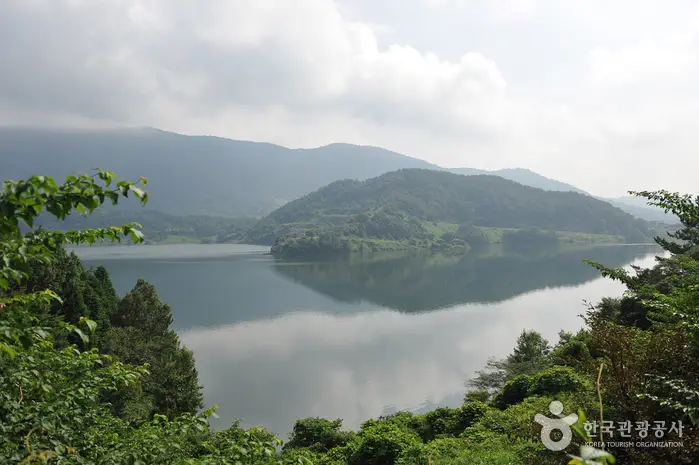
Juamho Lake and Sangsaho Lake
주암호와 상사호
Completed over eight years from 1984 to 1992 and holding 700.07 million tons of water, Juamho and Sangsaho Lakes serve not only water management functions for the Gwangju and Jeonnam regions but also feature a 145.5 km lakeside drive. Centering around the Honam Expressway, National Routes 15, 18, and 27 encircle Juamho Lake connecting Songgwangsa Temple and Dolmen Park, while Naganeupseong Folk Village and Sangsaho Lake, connected by Local Roads 818 and 857, add yet another layer of beauty, making them important tourism assets of Suncheon-si that allow visitors to enjoy the relaxed and abundant nature spread beneath the foothills of Jogyesan and Mohusan Mountains.MoreLess
- 2
Manyeon Falls
만연폭포
Located below the mountain pass leading from Hwasun-eup to Suman-ri is Manyeon Falls. This waterfall, where neuralgia patients have long visited in midsummer to heal their ailments, carries a legend. Long ago, Man-seok and Yeon-sun were lovers, but they were separated when Man-seok went off to war. After waiting for Man-seok who did not return, Yeon-sun was forced by her parents to marry another man; on her wedding day, she saw an emaciated Man-seok right there. On her wedding night, Yeon-sun fled the bridal chamber to meet Man-seok secretly and reached this waterfall, where they leapt to their deaths, pledging to fulfill in the afterlife the love they could not in this world. It is said that the waterfall was named Manyeon Falls after them. Standing under the stream of water cascading from about 10 meters high will send a chill through you, blowing away the summer heat completely.MoreLess
- 3
Mulyeomjeong Pavilion
물염정
Mulyeomjeong Pavilion, a representative pavilion of the Hwasun area in Jeonnam where the wandering poet Kim Satgat spent his final days, is located 3 km upstream from Hwasun Jeokbyeok (Red Cliffs). Looking out from the pavilion over the fantastic rocks and cliffs of Mulyeom Jeokbyeok unfolding like a folding screen, the atmosphere of the pine forest, and the scenery of the deep valley and sheer precipices creates a breathtaking vista that makes visitors feel as though they are stepping into a paradise of Taoist immortals. Recently, a stone statue and poetry monuments dedicated to Kim Satgat (real name Kim Byeong-yeon) have been established at the entrance of Mulyeomjeong Pavilion, adding to the interest of tourists.MoreLess
- 4
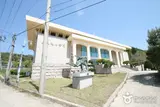
Oh Ji-ho Memorial Hall
오지호기념관
Many remember Oh Ji-ho as a painter and as an advocate for the mixed use of Hangul and Hanja (Chinese characters). Located in Dongbok, the birthplace of Oh Ji-ho, the Oh Ji-ho Memorial Hall exhibits his artworks and personal relics, and was opened in 2005 to revitalize local culture through special exhibitions and other programs.MoreLess
Source: Korea Tourism Organization (TourAPI) · Machine-translated