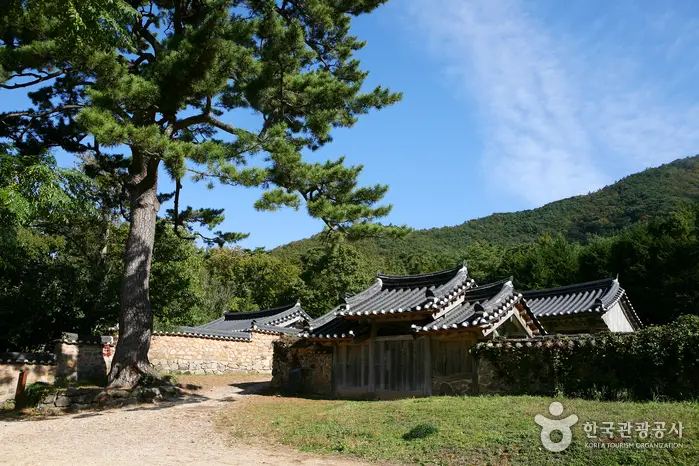
An End Is Another Beginning: The Hope Bus Departing from Haenam!
5 stops · 6 hours
Haenam lies at the southern tip of the Korean Peninsula. As the saying goes, every end is a new beginning. Drawn by the symbolism of ends and beginnings, people flock to Ttangkkut (Land's End) in Haenam. However, Haenam has far too many sights and culinary delights to offer to simply leave after seeing just the edge of the land. While you are here, take the opportunity to explore every nook and cranny.
- Duration
- 6 hours
- Distance
- 28.07km
Along the way
- 1Gosan Yun Seon-do Historic Site
고산윤선도유적지
This historic site is dedicated to Gosan Yun Seon-do (1587–1671), a Joseon civil official and pioneer of Korean literature, and features Nogudang, the sarangchae (men's quarters). As the head house of the Eochoun branch of the Haenam Yun clan with a 600-year tradition, Nogudang is backed by Deokeumsan Mountain and is widely regarded as one of Korea's most auspicious sites. Today, the historic site contains a ginkgo tree and nutmeg forest that testify to its long history and tradition, as well as Nogudang, the anchae (main quarters), haengrangchae (servants' quarters), a shed, an inner shrine, Gosan Shrine, Eochoun Shrine, Chuwondang, and the Gosan Relics Exhibition Hall. It is well known as a family estate that preserved the largest collection of artifacts (approx. 5,000 items) among Joseon noble families.MoreLess
- 2Duryunsan Cable Car
두륜산케이블카
Ttangkkut (Land's End), where the sea and sky meet, is the place where the Baekdudaegan Mountain Range dashed southward to make its final surge and come to rest. Possessing the greatest concentration of energy (gi) on the Korean Peninsula, it is both the start and the end of the Baekdudaegan. As such, Ttangkkut has been revered as a prime energetic spot where ancient sages and artists held sacred rituals to receive its energy, using it to open the gates of heaven. Local tales also tell that standing here and making a wish toward the sky and sea will make hope sprout and wishes come true. With this rich symbolism, Ttangkkut attracts visitors from all over the country as the starting point of hope and nationwide cross-country treks, while also serving as a vital hub and route for maritime culture.MoreLess
- 3Daeheungsa Temple [UNESCO World Heritage]
대흥사(해남)
Said to have been founded by Monk Ado in the 22nd year of King Seong of Baekje, Daeheungsa Temple is a sanctuary protected from the three disasters where the final teachings and robe/bowl of Great Master Seosan were passed down, sparking a revival of Buddhist culture. At Pyochungsa Shrine, where state rituals were held, and Iljiam Hermitage, the birthplace of Korean tea culture, visitors can trace the writings and footprints of historical figures such as Master Choui and Chusa Kim Jeong-hui. The temple grounds house Daeungbojeon Hall, Chimgyeru Pavilion, Myeongbujeon Hall, Eungjindang Hall, Cheonbuljeon Hall, Cheonbulsang (Thousand Buddhas), Pyochungsa Shrine, Daegwangmyeongjeon Hall, Iljiam Hermitage, Bukmireugam Hermitage, and the Seongbo Museum. Daeheungsa is home to numerous cultural assets, including the Rock-carved Seated Tathagata Buddha of Bukmireugam Hermitage (National Treasure No. 308) and the Bronze Bell of Tapsansa Temple (Treasure No. 88) housed in the Master Seosan Relics Exhibition Hall, while the country's largest stupa field (budojeon) holds the Stupa of Great Master Seosan alongside various cultural heritages and legends.MoreLess
- 4Duryunsan Provincial Park
두륜산도립공원
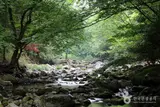
Duryunsan is a scenic mountain rising 703 meters above sea level at the southernmost tip of the Korean Peninsula, rich with temples and historical sites. It holds significant botanical value with its forests blending warm-temperate evergreen broadleaf trees and temperate deciduous broadleaf trees. It also features vast silver grass fields, and from the tops of its eight peaks, one can take in panoramic views of the Dadohae Archipelago across the West and South seas. The mountain takes pride in the autumn foliage woven by its dense forests as well as its vibrant green camellias. Along the 2 km path from the tourist complex to the temple, picturesque valleys stretch along both sides, framed by lush trees creating a breathtaking canopy tunnel.MoreLess
- 5
Haenam Donghae Kimchi Village
해남 동해김치마을
Located about 25 km from Haenam-eup at the foot of Duryunsan Mountain, Kimchi Village retains its pristine, eco-friendly charm. Featuring traditional stone-walled pathways, unpolluted seas, wide-open fields, and a reservoir showcasing village murals right from the entrance, the village delights visitors through well-curated, unique seasonal hands-on experiences. In addition, its proximity to major attractions such as Gangjin's celadon sites, Ttangkkut Tourist Site, and Wando makes it a popular themed destination linked with diverse village experience programs.MoreLess
Source: Korea Tourism Organization (TourAPI) · Machine-translated