Jeongeup: Where Naejangsan's Autumn Foliage and the Passion of the Donghak Peasant Revolution Burn Bright
7 stops · 1 night 2 days
Famous for the exquisitely beautiful autumn foliage of Naejangsan Mountain, Jeongeup is also a historic site where grassroots commoners passionately rose up during the Donghak Peasant Revolution in pursuit of a new world. Admire the fiery crimson foliage of Naejangsan Mountain while remembering the ardent aspirations of the people who boldly stood up for change in times past.
- Duration
- 1 night 2 days
- Distance
- 50.79km
Along the way
- 1
Hwangtohyeon Battle Site, Jeongeup
정읍 황토현 전적
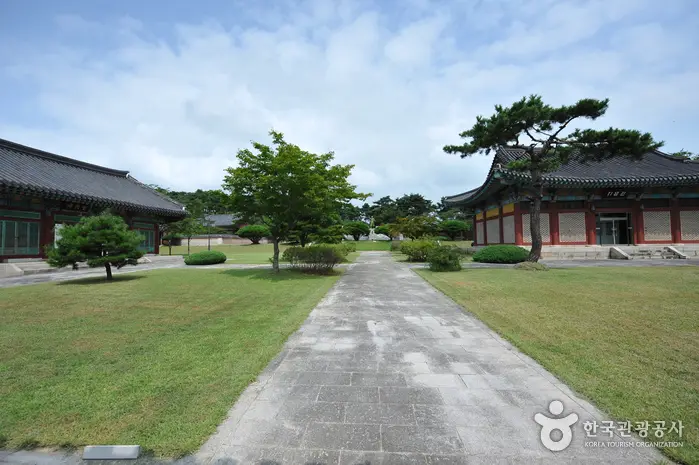
This low hill covered in red clay is the historic site of a major victory where the Donghak Peasant Army defeated government troops during the 1894 Gabo Donghak Peasant Revolution. In early April 1894, as government forces chased the peasant army, the rebels lured them into a trap and fought a fierce battle from the night of April 6 to the dawn of April 7, achieving a resounding victory. On that very day, they captured the Gobu government office, followed by Heungdeok, Gochang, and Mujang, spreading the flames of the peasant revolution across Gyeongsang-do and Chungcheong-do provinces. Today, the Gabo Donghak Peasant Revolution Monument stands on the ridge of Hwangtohyeon, and the Hwangtohyeon Battle Site Memorial Hall is located on the southeastern slope. Sitting with your back to the monument, the view of the red earthen mounds and fields across the road leaves a strong impression.MoreLess
- 2Donghak Peasants Revolution Memorial Hall
동학농민혁명기념관
This space was established to commemorate and honor the historic site where tens of thousands of nameless peasant soldiers—led by figures such as Jeon Bong-jun, Kim Gae-nam, and Son Hwa-jung under the banners of anti-corruption, anti-feudalism, and anti-foreign aggression—won their first major victory against government troops dispatched from Jeonju Gamyeong in 1894, serving as a critical turning point that transformed the Gobu Peasant Revolt into the nationwide Donghak Peasant Revolution. It features the Gabo Donghak Peasant Revolution Monument, the first monument dedicated to a peasant uprising in history, and an educational center that hosts various education programs and events related to the Donghak Peasant Revolution.MoreLess
- 3
Hwangtohyeon Battle Site, Jeongeup
정읍 황토현 전적
This low hill covered in red clay is the historic site of a major victory where the Donghak Peasant Army defeated government troops during the 1894 Gabo Donghak Peasant Revolution. In early April 1894, as government forces chased the peasant army, the rebels lured them into a trap and fought a fierce battle from the night of April 6 to the dawn of April 7, achieving a resounding victory. On that very day, they captured the Gobu government office, followed by Heungdeok, Gochang, and Mujang, spreading the flames of the peasant revolution across Gyeongsang-do and Chungcheong-do provinces. Today, the Gabo Donghak Peasant Revolution Monument stands on the ridge of Hwangtohyeon, and the Hwangtohyeon Battle Site Memorial Hall is located on the southeastern slope. Sitting with your back to the monument, the view of the red earthen mounds and fields across the road leaves a strong impression.MoreLess
- 4
Naejangsan Special Tourist Zone, Jeongeup
정읍 내장산 관광특구
Featuring diverse mountainous terrain including Naejangsan, Baegamsan, and Ipamsan Mountains, Naejangsan Special Tourist Zone is considered Korea's top autumn foliage destination due to the stunning fiery red leaves of its broadleaf trees. Since the Joseon Dynasty, it has been referred to as the 'Geumgangsan of the Honam Region.' Located about 11 km from downtown Jeongeup, Naejangsan Mountain was named for containing endless hidden treasures within its bounds. Centered around its highest peak, Sinseonbong (763 m above sea level), nine peaks stand in a horseshoe-like formation, creating a mystical atmosphere. Boasting scenery magnificent enough to be named one of Korea's Eight Scenic Views, it is renowned for Geumseon Valley—which embraces Geumseon Falls and Dodeok Falls—and Baegam Valley.MoreLess
- 5Donghak Peasants Revolution Memorial Hall
동학농민혁명기념관
This space was established to commemorate and honor the historic site where tens of thousands of nameless peasant soldiers—led by figures such as Jeon Bong-jun, Kim Gae-nam, and Son Hwa-jung under the banners of anti-corruption, anti-feudalism, and anti-foreign aggression—won their first major victory against government troops dispatched from Jeonju Gamyeong in 1894, serving as a critical turning point that transformed the Gobu Peasant Revolt into the nationwide Donghak Peasant Revolution. It features the Gabo Donghak Peasant Revolution Monument, the first monument dedicated to a peasant uprising in history, and an educational center that hosts various education programs and events related to the Donghak Peasant Revolution.MoreLess
- 6
Naejangsan Special Tourist Zone, Jeongeup
정읍 내장산 관광특구
Featuring diverse mountainous terrain including Naejangsan, Baegamsan, and Ipamsan Mountains, Naejangsan Special Tourist Zone is considered Korea's top autumn foliage destination due to the stunning fiery red leaves of its broadleaf trees. Since the Joseon Dynasty, it has been referred to as the 'Geumgangsan of the Honam Region.' Located about 11 km from downtown Jeongeup, Naejangsan Mountain was named for containing endless hidden treasures within its bounds. Centered around its highest peak, Sinseonbong (763 m above sea level), nine peaks stand in a horseshoe-like formation, creating a mystical atmosphere. Boasting scenery magnificent enough to be named one of Korea's Eight Scenic Views, it is renowned for Geumseon Valley—which embraces Geumseon Falls and Dodeok Falls—and Baegam Valley.MoreLess
- 7Pihyangjeong Pavilion
정읍 피향정
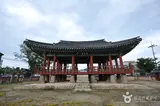
The name Pihyangjeong originates from the idea that the fragrance of lotuses blooming in Sangyeonji (Upper Lotus Pond) and Hayeonji (Lower Lotus Pond), dug on the east and west sides, fills the entire surrounding area. Facing south toward the pond, the building features a hipped-and-gabled roof (paljakjibung) with double eaves, and its interior can be accessed via stone steps at the front and back. Beneath the wooden veranda floor, circular stone base pillars support the structure, upon which 28 round wooden pillars are erected—a design said to reflect the ancient cosmology dividing the universe into 28 lunar mansions.MoreLess
Source: Korea Tourism Organization (TourAPI) · Machine-translated