A Second School Trip by Bus: Yangdong Village Course
4 stops
Gyeongju is a city that is like a giant Silla museum in its entirety. It is also home to as many as 52 UNESCO World Heritage designations. Naturally, visitors are driven by the urge to check off every single tourist attraction on the Gyeongju travel map. When feeling that way, hop on a city tour bus and reminisce about school trips of the past. Along with those nostalgic memories, the splendid heritage of Gyeongju will vividly leave its mark on your heart.
- Distance
- Approx. 29.87 km
Along the way
- 1
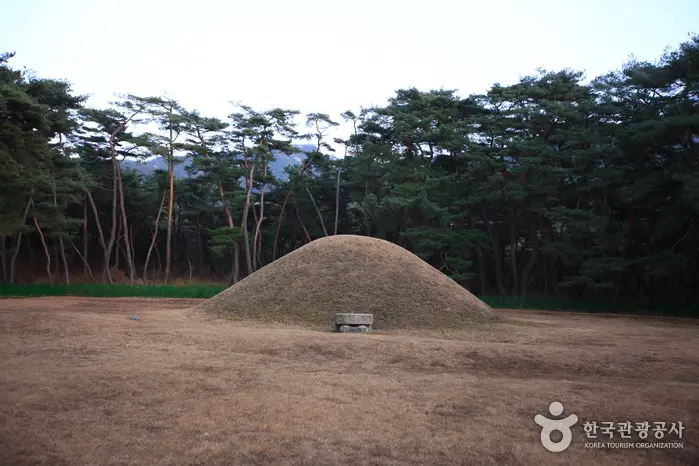
Tomb of King Gyeongae
경애왕릉
This tomb is the resting place of King Gyeongae (r. 924–927), the 55th monarch of Silla. It is a rounded earthen mound measuring 43 meters in bottom circumference, 12 meters in diameter, and 4.2 meters in height. It is located at the northwestern end of Namsan Mountain's foothills, on the east bank of Incheon (Girinnae) Stream. The king, son of the 53rd King Sindeok, met his end in 927 during a surprise attack by Gyeon Hwon of Later Baekje while hosting a banquet at Poseokjeong Pavilion.MoreLess
- 2
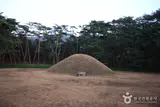
Samneung Royal Tombs in Bae-dong, Gyeongju
경주 배동 삼릉
This site is called Samneung (Three Tombs) because the royal tombs of King Adalla (the 8th monarch of Silla), King Sindeok (the 53rd monarch), and King Gyeongmyeong (the 54th monarch) are clustered in one place. The tomb measures 61 meters in bottom circumference, 5.8 meters in height, and 18 meters in diameter. Having been robbed twice, its interior was excavated and investigated in 1953 and 1963. The investigation revealed that the primary burial structure is a horizontal-entry stone chamber built with crushed stones. \n King Gyeongmyeong (r. 917–927, Bak Seung-yeong) was the son of King Sindeok; he allied with King Taejo (Wang Geon) of Goryeo to repel Gyeon Hwon's\n attack on Daeyaseong Fortress. He attempted to establish diplomatic relations with Later Tang of China, but was unsuccessful. The tomb measures 50 meters in bottom circumference, 4.5 meters in height, and 16 meters in diameter.MoreLess
- 3Gyeongju Gyochon Traditional Village
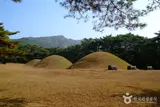
경주 교촌마을
Home to the Choe Clan Ancient House in Gyeongju (Important Folklore Cultural Heritage No. 27) and Gyeongju Gyodong Beopju (Important Intangible Cultural Property No. 86-da), Gyochon Village is imbued with the spirit of the Gyeongju Choe Clan, who maintained their vast fortune for 12 generations and placed great emphasis on scholarship, producing jinsa (literati examinees) across 9 generations. It is also said that Yoseokgung Palace, where Silla's Princess Yoseok gave birth to Seol Chong through her relationship with Monk Wonhyo, once stood here. Nearby are Gyerim Forest, steeped in the birth legend of Bak Hyeokgeose, the founder of Silla; the Tomb of King Naemul; Gyeongju Hyanggyo Local Confucian School; and Jaemaejeong Well, where General Kim Yu-sin once lived.MoreLess
- 4Yangdong Folk Village, Gyeongju [UNESCO World Heritage]
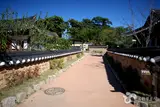
경주 양동마을 [유네스코 세계문화유산]
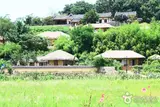
Yangdong Folk Village is Korea's largest traditional village that fully preserves the traditional culture and nature of the Joseon Dynasty, having been formed by the Wolseong Son and Yeogang Yi clans. Retaining numerous cultural assets such as National Treasures, Treasures, and folklore materials, the entire village has been designated a cultural heritage site (Important Folklore Cultural Heritage No. 189). Rich in attractions—including the scale and preservation status of the village, the quantity and authenticity of its cultural properties, as well as its beautiful natural environment and pristine local character—it was even visited by the UK's Prince Charles in 1993.\nMoreLess
Source: Korea Tourism Organization (TourAPI) · Machine-translated