A Stroll along Sacheon's Historical Trail
5 stops · 6 hours
This course explores the historic cultural heritage of Sacheon. Dasolsa Temple, an ancient and serene temple built during the flourishing era of Silla Buddhism, boasts sublime beauty in harmony with nature. In particular, the autumn scenery is truly peerless. Following the traces of ancient culture at places like Gugyeseowon Confucian Academy and Sacheoneupseong Fortress, who knows—you might just discover a new side of yourself along the way.
- Duration
- 6 hours
- Distance
- 48.20km
Along the way
- 1Dasolsa Temple
다솔사(경남)
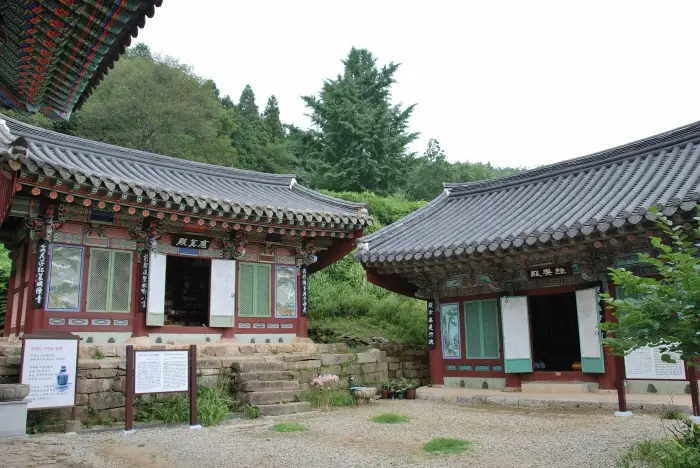
Dasolsa Temple is an ancient, historic temple founded during the reign of King Jijeung of Silla by the Indian monk Master Yeongi. It was destroyed by fire during the Japanese invasions of Korea (Imjin War). Ten years later, in the 12th year of King Sukjong's reign (1686), monks gathered their strength and spent a decade rebuilding and greatly reviving it. However, 62 years later, in the 24th year of King Yeongjo's reign (1748), it tragically suffered another disaster from a major fire. In the 34th year of the same king's reign (1758), several monks joined forces once again to reconstruct Myeongbujeon Hall, Daeyangnu Pavilion, and Sawangmun Gate. Then, in December 1914, another fire broke out and destroyed all hall buildings; fortunately, Daeyangnu Pavilion was spared. The structures standing today are the result of three years of reconstruction starting the following year.MoreLess
- 2
Gugyeseowon Confucian Academy
구계서원
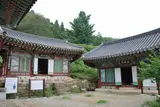
Gugyeseowon Confucian Academy was founded in 1606 (the 39th year of King Seonjo's reign), and its shrine, Gusansa, was built in 1611 (the 3rd year of Gwanghaegun's reign). In 1676 (the 2nd year of King Sukjong's reign), it was elevated to a royally chartered academy after receiving the hanging board inscribed 'Gugye' from the state. In 1723 (the 3rd year of King Gyeongjong's reign), the ancestral tablet of Kim Deok-ham was additionally enshrined here. It was abolished in 1868 (the 5th year of King Gojong's reign) due to the Daewongun's decree to tear down private academies, but was rebuilt in 1931.MoreLess
- 3
Sacheoneupseong Fortress
사천읍성
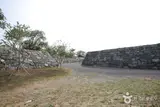
Built in the 27th year of King Sejong's reign (1445), Sacheoneupseong Fortress faces the Seonghwangdang Mountain Fortress on the mountain behind Yesu-ri, Jeongdong-myeon. It is a flatland-mountain fortress (pyeongsanseong) that cleverly takes advantage of typical mountain fortress topography—namely the surrounding terrain and mountain ridge near the residential area—to build sturdy fortress walls, serving to defend against enemies in emergencies and protect the local populace.MoreLess
- 4
Seonjinriseong Fortress, Sacheon
사천 선진리성
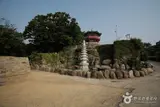
During the Samhan period, Sacheon was a small state known as Samulguk. Later, during the reign of King Nahae of Silla, it became Samul-hyeon. In 1995, Sacheon-gun and Samcheonpo-si were integrated to form the present-day Sacheon-si. During the Imjin War on May 28, 1592, Admiral Yi Sun-sin used the Turtle Ship for the first time in Sacheon Bay to destroy 12 Japanese vessels. Later, during the 1598 Jeongyujaeran invasion, it was a site of fierce battles between the Joseon-Ming allied forces and the Japanese army. Today, the fortress grounds are home to around 1,000 cherry trees ranging from 20 to 100 years old, attracting many visitors when they are in full bloom. A nearby tourist resort village has also been neatly established, offering great convenience for visitors.MoreLess
- 5
Sacheon Daepo Fishing Village
사천 대포어촌체험마을
Also famous as a gizzard shad village, Daepo Village in Sacheon, Gyeongsangnam-do, is celebrated for its refreshing southeasterly sea breeze. Off the coast of the village lies a large reef called 'Hanyeo,' which is submerged during high tide and emerges above the water at low tide. The village was once called 'Hanyeo' after this reef before being renamed Daepo in recent times. Like the Miracle of Moses, low tide connects 'Hanyeo' with the mainland so that visitors can walk directly to the reef. The area produces octopus, fleshy prawns, Manila clams, oysters, and mud shrimp. Located at the heart of the beautiful natural scenery of Changseon-Samcheonpo Bridge and Hallyeohaesang National Park, it has become very popular with visitors, especially with improved accessibility following the opening of the Daejeon-Jinju Expressway. Traveling from Sacheon-eup along National Route 3, you will also find the Sacheonman Coastal Road stretching from Yonghyeon in Sacheon-si along the coast to Daepo Village in Namyang-dong.MoreLess
Source: Korea Tourism Organization (TourAPI) · Machine-translated