Look at Me, Look at Me! Hop on the Bus!
4 stops · 1 day
Miryang is a historic small city steeped in traditional charm and flavor. Much like the cheerful melody of the folk song Miryang Arirang, it is a place brimming with the vibrant excitement of tradition and warm human affection. When in Miryang, take a ride across its mountains, rivers, and fields while humming a verse of Miryang Arirang.
- Duration
- 1 day
- Distance
- 41.31km
Along the way
- 1
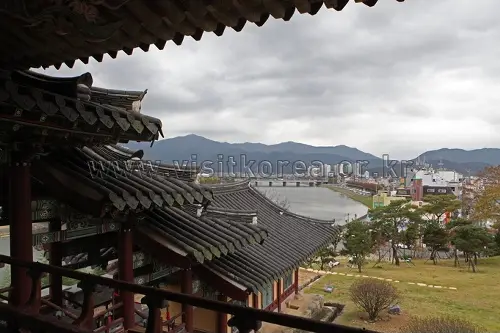
Miryang Yeongnamnu Pavilion
밀양 영남루
Located on Adongsan Mountain beside the Namcheongang River in Miryang, Yeongnamnu Pavilion (Treasure No. 147) is counted among Korea's three major pavilions alongside Chokseongnu Pavilion in Jinju and Bubyeongnu Pavilion in Pyeongyang. Featuring a hipped-and-gabled roof measuring 5 kan east-to-west and 4 kan north-to-south, flanked by two auxiliary pavilions, this massive two-story structure was originally a small pavilion attached to Yeongnamsa Temple, one of the five prominent temples of Silla. Historical records show that after Yeongnamsa Temple fell into ruin, the pavilion was rebuilt on a larger scale during the reign of King Gongmin of Goryeo, and the present building was reconstructed in 1884 by Yi In-jae, the magistrate of Miryang.MoreLess
- 2
Miryang City Museum
밀양시립박물관
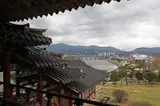
Miryang City Museum was established to synthesize, efficiently preserve, and exhibit the culture of the Nakdonggang River basin, while also serving as a central hub for historical and cultural-artistic authentication through the collection, investigation, research, and organization of local historical materials, thereby contributing to cultural appreciation and social education for citizens. The museum is divided into Permanent Exhibition Hall 1, Permanent Exhibition Hall 2, and a Special Exhibition Hall, highlighting the history of the Miryang region from the Samhan period to the Joseon dynasty.MoreLess
- 3
Pyochungsa Temple (Miryang)
표충사(밀양)
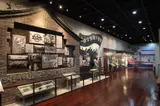
Pyochungsa Temple houses Bronze Incense Burner with Silver Inlay of Pyochungsa Temple (National Treasure No. 75, designated on September 17, 1958), Three-Story Stone Pagoda (Treasure No. 467), and about 200 cultural relics related to Master Samyeong. The surroundings of the temple feature Cheungcheung Falls, Geumgang Falls, and Eoreumgol Valley, as well as Sajapyeong Plain on the mountain ridge and Sandeulneup, the largest alpine wetland in South Korea.MoreLess
- 4
Miryang Eoreumgol Valley
밀양 얼음골
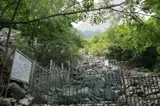
The roughly 29,752 m² (about 9,000 pyeong) valley located on the northern hillside of Jaeyaksan Mountain (Cheonhwangsan Mountain) at an altitude of about 600–750 meters is known as Eoreumgol Valley (Ice Valley). This mysterious place begins freezing in spring and only thaws after Cheoseo (the end of summer heat), while in winter, the stream does not freeze and warm steam rises instead. The hotter the weather gets, the more ice forms in the rock crevices, and in winter, steam warm enough to wear short sleeves rises. Known as the "Mystery of Miryang," it is protected as Natural Monument No. 224.MoreLess
Source: Korea Tourism Organization (TourAPI) · Machine-translated