Set Off for Gimhae, the Heart of Splendid Gaya Culture!
4 stops · 3 hours
Gimhae is a land steeped in ancient history where Geumgwan Gaya established a splendid kingdom. Visiting the city reveals well-preserved artifacts, legendary place names, and remnants of ancient Gaya, making visitors feel as though they have stepped into a time machine and traveled back 2,000 years to the ancient Gaya kingdom.
- Duration
- 3 hours
- Distance
- 3.55km
Along the way
- 1
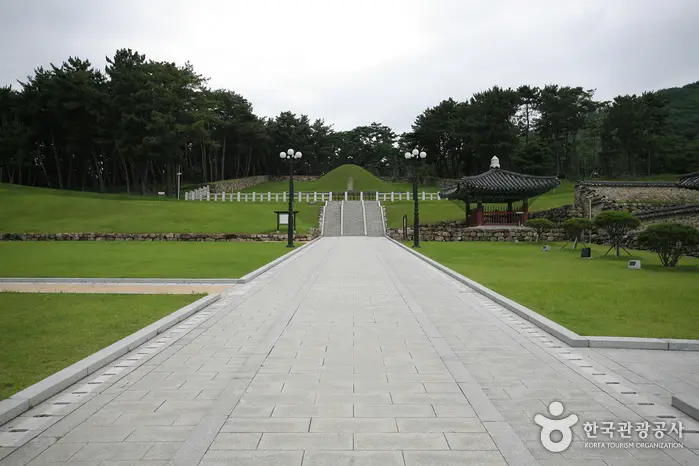
Tomb of Queen Suro, Gimhae
김해 수로왕비릉
Located in Gusan-dong, Gimhae-si, this Gaya-period royal tomb is the burial site of Queen Heo (Historic Site No. 74), the consort of King Suro, the founding monarch of Garakguk. It is a large circular earthen mound with a stone retaining wall built of elongated stones at the front and a low stone wall enclosing a wide surrounding area. In front of the tomb stands a tombstone erected during repairs in 1647 (the 25th year of King Injo's reign), inscribed in two lines with 'Tomb of Queen Consort Heo, Grand Empress Boju, Queen Consort of King Suro of Garakguk (駕洛國首露王妃 普州太后許氏陵)'.MoreLess
- 2Gimhae National Museum
국립김해박물관
Gimhae National Museum opened on July 29, 1998, to comprehensively compile and showcase the cultural heritage of Gaya, one of Korea's ancient kingdoms. Situated at the foot of Gujibong Peak in Gimhae-si—a site deeply connected to the founding myth of Gaya—the museum features an intensive display of Gaya cultural assets, along with the prehistoric culture of the Busan and Gyeongsangnam-do regions and the heritage of Byeonhan, which served as the foundation for Gaya's growth.MoreLess

- 3Tomb of King Suro
수로왕릉
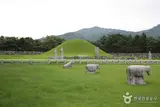
King Suro ascended the throne in 42 AD as the founder of Garakguk, took Princess Heo Hwang-ok of the Indian Kingdom of Ayuta as his queen in 48 AD, and became the founding ancestor of the Gimhae Kim clan. The royal tomb was refurbished to its current appearance in 1580 (the 13th year of King Seonjo's reign) by Heo Yeop, the governor of Yeongnam. Within the tomb grounds are various buildings including Sungseonjeon, which houses the spirit tablets of King Suro and Queen Suro, Anhyanggak, Jeonsacheong, and Jegigo, as well as stone monuments like Shindobi and Gongjeokbi. The tombstone in front of the tomb was erected in 1647 (the 25th year of King Injo's reign), and the name 'Sungseonjeon' was bestowed by King Gojong in 1884 (the 21st year of his reign).MoreLess
- 4
Bonghwang-dong Archaeological Site in Gimhae
김해 봉황동 유적
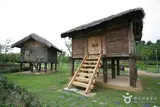
This site was expanded and designated as a Historic Site on February 5, 2001, by combining the Hoehyeon-ri Shell Mound—a representative shell mound of the Gaya period and the site of Korea's first archaeological excavation in 1920—with Bonghwangdae (formerly Cultural Heritage Material No. 87), the largest settlement site of Geumgwan Gaya. On the hill, sites related to the legend of General Hwangse and Lady Yeoui, such as Yeouigak Pavilion and Hwangsebawi Rock, still remain, and Gaya-period stilted houses and residential sites have also been excavated here.MoreLess
Source: Korea Tourism Organization (TourAPI) · Machine-translated