An Invitation to Gwangju, the Capital Area's Leading Eco-Friendly Clean City
3 stops · 1 day
Gwangju, Gyeonggi-do, serving as a gateway to Seoul and imbued with the spirit of Namhansanseong Fortress, is newly emerging as a wellness travel destination harmonizing culture and ecology, especially following Namhansanseong's designation as a UNESCO World Heritage site and growing interest in the environment.
- Duration
- 1 day
- Distance
- 35.48km
Along the way
- 1
Cheonjinam Shrine
천진암 성지
While the Catholic Church in most countries around the world began through the evangelism of foreign missionaries, the Catholic Church in Korea was initiated in 1779 by prominent scholars of the time, including Yi Byeok, Gwon Il-sin, Jeong Yak-jong, Gwon Cheol-sin, and Yi Seung-hun. Through 6 to 7 years of study sessions (Ganghakhoe) for a voluntary search for truth at Cheonjinam, they elevated and developed Cheonhak (Western Learning), which was previously at the level of academic knowledge, into the dimension of religious faith as the Catholic Church, and that very site is Cheonjinam Shrine.MoreLess
- 2
The Face Museum
박물관 얼굴
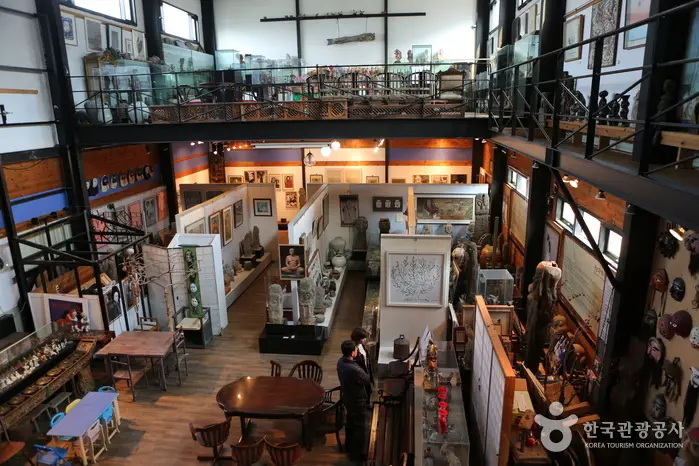
Located in Bunwon-ri, Namjong-myeon, Gwangju-si, Gyeonggi-do, The Face Museum was created by theatre director Kim Jeong-ok, who envisioned a space for [People and Faces] by gathering in one place stone figures, wooden figurines, and ceramics crafted by our ancestors, as well as roof-end tiles and masks modeled after human faces from Korea and around the world that he collected over the past 40 years. MoreLess
- 3Namhansanseong Provincial Park [UNESCO World Heritage]
남한산성 도립공원[유네스코 세계문화유산]
There were four major outer fortresses guarding Seoul: Gaeseong to the north, Suwon to the south, Ganghwa to the west, and Gwangju to the east. Namhansanseong Fortress was in Gwangju to the east. Located on Namhansan Mountain, 24 km southeast of Seoul and 6 km northeast of Seongnam-si, it measures 11.76 km in total length (main fortress 9.05 km, outer fortress 2.71 km) and 7.3 m in height. There are records stating that it was originally the royal fortress of King Onjo, founder of Baekje and son of King Dongmyeong of Goguryeo about 2,000 years ago, and records also note that it was Jujangseong Fortress built in Hansanju in the 13th year of King Munmu of Silla (673) during the Silla-Tang War. Taking advantage of the ancient site, it was repaired and rebuilt several times throughout subsequent generations, and is said to have been fully fortified during the reign of King Gwanghaegun of Joseon (1621).MoreLess
Source: Korea Tourism Organization (TourAPI) · Machine-translated