A City of Charm and Atmosphere Shaped by Time
4 stops · 1 day
Daegu has long been the cradle of administration and culture in the Yeongnam region. As such, many of its alleys are steeped in history and culture. Explore every corner of Daegu, where the landscape crafted by time and human hands is even richer than nature itself.
- Duration
- 1 day
- Distance
- 66.39km
Along the way
- 1Daegu Arboretum
대구수목원
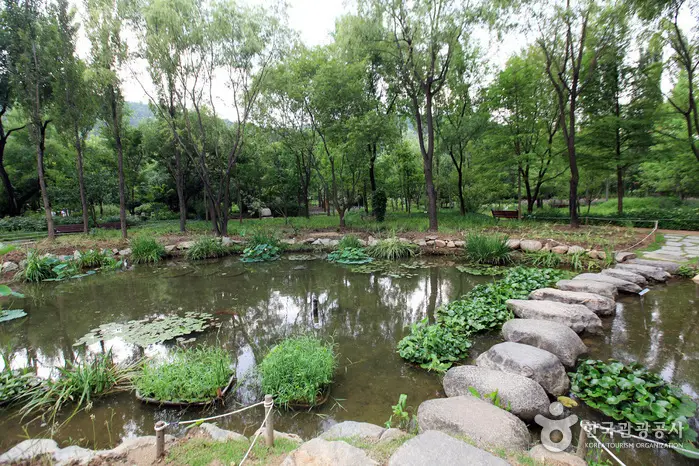
Daegu Arboretum consists of 21 distinct themed gardens, including a Conifer Garden, Broadleaf Tree Garden, Flowering Tree Garden, Wild Herbaceous Plant Garden, Medicinal Plant Garden, and Dye Plant Garden. It features about 60,000 trees across 400 species and 130,000 herbaceous flowering plants across 800 species in 1,100 flowerbeds. In addition, it exhibits around 300 bonsai across 40 species, 2,000 cacti across 200 species, and about 300 viewing stones (suseok). As an urban arboretum close to downtown, it is beloved by Daegu citizens for observation, field trips, study, and relaxation.MoreLess
- 2House of Missionary Switze
선교사스윗즈주택
Built around 1910 by American missionaries as their residence, this building was inhabited by missionaries including Missionary Switze. The floor plan features a veranda on the south-right side leading to the entrance, which connects directly to the living room and parlor through the entrance hall, with bedrooms, a staircase, a bathroom, a kitchen, and a dining room arranged around the living room. The exterior rests on an ashlar foundation of andesite fortress stones, topped with red bricks laid four stretcher courses to one header course. The gable roof was originally finished with Korean-style clay tiles but was later altered with galvanized iron. Although parts of the roofing and finishing materials have changed, the overall shape and interior structure of the building well preserve its original appearance. As part of the centennial commemorative project of Dongsan Medical Center, the House of Missionary Switze is currently being developed into a Medical Mission Museum.MoreLess
- 3Nokdongseowon Confucian Academy
녹동서원
Built in 1789 (the 13th year of King Jeongjo's reign) by local Confucian scholars, this academy was established to honor the will of Kim Chung-seon, who valued Confucian culture and etiquette. It was demolished in 1868 (the 5th year of King Gojong's reign) following Heungseon Daewongun's decree abolishing seowon academies, rebuilt in 1885, and relocated to its current site in 1971. The grounds house Nokdongsa Shrine, Hyangyangmun Gate, a historic monument, and a spirit path stele (shindobi), where ancestral rituals are held annually in March. During the Imjin War, Kim Chung-seon fought as a vanguard commander under Kato Kiyomasa before defecting to Joseon. He later passed on matchlock manufacturing techniques, made distinguished contributions in the battles of Gyeongju and Ulsan, and was granted the name Kim Chung-seon by the royal court. He also played a significant role during Yi Gwal's Rebellion and the Byeongja Horan (Manchu invasion), and in his later years, he retired to the countryside to dedicate himself to educating and guiding the local community. MoreLess
- 4Kim Kwang-seok-gil Street (Kim Kwang-seok Re-drawing Street)
김광석 길(김광석다시그리기길)
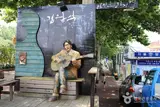
Kim Kwang-seok-gil Street is a mural street themed around the life and music of the late Kim Kwang-seok, created in the alleys near Bangcheon Market in Daebong-dong where he once lived. Begun in November 2010 as part of the 'Bangcheon Market Munjeonseongsi Project,' the Jung-gu Office and 11 artist teams participated in creating the street. Along the 350-meter-long wall, Kim Kwang-seok sculptures and murals depicting various scenes—such as Kim serving noodles at a street stall (pojangmacha) and gazing at the sea—along with his song lyrics are painted throughout the alley walls. Every autumn, the 'Kim Kwang-seok Singing Contest' is held around Bangcheon Market and Dongseong-ro to commemorate the late artist.MoreLess
Source: Korea Tourism Organization (TourAPI) · Machine-translated