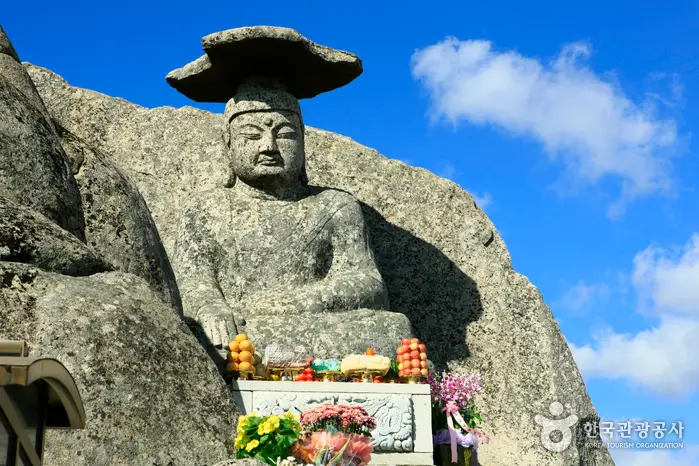
Climbing Palgongsan Mountain, Embracing the Nature of Daegu
4 stops · 1 day
Daegu has long served as the cradle of administration and culture in the Yeongnam region. As such, many of its alleys and neighborhoods are steeped in history and culture. This course introduces Palgongsan Mountain, where you can explore Daegu's natural landscape. Don't miss out on visiting the Bullo-dong Ancient Tomb Complex, Donghwasa Temple, and Daegu Citizen Safety Theme Park along the way.
- Duration
- 1 day
- Distance
- 49.60km
Along the way
- 1
Palgongsan Provincial Park (Gatbawi District)
팔공산도립공원(갓바위지구)
Palgongsan is a high mountain with an elevation of 1,193 meters located north of Gyeongsan-si. During the Silla period, it was a famous mountain known as Jungak and Buak.\n Many ancient Silla temples and cultural heritage sites are situated here, including the Stone Seated Bhaisajyaguru Buddha of Gwanbong Peak (Gatbawi), Wonhyosa Temple, Cheonseongsa Temple, and Bulgulsa Temple.\nMoreLess
- 2
Bullo-dong Ancient Tomb Complex, Daegu
대구 불로동 고분군
There are over 200 ancient burial mounds situated across the low hills of Bullo-dong, Dong-gu, where the Geumhogang River flows. \nThe name Bullo-dong originated when Wang Geon, after being defeated in the Battle of Dongsu (also known as the Battle of Gongsan), fled to this area and found only young children left behind because the adults had all fled. \nThese burial mounds are presumed to date from the Three Kingdoms Period and have been designated as Historic Site No. 262. An investigation of these tombs was conducted during the Japanese colonial period, during which they were called the Haean-myeon Ancient Tomb Complex as the area belonged to Haean-myeon, Dalseong-gun, Gyeongbuk. \nConstructed during the Three Kingdoms Period, the Bullo-dong Ancient Tombs are presumed to be a communal cemetery for the local ruling class that governed this region in ancient times.MoreLess
- 3
Donghwasa Temple (Daegu)
동화사(대구)
Located on the southern slope of Palgongsan Mountain, 22 km northeast of downtown Daegu, this temple was founded in 493 (the 15th year of King Soji of Silla) by Venerable Geukdal. Originally named Yugasa, it was renamed Donghwasa by National Preceptor Simji when he rebuilt it in 832 (the 7th year of King Heungdeok) because paulownia trees were in full bloom within the temple grounds even though it was winter. The entrance to the temple is surrounded by lush trees, with clear water cascading in waterfalls throughout the four seasons.MoreLess
- 4
Daegu Citizen Safety Theme Park
대구시민안전테마파크
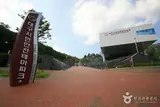
Daegu Citizen Safety Theme Park operates various facilities to provide practical safety experience, including a specialized Subway Safety Exhibition Hall, Mountain Safety Exhibition Hall, Earthquake Safety Exhibition Hall, and Future Safety Theater. Along with raising safety awareness, visitors can realistically experience disaster situations encountered in daily life. The Subway Safety Exhibition Hall spans three floors and offers specialized hands-on subway safety training. The Daily Safety Exhibition Hall is an experiential exhibition space where visitors can learn about and respond to various everyday disaster scenarios, such as storm and flood damage, mountain safety, earthquakes, fires, and first aid. The Future Safety Theater is a 3D motion ride theater showing an animation about the heroic actions of 119 firefighters resolving sudden disasters in a futuristic city. The Future Disaster Prevention Hall provides information on the February 18 Daegu Subway Fire, chronicling the historical transition of disasters, worldwide disasters, and the future of disaster prevention.MoreLess
Source: Korea Tourism Organization (TourAPI) · Machine-translated