Relaxing in Auspicious Lands Leaning on Jirisan Mountain and the Seomjingang River
6 stops · 2 days, 1 night
Pyeongsa-ri in Agyang, famous as the setting of author Park Kyung-ni's epic novel [Toji (The Land)], is a land abundantly blessed by the Seomjingang River. The name Agyang was given because it was said to resemble Yueyang in China. Taking place names from China, the sandy riverbank in Pyeongsa-ri was named Geumdang, and the lake within the sandbank was called Dongjeongho Lake. Among the praises sung of Agyang's beauty are the Eight Views of Sosang. Dongjeongho Lake in Pyeongsa-ri and the Eight Views of Sosang in Agyang are sources of pride for the locals, creating a landscape steeped in Korean beauty. In addition, Gososeong Fortress (Historic Site No. 151), located at an altitude of 300 meters midway up Hyeongjebong Peak, was built during the Silla period and overlooks the Seomjingang River and Dongjeongho Lake below, bearing witness to a thousand years of history.
- Duration
- 2 days, 1 night
- Distance
- 64.40km
Along the way
- 1
Ssanggyesa Temple (Hadong)
쌍계사(하동)
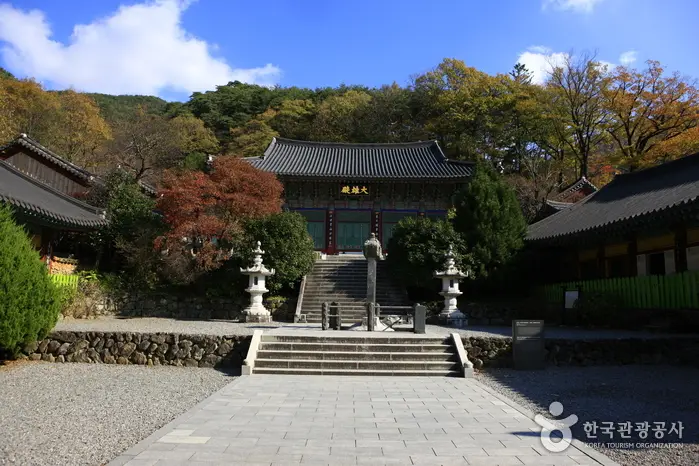
Ssanggyesa Temple sits on the southern foot of Jirisan Mountain along a 6 km cherry blossom-lined stretch from Hwagae-ri to Unsu-ri in Hwagae-myeon, Hadong-gun, Gyeongsangnam-do, located 21 km from Gurye-eup in Jeollanam-do. It was founded in 722 (the 21st year of King Seongdeok of Silla) by Monk Sambeop, a disciple of Master Uisang. Initially named Okcheonsa, it was rebuilt as a grand temple by Zen Master Jingam in 840 (the 2nd year of King Munseong), and later renamed 'Ssanggyesa' in 887 by King Jeonggang in reverence of the master's teachings. MoreLess
- 2Choi Champandaek (House of Choi Champan)
최참판댁
Pyeongsa-ri in Agyang, famous as the setting of author Park Kyung-ni's epic novel [Toji (The Land)], is a land abundantly blessed by the Seomjingang River. The name Agyang was given because it was said to resemble Yueyang in China. Taking place names from China, the sandy riverbank in Pyeongsa-ri was named Geumdang, and the lake within the sandbank was called Dongjeongho Lake. Among the praises sung of Agyang's beauty are the Eight Views of Sosang. Dongjeongho Lake in Pyeongsa-ri and the Eight Views of Sosang in Agyang are sources of pride for the locals, creating a landscape steeped in Korean beauty. In addition, Gososeong Fortress (Historic Site No. 151), located at an altitude of 300 meters midway up Hyeongjebong Peak, was built during the Silla period and overlooks the Seomjingang River and Dongjeongho Lake below, bearing witness to a thousand years of history.MoreLess
- 3Unjoru Historic House in Gurye
구례 운조루
This house was built in 1776 (the 52nd year of King Yeongjo of Joseon) by Ryu I-ju, who served as the magistrate of Samsu at the time. It is a large-scale yangban residence originally comprising 99 kan (73 kan remaining today), featuring a layout in the shape of the Chinese character '품' (品) that symbolizes the dignity of Joseon scholars. Unjoru House is situated on an auspicious site with well-defined mountain ridges (Blue Dragon on the left and White Tiger on the right) alongside proper inner (front ditch) and outer (Seomjingang River) water drainage. Obongsan Mountain in front of the house is said to resemble subjects prostrating before royalty, while the lotus pond is said to have been created to prevent fire as the southern mountain's topography takes the shape of flames. MoreLess
- 4
Hwaeomsa Temple
화엄사
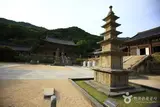
Located 5.4 km east of Gurye-eup at the foot of Jirisan Mountain, the sacred mountain of the Korean people, Hwaeomsa is a thousand-year-old temple founded in 544 (the 22nd year of King Seong of Baekje) by Master Yeongi, who named the temple after the first two characters of the Avatamsaka Sutra (Hwaeomgyeong). Initially, only Haehoedang Hall and Daeung Sangjeokgwangjeon Hall were built. It was expanded by Master Jajang in 643 (the 12th year of Queen Seondeok) and further expanded by National Preceptor Doseon in 875 (the 1st year of King Heongang of Silla). After being destroyed by fire during the Japanese invasions of Korea, Master Byeogam began reconstructing the temple in 1630 (the 8th year of King Injo), completing it seven years later in 1636 (the 14th year of King Injo).MoreLess
- 5Gurye Cheoneunsa Temple
천은사(구례)
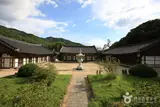
Cheoneunsa Temple is located 9 km north of Gurye-eup, at the entrance to the Jirisan Mountain Ring Road. Founded in 828 (the 3rd year of King Heungdeok of Silla) by Master Deok-un and the Indian monk Suru, it is considered one of the three major temples of Jirisan Mountain alongside Hwaeomsa Temple under the collective name 'Hwacheon Yangsa.' It was burned down during the Japanese invasions of Korea and rebuilt in 1610 (the 2nd year of Gwanghaegun of Joseon) by Master Hyejeong, but was destroyed by fire again in 1676 (the 2nd year of King Sukjong). Rebuilt the following year, it suffered another fire in 1773 (the 49th year of King Yeongjo), before Master Hyeam rebuilt it in 1775 (the 51st year of King Yeongjo), bringing it to its current form. MoreLess
- 6
Jirisan Spaland
지리산온천랜드
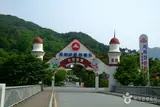
Located in Sandong-myeon, Gurye-gun, Jeollanam-do, 'Jirisan Spaland' features a massive open-air hot spring. Established in 1995 on a site of approximately 33,000 square meters utilizing germanium hot spring water and mineral water, it is a hot spring tourist hotel that offers accommodations. Jirisan Spaland is equipped with a theme park-style open-air hot spring facility spanning roughly 13,000 square meters—the largest in Asia—and uses 100% natural germanium hot spring water with 0% chemical additives. The hot spring water helps prevent various adult diseases, promotes metabolism to soothe and clear the mind and body, and also enhances immunity.MoreLess
Source: Korea Tourism Organization (TourAPI) · Machine-translated