A 100-Year Journey Across Modern and Contemporary Times
4 stops · 6 hours
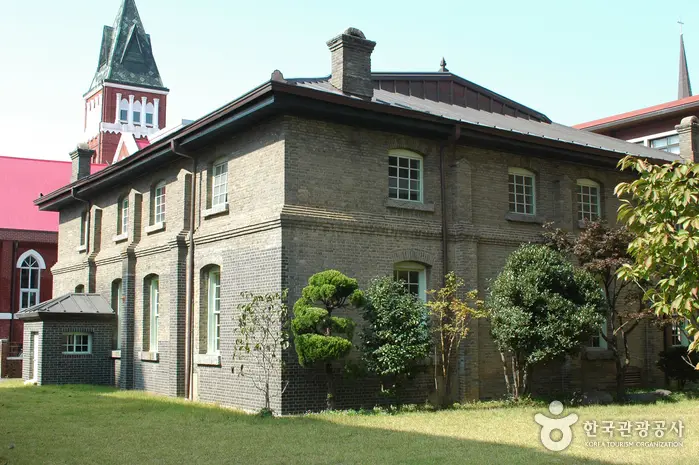
Starting from Namgwangju Station on Subway Line 1, the concept of this tour is 'a 100-year journey crossing modern and contemporary times.' The first places to visit include Yangnim-dong History and Culture Village, Owen Memorial Hall, Lee Jang-woo's House, and Missionary Wilson's House. The two-story Owen Memorial Hall was built to commemorate Clement C. Owen, one of the first missionaries to the Jeonnam region who was active in Gwangju and died a martyr.
- Duration
- 6 hours
- Distance
- 3.10km
Along the way
- 1Owen Memorial Hall
오웬기념각
Located within the Christian Hospital Nursing College, Owen Memorial Hall was built in 1914 with a $4,200 fund sent by American friends and relatives to commemorate Missionary Owen, who arrived as the first missionary in the Jeonnam region along with Reverend Eugene Bell and died a martyr in Gwangju. It is a Western-style building with a total floor area of 434 square meters (including annexes). Judging from its floor plan, it is presumed to have been used as a chapel and meeting room, but it is currently used as an auditorium for the Christian Hospital Nursing College.MoreLess
- 2Lee Jang-woo's House
이장우가옥
This is a tile-roofed house arranged with a gate quarters, storehouse, servants' quarters, sarangchae (men's quarters), and anchae (women's main quarters). The ridge beam inscription of the anchae reads 'Gwangmu 3rd Year, Eulhae, February 10, Chuksi (光武三年乙亥二月十日丑時),' indicating it was built in 1899. Overall, it is a traditional house with a thick, sturdy framework and a well-preserved original form.MoreLess
- 3Missionary Wilson's House
우일선 선교사 사택
Missionary Wilson's House is a two-story brick building facing east at the foot of Yangnimsan Mountain, making it the oldest existing Western-style house in Gwangju. It is only known to have been built in the 1920s by American missionary Wilson, and the exact date of construction is unknown. Currently, the interior has been renovated and is used as an office for the Presbyterian Church of Korea, serving as a valuable resource for understanding the flow of modern Korean architecture.MoreLess
- 4
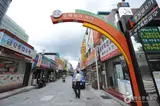
Chungjang-ro Street
충장로
Known as Gwangju's Myeong-dong, the fashion street of Chungjang-ro offers a glimpse into Gwangju's latest trends at a glance. It has been called Chungjang-ro since 1946, named after the posthumous title of General Kim Deok-ryeong (Chungjanggong) to honor his loyalty. From Chungjang-ro 1-ga to 3-ga, it is lined with large fashion malls, clothing stores, accessories, and various sundries, filled with famous brand items and innovative products. In 4-ga and 5-ga, there is a silk fabric street densely packed with Hanbok shops where you can purchase Korea's traditional clothing, including traditional wedding Hanbok, merchants' Hanbok, and modern modified Hanbok.MoreLess
Source: Korea Tourism Organization (TourAPI) · Machine-translated