Night View of Cheongju from the Foot of Uamsan Mountain
7 stops · 2 Days 1 Night
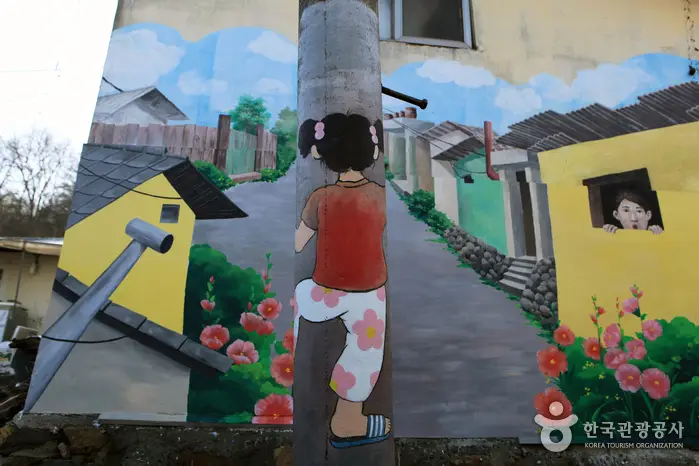
Located around Suam-ro in Sangdang-gu, Cheongju-si, Chungcheongbuk-do, Suamgol has become a must-visit attraction for travelers visiting Cheongju. Originally a hillside village (daldongne) formed when refugees settled after the Korean War, it was once a humble and quiet neighborhood, but began to transform with a public art project carried out in 2007.
- Duration
- 2 Days 1 Night
- Distance
- 24.71km
Along the way
- 1Suamgol Mural Village
수암골 벽화마을
Located around Suam-ro in Sangdang-gu, Cheongju-si, Chungcheongbuk-do, Suamgol has become a must-visit attraction for travelers visiting Cheongju. Originally a hillside village formed when refugees settled after the Korean War, it was once a humble and quiet neighborhood, but began to transform with a public art project carried out in 2007. Cute and bright murals were painted throughout the area, revitalizing the neighborhood. Since then, as it became known as a filming location for TV dramas such as Cain and Abel and King of Baking, Kim Takgu, an increasing number of travelers have visited Suamgol. Situated at the foot of Uamsan Mountain, it also offers a scenic panoramic view of downtown Cheongju. The view looking down at sunset is particularly beautiful. There are also several restaurants utilizing drama sets and cafes with scenic views.MoreLess
- 2
Children's Museum of Cheongju National Museum
국립청주박물관 어린이박물관
The Children's Museum located inside the Cheongju National Museum is a cultural learning space designed for children. In Exhibition Hall 1, children can understand important museum activities such as the research, preservation, and exhibition of cultural heritage, and enjoy experiencing the history and culture of Cheongju, the clear town. In Exhibition Hall 2, visitors can follow "lines" to compare Korean culture with cultures around the world and examine the characteristics and excellence of Korean culture from a new perspective. In the Hands-on Learning Room, children can make, touch, and feel the beauty and excellence of Korean cultural heritage firsthand.MoreLess
- 3Cheongju Sangdangsanseong Fortress
청주상당산성
The name Sangdangsanseong Fortress seems to have derived from Sangdang-hyeon of the Baekje Kingdom during the Three Kingdoms Period. It is a massive valley-enclosing stone mountain fortress with a circumference of over 4 km. It is presumed that Sangdangsanseong Fortress was initially built as an earthen fortress during the Baekje period, and records also state that Kim Seo-hyeon (Lord Wonjeong), the third son of Kim Yu-sin, built Seowonsulseong Fortress. Later, in the 29th year of King Seonjo during the Joseon Dynasty, it was rebuilt at the time of the Japanese invasion (Imjin War) and was reconstructed into a stone fortress during the reign of King Sukjong.MoreLess
- 4Suamgol Observatory
수암골 전망대
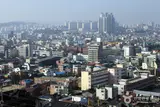
Suamgol is a place that was formed as refugees settled after the Korean War. Suamgol Observatory is located on the road above the village. It is a scenic spot offering a panoramic view of downtown Cheongju. In addition, there is a cafe street below the observatory.MoreLess
- 5Cheongju Jungang Park
청주 중앙공원
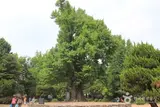
From ancient times, Cheongju was called Juseong (boat castle) because its topography was said to resemble a boat floating on the Musimcheon Stream. The Iron Flagpole at the Yongdusa Temple Site, standing in Nammun-ro 2-ga at the heart of Cheongju, is said to have been erected as a mast to stabilize the boat. Jungang Park serves as a resting space for citizens located right in the center of Cheongju City, and it houses the Apgaksu tree filled with the breath of ancestors, the Chungcheong-do Military Commander's Office Gate (Yeongmun), and Mangseollu Pavilion. The Yeongmun of the Military Commander is a two-story wooden pavilion measuring 3 bays in front and 2 bays on the side with an ikgong-style octagonal roof, designated as Tangible Cultural Heritage No. 15. In front of it stand the thousand-year-old ginkgo tree Apgaksu, a monument commemorating Master Jo Heon and Monk Yeonggyu, a memorial stone for Han Bong-su, a monument for Park Chun-mu, and the Seowon Hyangyak Monument.MoreLess
- 6
Iron Flagpole at Yongdusa Temple Site, Cheongju
청주 용두사지 철당간
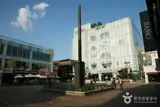
It was designated as National Treasure No. 41 on December 20, 1962. The granite support pillars are 4.2m high, the iron flagpole is 12.7m high, and each iron cylinder is 0.63m high with a diameter of 0.4m. A flagpole (danggan) refers to a pole used to hang a Buddhist banner (dang) during ceremonies such as prayers or Dharma assemblies at a temple. Since the Silla Dynasty, many flagpoles were erected alongside the construction of temples, but in most cases, only the stone support pillars remain while the flagpoles themselves have disappeared. As for iron flagpoles, only three remain: the Iron Flagpole of Gapsa Temple in Gongju (Treasure No. 256), the Flagpole of Chiljangsa Temple (Gyeonggi Tangible Cultural Heritage No. 39), and this Iron Flagpole at the Yongdusa Temple Site.MoreLess
- 7
Cheongju Yukgeori Traditional Market
청주육거리종합시장
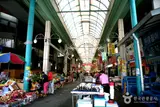
As Cheongju's representative traditional market, visitors can purchase agricultural products produced directly from rural areas and various manufactured goods, and a dawn market (also known as the Goblin Market) is held where agricultural products grown directly by farmers are traded. Beginning as the Cheongju Market along the bank of the Musimcheon Stream during the Joseon Dynasty, it has been called Yukgeori Market since 1973. It spans an area of approximately 99,000 square meters with about 1,600 shops and around 4,000 workers. A 5-day market (held on days ending in 2 and 7) is held, and with recent arcade installation and parking facility construction, it is recognized as a best practice among traditional markets nationwide, serving as a model for merchants in other regions.MoreLess
Source: Korea Tourism Organization (TourAPI) · Machine-translated