Mountains and Sea Beautiful in the Night
6 stops · 1 day
To see the night view of Mokpo, you should head up Yudalsan Mountain. If you depart before sunset and hike up to Madangbawi Rock, a famous viewpoint for night sceneries, you can enjoy the panoramic view of Mokpo from several pavilions along the way and take in both the sunset and nightscape from Madangbawi Rock. Starting from Nojeokbong Peak and passing by Opodae and Daehakru Pavilion, you will come across the song monument for 'Tears of Mokpo.' In addition, if you visit the sea in front of Pyeonghwa Plaza in Sang-dong, you can watch the so-called 'Dancing Sea Fountain.' The fountain installed in the sea and its lighting dance along with the music.
- Duration
- 1 day
- Distance
- 13.51km
Along the way
- 1
Architecture from the Japanese Colonial Period
일제강점기 건축물들
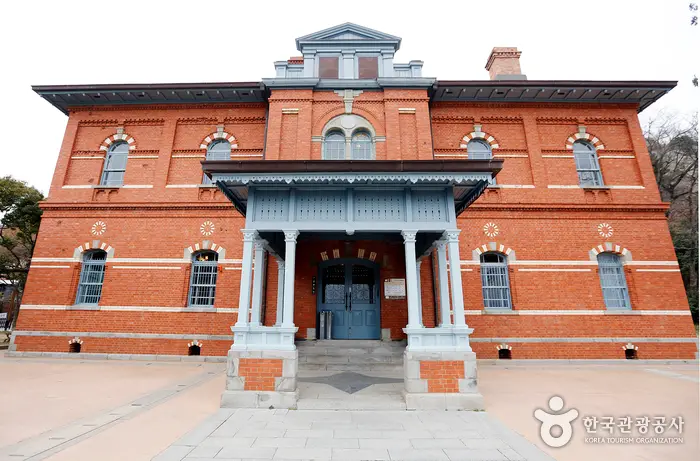
Mokpo was one of the ports through which military supplies and Korean goods were smuggled to Japan during the Japanese colonial period. As a result, many buildings from the Japanese colonial period remain. Former Japanese Consulate in Mokpo (Historic Site No. 289 / Designated on 1981.09.25)], Former Honam Bank Mokpo Branch (Registered Cultural Heritage No. 29 / Designated on 2002.05.31), Former Oriental Development Company Mokpo Branch (Jeollanam-do Monument No. 174 / Designated on 1999.11.20), Former Mokpo Youth Hall (Registered Cultural Heritage No. 43 / Designated on 2002.09.13), Mokpo Jungang Church (Registered Cultural Heritage No. 340 / Designated on 2007.07.03), Mokpo Yangdong Church (Registered Cultural Heritage No. 114 / Designated on 2004.12.31), Former Missionary House of Mokpo Jeongmyeong Girls' Middle School (Registered Cultural Heritage No. 62 / Designated on 2003.06.30)MoreLess
- 2Mokpo Modern History Museum No. 2
목포근대역사관 2관
The Mokpo Branch of the Oriental Development Company (Modern History Museum) was built in June 1920. Built in an early modern Western architectural style, the building is a tangible remnant of Japanese aggression that awakens awareness of Korean history. It is currently used as Mokpo Modern History Museum No. 2.MoreLess
- 3Nojeokbong Peak
노적봉
Nojeokbong Peak refers to a massive rock peak located on Yudalsan Mountain in Mokpo. This peak is famous for being used by Admiral Yi Sun-sin during the Imjin War to defeat the enemy, showcasing his sophisticated psychological warfare using terrain. In order to overcome military disadvantage during the Imjin War, he wove straw mats to cover the rocks, disguising them as huge stacks of military grain (nojeok) so that it looked as though massive provisions were stockpiled. In addition, he had local residents wear military uniforms and continuously circle around Nojeokbong Peak to create the illusion of a massive army. He also had white clay powder sprinkled into the Yeongsan River so that the water flowing into the sea looked like water from washing rice, disguising the size of the army and causing the Japanese commander to turn his troops around and retreat. There is a legend that the tactic of circling Nojeokbong Peak at the time later sublimated into a cultural art form and developed into the folk dance Ganggangsullae.MoreLess
- 4Mokpo Special Tourist Zone
목포 관광특구
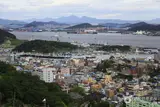
Mokpo is a tourist and marine city where marine tourism resources harmonize with culture and art. First, Yudalsan Mountain rising high in the center of Mokpo is Mokpo's greatest landmark. Scenic pavilions are located throughout Yudalsan Mountain, and the view of downtown Mokpo from these pavilions as well as the view of Yudalsan Mountain from downtown Mokpo are both marvelous. Yudalsan Mountain's walking trail, where you can take a leisurely stroll and enjoy forest bathing, is popular not only with Mokpo citizens but also with tourists.MoreLess
- 5Mokpo Gatbawi Rock
목포 갓바위
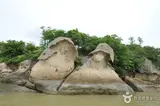
At Gatbawi Rock, there are Jungbawi (Monk Rock) and Satgatbawi (Straw Hat Rock), and Satgatbawi is usually referred to as either Jungbawi or Satgatbawi. It is called Gatbawi because the rocks on the sea side look as if two Buddhist monks are wearing satgat (traditional woven hats), and Jungbawi is said to be named so because a great Buddhist master resided there. MoreLess
- 6
Mokpo Children's Sea Science Museum
목포어린이바다과학관
On February 5, 2013, the Mokpo Children's Sea Science Museum opened in Samhakdo Neighborhood Park. The Mokpo Children's Sea Science Museum is a three-story building themed around the 'sea' and consists of five main exhibition spaces: Sea Imagination Hall, Deep Sea, Middle Sea, Shallow Sea, and Sea Child Dome. The Mokpo Children's Sea Science Museum aims to instill scientific thinking and abilities in children—the leaders of the 21st-century maritime era—by offering distinctive hands-on education in marine science.MoreLess

Source: Korea Tourism Organization (TourAPI) · Machine-translated